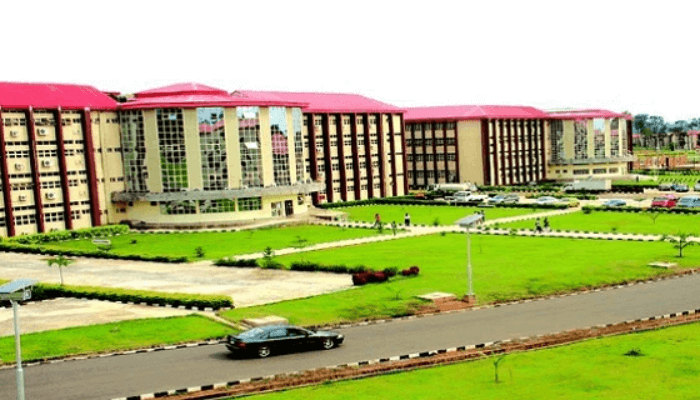
Nigeria’s education sector is undergoing a noticeable shift as several polytechnics are being converted into universities.
While this transition is often justified as a pathway to expanding access to degree education and elevating institutional status, it raises critical concerns about the country’s already fragile technical skills base.
At a time when Nigeria faces an acute shortage of skilled technicians, technologists, and middle-level manpower required for industrial growth, the steady conversion of polytechnics into universities risks further weakening the nation’s technical education pipeline.
Sunday Adebisi, the director of the Entrepreneurship and Skills Development Centre at the University of Lagos, describes the conversion as a two-edged sword, which, if well implemented, will be a right step in the right direction, but otherwise, will lead to regrets.
“It’s a two-edged sword. If it is well implemented, it will be a good thing, but if done in the usual way of handling policies, without really paying attention to the implementation, it may be a sorry case.
“I think it’s a right step in the right direction if we can see it through and ensure that experts are brought in to drive it for a better output,” he said.
Adebisi emphasised the dichotomy between polytechnic and university, which he said, has downgraded polytechnic to just a mere secondary school.
Besides, he decried the quality of trainers in the polytechnic, noting it is weak, as he explained that an HND distinction holder would just stay in polytechnics and continue to teach without adding anything to their qualification.
This, he said, is contrary to the university system, where in every three years, if a lecturer is not upscaling, the university will throw him out.
He further noted that though technicality in the polytechnic is supposed to be heavy, the system has not lived up to expectations, which he said the conversion may achieve.
“If Nigeria is consolidating the majority of these polytechnics into universities, to make them specialised; I think it’s a good thing.
“What is important is that we’re turning them into technical universities, and ensuring they focus on the technicalities, and producing professors in that area so that knowledge can be mined and output can be seen,” he noted.
Oyewole Sarumi, a faculty member at ICLED Business School, Lagos, said at first glance, this conversion appears progressive, but beneath this seemingly positive narrative lies a deeper and more troubling reality.
“The conversion of polytechnics into universities is gradually dismantling the very institutions designed to produce the technical and technological workforce that industrial economies depend upon.
“If allowed to continue unchecked, this policy direction may weaken Nigeria’s technical manpower pipeline and ultimately undermine the country’s industrial future,” he said.
Oyewole emphasised that the core issue is not merely administrative restructuring but the fundamental misunderstanding of the distinct mandates that define universities and polytechnics.
According to him, these two categories of institutions were never designed to perform identical roles within a national development framework.
“Universities traditionally serve as centres of advanced scholarship, theoretical inquiry, and academic research.
Their mission is to expand the frontiers of knowledge, train professionals in disciplines such as medicine, law, social sciences, and humanities, and contribute to intellectual discourse.
“Polytechnics, on the other hand, were created to focus on applied science, technology, engineering practice, and industry-oriented skills. Their primary function is to produce technicians, technologists, and middle-level professionals who possess practical competencies required in manufacturing, construction, engineering maintenance, and industrial production.”
Besides, he pointed out that the timing is wrong as many countries are embracing technical and vocational education for human capital development.
“This is the wrong time for this initiative because most parts of the world are now emphasising technical and vocational education. From my perspective, the implications of this shift extend far beyond the education sector.
“Nigeria already faces a significant mismatch between academic qualifications and labour market needs. Many university graduates struggle to find employment because their degrees do not align with industry requirements, while employers in manufacturing, construction, and technology sectors report persistent shortages of technically skilled workers,” he said.
About 24 polytechnics and colleges of education have been converted to universities by the federal and state governments.
Some of the institutions converted include Abia State Polytechnic, Federal Polytechnic, Ilaro; Federal Polytechnic, Ofa; Yaba College of Technology; Kaduna State Polytechnic; and Delta State Polytechnic, Ozoro, among others.
According to a report by RePEC Research journal, the mandate of polytechnic education is to produce middle and high-level manpower in technology, and applied sciences to engender development.
“The purpose is to produce more technically trained graduates. The Federal Polytechnics (Amendment) Acts 2019; Cap F17, Laws of the Federation of Nigeria 2004 was enacted to establish polytechnics across the country, providing full-time courses in technology, applied sciences, management, and other fields.
Unfortunately, polytechnics have been largely pursued in theoretical form rather than in practical form for many years because of inadequate facilities, inadequate administration and supervision and political challenges.
According to Isaac Miller, chief lecturer at the School of Technical Education, Federal College of Education (Technical), (FCET) Akoka- Lagos, “There are various factors responsible for the neglect of technical education such as societal wrong perception, lack of ideal counseling and the capital intensive nature of setting up such institutions and maintaining it, and the biasness of many political leaders towards technical skills.”
Kingsley Moghalu, the president of the Institute for Governance and Economic Transformation, speaking on the need for Nigeria to embrace technical education to develop its economy, said, “Technical skills are crucial for meeting the demands of a rapidly evolving labour market and supporting industries such as construction, manufacturing, and services.
Without a skilled workforce in areas such as plumbing, welding, electrical work, and automotive repair, Nigeria may struggle to meet infrastructure needs, maintain industrial machinery, and provide essential services. This can impede economic development and hinder efforts to build resilient and sustainable communities.”

Join BusinessDay whatsapp Channel, to stay up to date
Open In Whatsapp