In a move to revitalise Nigeria’s education system, the federal government is pursuing a $500 million funding injection while intensifying reforms aimed at expanding access, upgrading infrastructure, and improving the quality of teaching and learning.
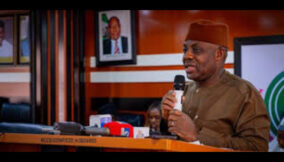
Tunji Alausa, the minister of education, made the announcement known on Tuesday at the Federal Ministry of Education (FME) and Global Partnership for Education (GPE) CEO breakfast meeting held in Lagos, where top private sector leaders and development partners gathered to align investments with the government’s reform agenda.
The minister disclosed that the global replenishment initiative, expected to raise $11.5 billion to support foundational learning across 80 countries, presents a major opportunity for Nigeria to deepen ongoing reforms.
“As part of this conference cycle, if everything goes well, Nigeria will benefit from another $500 million to support our foundational education,” he said.
Read also: Explainer: What the Learner ID Number means for Nigeria’s basic education
Alausa stressed that education remains the most strategic investment for national growth, noting that increased funding yields significant economic returns.
“Investment in education is the best investment that gets the highest return. For every one per cent increase in spending, productivity rises by six per cent. Every additional year of schooling leads to about a 5.7 percent increase in earnings, even higher for women,” he noted.
Furthermore, the minister disclosed that the past year saw the reintegration of over 1.1 million out-of-school children into classrooms, which he described as a major achievement.
“In the past 24 months, we’ve been able to move well over 1.1 million children from the streets back to school,” he said.
However, he said that Nigeria still faces a deep-rooted education crisis, with approximately 15 million children out of school.
“Today, we still have about 15 million out-of-school children in our country, with a high concentration in the North-east and North-west,” he stressed.
Besides, the minister noted the alarming rate of learning poverty, explaining that millions of children were unable to read age-appropriate texts by the age of 10.
Read also: Lagos seals UK deal to boost digital learning in public schools
A major concern raised by the minister was the sharp drop in enrolment in primary and junior secondary education, which he attributed largely to inadequate infrastructure.
“Today, we have about 32 million children in primary schools, but when you move to junior secondary school, you find only about six million. There’s a drop-off of almost 22 million children,” he said.
He explained that the limited number of junior secondary schools nationwide compared to primary schools drove the disparity.
“We have about 78,000 primary schools, but only about 9,000 junior secondary schools. That tells you clearly that access is a major issue,” he stated.
Alausa explained that the federal government has earmarked N100 billion for the construction of new student hostels across tertiary institutions.
“This year, we’ll be spending about N100 billion in building new student hostels across universities and polytechnics to expand access and improve learning conditions,” he said.
He also mentioned that we are directing additional investments towards rehabilitating engineering workshops, medical schools, and technical institutions to enhance capacity in critical sectors.
Read also: Alausa announces plan to scrap Common Entrance for Learner ID tracking
“We are investing heavily in STEM and technical education because that is where the future lies,” he noted.
On basic education financing, the minister said reforms have significantly improved access to Universal Basic Education Commission (UBEC) matching grants from state governments.
“Before we came in, we had almost N240 billion sitting as unaccessed matching grants. Today, through improved collaboration, over N140 billion has been accessed and deployed by states,” he said.
According to him, the funds are being used to build classrooms, provide furniture, and improve sanitation facilities in schools.
He added that the government was also pushing legislative changes to increase UBEC funding.
“We have a bill at the National Assembly to increase UBEC funding from two per cent to four per cent, which will further strengthen foundational education,” he said.
Read also: How lecturers’ salary scheme can shape quality learning in Nigeria’s universities
Alausa also revealed that the ministry has deployed a nationwide digital platform to track students across their educational journey, a move aimed at improving planning and reducing dropout rates.
“For the first time in the history of our country, we now have a digital platform where every child can be tracked from primary school through their education journey.
“We know where these children are, and as they drop out, we know the reasons and can intervene accordingly.”
He described the initiative as a game-changer that would enable data-driven policy-making and accountability.

Join BusinessDay whatsapp Channel, to stay up to date
Open In Whatsapp