Twenty-sixteen wound up, people familiar with the education sector are taking a long look, evaluating the impact of economic headwinds and policy choices in terms of access and quality.
“Access and quality of education were adversely affected. We could not import furniture, research and teaching materials. Some parents could not pay tuition fees. I thought this applied only to private universities only to be told that some parents of students in the Federal universities were unable to pay the N20, 000 to N30, 000 tuition fees” Debo Adeyewa, Vice Chancellor Redeemer’s University said via phone.
Education in Africa’s most populous nation was threatened by both perennial problems (access, quality) and short-term policy challenges, such as ousting of 13 vice chancellors of Federal universities by President Mohammadu Buhari.
The autonomy of universities was challenged on February 13, 2016 when the president unilate rally sacked thirteen vice chancellors of Federal universities, dissolved governing councils smacking of military dictatorship.
Retracing his steps President Buhari issued a press statement saying “we gave a blanket order which we had to rescind when we said all boards are suspended or dissolved. We had to go back and lick our vomit in terms of university boards.
“We found out that according to their laws, they cannot choose vice chancellors unless the board sits down, interview prospective candidates who want to be VCs” said Mohammadu Buhari, president of the Federal Republic of Nigeria in response to public outcry.
Back to foundational years. In 2016, early years (0 – 5) education did not receive attention as people familiar with the matter say. Greater attention was directed to the tertiary level of education.
An inventory of Early Child Care facilities in Nigeria conducted by the Federal Government of Nigeria, the National Educational Research and Development Council (NERDC) and United Nation Children Emergency Fund (UNICEF) showed that most of the ECC facilities are privately owned (42 percent of the sample population) and 34 percent by the government, followed by 21percent by local communities, this pattern persisted in 2016.
“We really need to be careful how we do early years education in this country. Within reason, there are certain things children are supposed to learn between ages 0-5. This age range is really critical because it is foundational” said Omy Itsueli, founder/CEO Rainbow Manor Ltd, specialist in early years’ education.
She pointed out, “for instance, developmental dysfunctions like dyslexia (writing and reading disorders) and dyscalculia (calculations disorder) when discovered early can be managed. When this problems are not discovered early enough they pose grave problems in adulthood. How do you discover this when early learning is left to non-experts” she queried.
Given that Early Childhood Development programme is now covered by the Universal Basic Education law, government ownership at state, Local Government Area and community levels might increase, particularly regarding centres catering for the 3-5 year olds. However the challenge remains as to the role of Universal Basic Education Commission (UBEC) and State Universal Basic Education Boards (SUBEBS) on issues relating to the 0-3 year olds.
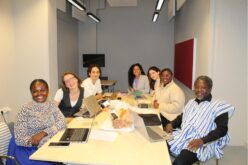
“We are in a complicated mess in this country. You see, because education is on the concurrent list with the local government responsible for basic and early childhood education there has been a growing neglect of the early years” said Folashade Adefisayo, CEO Lead Learning Ltd at “The Gathering” an initiative of Concerned Parents & Educators Network.
Beyond age five, a child falls into the category of pupils captured in the Universal Basic Education policy.The Universal Basic Education policy designed to offer foundational education to children aged 6 – 15 years met with challenges as enrolment fell by one million pupils; this is according to the National Bureau of Statistics (NBS) 2016 education data.
Analysts attribute this drop in enrolment to a number of factors, including a lack of coordination between the Federal Government and States, misappropriation of UBE funds and a lack of confidence in the programme by some parents who now prefer private schools to public schools because of falling standards.
Others include the worsening economic realities parents face making it necessary for them to have children hawk various items on the streets and the insurgency in the northeast.
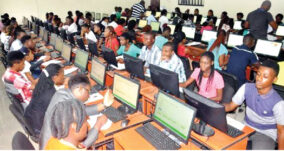
Tertiary education in 2016 continued to suffer from infrastructure deficit, low staff motivation and Academic Staff Union of Universities (ASUU) strikes, these challenges led to limited access and quality shortfalls.
However, the general state of tertiary education in Nigeria still lags behind international benchmarks and based on the current criteria by which universities are ranked it is difficult to expect much more than the system is giving.
“The parameters for the ranking of world universities vary slightly from one ranking agency to the other. At present there are three known ranking agencies in the world. However the major indices include visibility through publications, patents and inventions” Ibidapo Obe, former vice chancellor of the University of Lagos said in an emailed note.
Obe added that “the destination of graduates in the workplace also count as well as the international mix of staff and students. Earlier some of our older universities that are able to have these parameters lost it during the incessant strikes by staff and students of the universities. We need steady calendar to attract international staff and students.”
This seems a tall order because of the lingering rancour between the Federal Government and the Academic Staff Union of Universities. In November 2016 there was a warning strike and indications that more strikes will follow should the FGN fail to listen to ASUU’s demands.
On curriculum, analysts say the fundamental problem with the public university system is the content of instruction, which was developed since 1900AD. Nigeria received a post-industrial curriculum for a pre-industrial society. Public universities need to move from knowledge acquisition to competency building.
“Public university curricula were largely designed to train people to occupy positions in government ministries. Today, the needs of the country have outstripped this” suggested Ike Mowete, a professor at University of Lagos.
STEPHEN ONYEKWELU
Join BusinessDay whatsapp Channel, to stay up to date
Open In Whatsapp