- Wednesday, July 22, 2026


BusinessDay
November 27, 2025
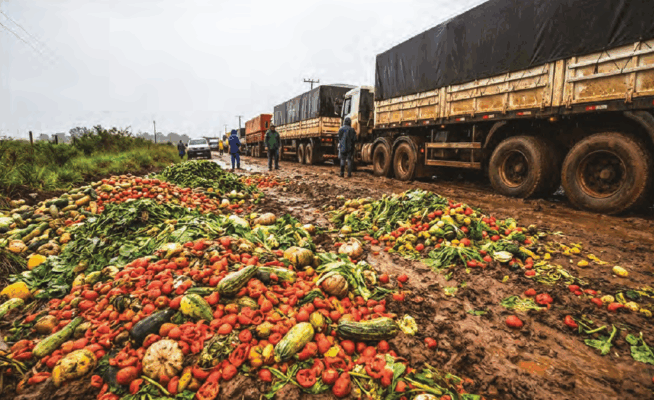
Nigeria is losing too much of the food it produces long before it reaches the people who need it most. Across farming communities, crops that take months of labour never make it beyond the village. They rot in sacks on broken rural roads or go bad inside overheated trucks not built for perishables. By the time much of this food arrives at the markets, it is already unsafe for consumption. For a country battling rising hunger and record-high food prices, this level of waste has become one of the major threats to national food security.
Farmers understand this crisis better than anyone. They harvest their cassava, tomatoes, vegetables, grains, fish and tubers in good condition, only for them to deteriorate while being transported to the market. Losses are so severe that many farmers cannot recover their investments. These losses do not result from poor farming practices but from the structural failures that define Nigeria’s food system: poor rural roads, unreliable vehicles, the near absence of cold-chain transport and a fragmented, outdated logistics network.
Nigeria has one of the highest post-harvest loss rates in the world. About 40 percent of all food produced is wasted, equivalent to roughly 31 million tonnes annually. ActionAid estimates the financial cost at N3.5 trillion every year, over nine times the federal agriculture budget for 2024. This figure is also almost equal to the value of all agricultural imports and exports combined, meaning Nigeria wastes as much food as it trades internationally. The economic cost is high, but the human cost is even clearer. Nigeria ranks 115th out of 123 countries on the 2025 Global Hunger Index, with a score of 32.8 categorised as “serious.” In a nation of more than 200 million people, nearly half the food needed to feed the population is lost on the journey from farms to markets. A hungry country simply cannot afford such losses.
According to the Ministry of Agriculture and Food Security, post-harvest loss ranges from 5–20 percent for grains, about 20 percent for fish, and up to 60 percent for fruits, vegetables and tubers – foods essential for nutrition. They are highly sensitive to heat, delays and poor storage. Most trucks used for food transport are old, lacking refrigeration and proper ventilation. Breakdowns are common. Drivers face endless checkpoints, illegal fees and long stops, all contributing to spoilage. Transporting food in Nigeria is a gamble: farmers face a 50–50 chance of recovering their money; consumers face rising prices; and the entire food chain suffers. For a country already struggling with inflation and hunger, this is a dangerous situation.
The path forward is important. Improving transport systems is one of the fastest and most effective ways to strengthen food security. Good roads reduce travel time. Reliable vehicles preserve produce quality. Efficient logistics reduce costs and stabilise prices. But roads alone cannot carry the weight of Nigeria’s food system. The country needs a wider vision — one that reimagines transport as an integrated, multi-layered national system capable of supporting a population of over 200 million.
A modern rail system linking major food-producing regions to urban centres is essential. Rail remains the most efficient way to move large volumes of goods. Trains travel faster, face fewer stops and avoid many informal charges on road networks. As rail capacity grows, cost per tonne decreases, making it ideal for transporting millions of tonnes annually. A strong rail backbone would ensure that tomatoes from Kano, onions from Sokoto, grains from Kebbi and fish from the South-South reach markets in better condition and at lower cost. This requires strategic public–private partnerships to build freight corridors and acquire modern locomotives.
Cold-chain infrastructure must also become a national priority. Refrigerated trucks, solar-powered storage centres, cold rooms at farm clusters and temperature-controlled warehouses can drastically reduce waste. Countries like Kenya, India and Morocco use cold chains to protect farmers’ earnings and stabilise food supply. Nigeria can adapt these systems to local realities, especially with solar-powered units that bypass unreliable electricity grids. Technology must also play a role. Temperature sensors can monitor produce during transport, GPS trackers can reduce delays, and digital platforms can match farmers with logistics providers. These tools already power efficient food systems around the world.
Farmers, too, can benefit from joint action. Through cooperatives, they can pool resources to lease refrigerated trucks, build shared storage hubs and negotiate better transport prices. Cooperative logistics have helped farmers in Ethiopia, Kenya and Rwanda overcome similar challenges. Nigeria can adopt and scale these models to suit local needs and empower smallholder farmers.
Improving food transport will not solve every challenge in agriculture, but it will address one of the most damaging challenges facing farmers in Nigeria. When food moves safely and efficiently, farmers earn more, consumers have access to fresh and affordable products, and markets stabilise. This strengthens all four pillars of food security – availability, access, utilisation and stability.
With coordinated investment, cold-chain development, modern rail infrastructure, improved rural roads and technology-enabled logistics, Nigeria can turn its wasted harvest into a foundation for national resilience and food security. The solutions are within reach if the country chooses to think critically, act boldly and prioritise the systems that keep food moving from farm to table.

Join BusinessDay whatsapp Channel, to stay up to date
Open In Whatsapp