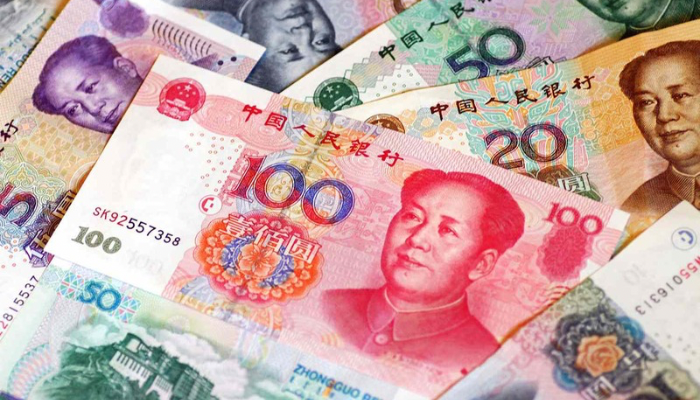
A growing shift in global finance toward the internationalisation of China’s Renminbi (RMB) is set to reshape how Nigerian companies manage trade, funding, and currency risks, according to a new report by Standard Chartered.
The report, titled Renminbi in Motion for Corporates, highlights a widening gap between how companies earn and spend in RMB and how they finance their operations, an imbalance that carries significant implications for African economies, including Nigeria, where commercial ties with China have expanded rapidly.
China, which accounts for over 15 percent of global trade and remains the largest trading partner for more than 120 countries, has become a critical partner for Nigeria across infrastructure, energy, telecommunications, and manufacturing. Yet, despite this deepening relationship, the RMB still represents just 3.1 percent of global payments and 1.9 percent of global foreign exchange reserves, indicating that its global role is still evolving.
The Standard Chartered survey, which covered nearly 300 corporates across 19 industries, shows that companies already generate 23 percent of their revenues and 25 percent of their costs in RMB-linked transactions. However, only 14 percent of corporate debt is denominated in RMB, underscoring a persistent mismatch between operational exposure and financing structures.
For Nigerian businesses, particularly in import-dependent sectors such as manufacturing, construction, oil and gas services, and power infrastructure, this mismatch is increasingly evident. Many firms already transact with Chinese suppliers either directly in RMB or through dollar conversion, but their financing and treasury management frameworks remain largely dollar-based.
According to Karen Ng, head of China opening and RMB Internationalisation at Standard Chartered, the shift is becoming more structural and driven by real business needs.
“Many corporates already have meaningful RMB exposure through trade, procurement, and supply chains. Operational needs, such as trade settlement and balance sheet alignment, are increasingly driving adoption as market infrastructure deepens and liquidity expands, according to Ng.
The report suggests that aligning financing structures with RMB-denominated trade flows could help companies reduce transaction costs, limit exchange-rate volatility, and improve efficiency across cross-border supply chains.
A key driver of this transition is the rapid expansion of financial infrastructure supporting RMB transactions. China’s cross-border interbank payment system (CIPS), which serves as a global clearing network for RMB payments, now connects more than 1,500 financial institutions across 124 countries. Transaction volumes on the platform are growing at approximately 43 percent annually, reflecting increased adoption in global commerce.
Standard Chartered noted that companies are moving beyond simple trade settlement to incorporate RMB funding and liquidity management, particularly in Greater China and North Asia. The integration of supply chains with Chinese manufacturing networks largely drives adoption in Southeast Asia.
However, in Africa and the Middle East, RMB usage remains more limited, concentrated mainly in energy, commodities, and infrastructure corridors linked to Chinese investment and project financing.
“For Nigeria, this presents both a challenge and an opportunity. As trade volumes with China continue to rise, the ability of corporates and financial institutions to adapt their treasury, financing, and risk management frameworks to accommodate RMB transactions will become increasingly important,” the report disclosed.

Join BusinessDay whatsapp Channel, to stay up to date
Open In Whatsapp