BusinessDay | Women. Wealth. Power. Column

For some of us, International Women’s Day was never symbolic. It has always been structural.

Every March, the world pauses. Panels are convened. Pink logos appear. Tributes are posted. And then, on March 9th, the world moves on. Back to boardrooms that look the same. Back to pay gaps that persist. Back to leadership pipelines that quietly thin out the higher you climb.

I understand the impulse to celebrate. Women deserve celebration, loudly, joyfully, and often. But somewhere between the flowers and the hashtags, we risk losing the thread of what this day was always meant to provoke: not a moment of appreciation, but a sustained commitment to change. International Women’s Day is becoming, for too many organisations, what Valentine’s Day has become for love: a commercially convenient substitute for the daily, unglamorous work of actually showing up.

I say this not to diminish those who mean well. I say it because I have spent sixteen years in the business of meaning well and doing the work. The distance between those two things is where the future of women is either built or abandoned.

This is my give-to-gain story.

Sixteen years of building

In 2010 in Johannesburg, I launched what would become the Inspired Women of Worth Network, iWOW. Born from a conviction that women needed more than inspiration. They needed community, frameworks, and the practical tools to live and lead at their fullest. Not women of achievement or status. Women of worth, in every form, at every level, in every room.

By 2011, that conviction had become a stage: the iWOW inaugural Global Possibilities Summit. Inspiration. Leadership. Entrepreneurship. A room full of women hearing what they perhaps hadn’t heard loudly enough: You are a treasure trove of unlimited possibilities.

In 2016, I wrote in this publication about women climbing the real estate ladder and building wealth on the way up. Financial independence is not a luxury. It is a strategy. It is power. The World Economic Forum had predicted it would take until 2133 to achieve global gender parity. I have never been able to sit comfortably with that number.

The building did not stop in those years. It has never stopped. Every year has added a layer: a curriculum, a network, a programme, a room designed specifically for the women who needed it most.

Then, in 2020, the milestone I am perhaps most proud of. The Power Woman Leadership Programme: the first female leadership development curriculum designed specifically for African women in business and leadership. Not borrowed from Western frameworks. Built from the ground up, for us, by us. Because inspiration without a framework fades. A curriculum changes how women see themselves, how they lead, and how they build others.

This is the pattern I have followed for sixteen years. And this week, it reached a profound new chapter.

When institutions choose to build

On March 9th, the day after International Women’s Day, I was privileged to design the strategic architecture for, support the launch of, and speak at the inauguration of a women’s network within one of Nigeria’s most significant national institutions: NNPC Limited.

The woman who made it happen from the inside deserves to be named. Sophia Mbakwe, EVP Business Services, was one of the earliest members of iWOW. In 2011, before the Global Possibilities Summit had fully found its shape, she came to me with a question I have never forgotten. Not what can I get from this? Not, how does this benefit me? She asked, ‘What can I do to help?’ I gave her a role. She delivered far beyond it.

Fifteen years later, I stood in that hall at NNPC and watched her, under the full patronage of her GCEO and alongside her senior colleagues, convene one thousand women into the Women in NNPC Network. The significance of that moment was not lost on me. The woman who once asked how she could help had become the woman who built the infrastructure for others to rise. That is not a coincidence. That is the compounding return on a given-to-gain investment made well over a decade ago.

That is what it looks like when a woman is built to win.

The Women in NNPC network (WIN) was launched under the patronage of the GCEO, Engineer Bayo Ojulari. And what he said that morning is worth putting on record, not as a ceremonial gesture, but as a philosophy forged over 37 years of leadership across some of the world’s most challenging environments.

He said, ‘Behind every successful woman, there is also a man.’ The common wisdom runs only in one direction: behind every successful man is a woman, but the reverse is equally true and rarely acknowledged. That men who understand this do not champion women out of charity. They do it because they have seen, lived, and led the evidence. In the Middle East, he told us, he once led an all-male leadership team and discovered what every leader eventually discovers in that situation: you cannot change a culture you cannot see clearly. Without women at the table, the subconscious bias has no mirror. Change becomes impossible.

He spoke of being beaten, castigated, demoted, and thrown out of a country for promoting women into roles the system was not ready to accept. Of being accused by men and women alike for advancing a female technical leader in Nigeria. He spoke of his mother, his daughters, his sister, and his wife. And he asked, simply, knowing what women are, why would any man not fight for them to rise?

But he also issued a challenge that the room needed to hear: women must support and stand up for the men who stand up for them. Acknowledge them. Amplify them. Because the men who champion women often do so at personal cost, and silence from the women they championed makes that cost feel invisible.

When an institution of NNPC’s scale and national significance chooses to build infrastructure for its women, not just celebrate them but build for them, it is a signal. When a GCEO brings his personal history, his personal cost, and his personal conviction to that launch, it is more than allyship. It is architecture.

What the rest of you can do

To the builders reading this, the women and men designing curricula, launching networks, creating funds, mentoring quietly, opening doors when no one is watching: do not despair. The work is slow. The recognition is uneven. Build anyway. The infrastructure you lay today is the floor the next generation will stand on.

And to the organisations, the ones who mean well, and I believe most of you do: what are you building? Not what you are celebrating. What are you actually constructing, funding, and committing to beyond this month? Because the women you celebrated this week will return on Monday to the same systems, the same pipelines, and the same unwritten rules that existed before the flowers arrived. No amount of applause changes a system. Only structure does.

Design the leadership curriculum. Launch the network with intention. Fund the programme. Promote the woman who has been ready for three years. Do the work that outlasts the occasion.

The long game

This week, while the world is still processing International Women’s Day, I have convened the Power Woman Africa Mastermind, March 12 and 13, in Lagos. Twenty-five women from across Africa and the diaspora. Not at a conference. Not a celebration. In a strategy room, curated, focused, and built for senior women ready to do the actual work of designing their next level.

No crowd. No performance. Just women with serious intent sitting inside a serious framework, building their own infrastructure for leadership and wealth, on their own terms. Because there is a moment in every woman’s professional life when inspiration is no longer what she needs. What she needs is architecture.

I said it during my masterclass ‘Built To WIN’ at the NNPC Women’s Network launch, and I will say it here: stop waiting to be discovered. Architecture is not built by waiting. You are talented. You are ready. Stop waiting for permission to build.

I have given time when I didn’t have enough of it. Vision when the path wasn’t clear. Platforms when women needed to be seen. Frameworks when inspiration alone wasn’t sufficient. And belief, relentless, unapologetic belief, in what women become when they are properly resourced, boldly challenged, and genuinely supported.

The gains are not mine alone. They live in every woman who stepped into her power. Every negotiation won. Every boardroom entered with confidence. Every institution that chose, this year, to build rather than just celebrate.

Your success is not just personal. It is political. It is economical. It is generational.

Here’s to Power Women all over the world: may we know them, may we be them, may we raise them. And as we do, let us acknowledge the men who stood up when it cost them something. They are part of this architecture too.

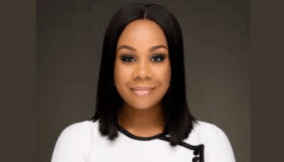
Udo Okonjo is CEO of Fine & Country West Africa and founder of Radiant Collective Capital. She has been building infrastructure for women in leadership and wealth since 2010.

Udo Maryanne Okonjo is a board director, wealth strategist, and investor. As Executive Chair of Fine &Country West Africa and Founder of Radiant Collective Capital, she champions women-led wealth, Impact and Legacy across Africa and Beyond.

Join BusinessDay whatsapp Channel, to stay up to date

Open In Whatsapp