There is no perfect nation and no leader is infallible. Leadership entails being in charge. Being in charge entails, amongst other responsibilities, taking decisions no matter how unpleasant. If a nation’s economy is about to break, leadership must fix it.
When a leader fixes what is broken, he or she will win the gratitude of the people who have been suffering under the bad situation, while those who made the situation a bad one may not appreciate what the leader did to fix what was bad. A good leader must not allow his people to suffer or make majority pay for inadequacies, egocentricity, and maladroitness of those few in the society who created economic problems.
I read a piece where PMB was quoted to have said, “I have been a democrat since the year 2002. I do not think I tolerate corruption. I do not think I have picked anybody that I know will embarrass my government.” Going through PMB’s expression, I did not judge him.
I did a bit of mental reappraisal of democracy in Nigeria. This is because in less than two decades of continuous democratic governance in Nigeria, a leader has emerged at the highest level of government who confidently says he is a democrat. This is excellent! By implication, PMB believes in a progressive social agenda, workers’ rights and diplomacy over military action, and separation between religion and the state. So help him God!
What about other politicians in government? Are they democrats or “demograbs”? I ask this question because we cannot have only one democrat in government. There may be other democrats unknown to me. How many democrats do we have in Nigeria that democracy has brought our economy to its knees? Political pundits may argue that Nigeria has many democrats. No qualms. Most of our politicians, however, only wear toga of democrats. Unfortunately, they are not practicing democrats.
In my assessment of the current economic problems, there are four issues that are likely to create a burden for PMB. They are devaluation of naira, privatization of refineries, corruption, and removal of fuel subsidy. For those who have been observing events within the politico-economic terrain of the nation, these four issues are intrinsically interwoven and mutually reinforcing.
Just like the first law of thermodynamics which states that “energy can neither be created nor destroyed”, corruption is the energy that feeds fuel subsidy, devaluation of naira, and privatization of refineries in this country. You cannot destroy corruption. Corruption is a way of life in most democracies and it is the foundation on which fuel subsidy, privatization of refineries and devaluation of naira stand in Nigeria.
With respect to fuel subsidy, some critics including the Nigerian Labour Congress (NLC) have argued strongly that deregulation and fuel subsidy removal will unleash hardship on Nigerians. But others have equally reasoned that Nigeria cannot continue to depend on imported refined products.
I do not subscribe to fuel subsidy. PMB has borne the burden by taking a decision. The decision reflected in his budget speech is that fuel subsidy will be removed in the first quarter of the year 2016. I urge PMB to be committed to removing fuel subsidy. What is the effect on the citizenry? It is for PBM and his team of economic advisers to figure out. This is one of the burdens of leadership. In a country of democrats, monopoly of goods and services by a cartel is undesirable, so the Federal Government must regulate the oil industry.
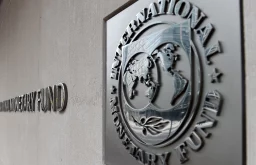
On devaluation of the naira, PMB is not yielding. He has said severally that he needs to be convinced. I do believe that the visit of Christine Lagarde, managing director of the International Monetary Fund (IMF), has not convinced PMB to rescind his decision on naira devaluation.
A few economists have argued though that there is need for a devaluation of the naira, especially after the latest drop in oil prices in Q4 2015. It is yet to be seen what the nation will benefit after devaluation of its weak currency. The craze for foreign exchange is the problem. Will the nation have more foreign exchange after devaluation of its currency? Negative! Why?
Nigeria is not like China whose products and services are all over the globe. Rather than devalue the naira, perhaps the solution will be for Nigeria to export other commodities besides crude oil in order to make for the loss in foreign exchange reserves. Devaluation of the naira will increase inflation rate far above the level it is on now (9.8 percent). This is the time for diversification of the economy. It must be done with the best of intentions. Governments at federal and state levels should not only think of increasing VAT but must give tax rebates to firms operating in critical sectors of the economy. This is the way it is done in other climes. Nigeria’s case cannot be different.
Take the agricultural sector. Government should protect farmers producing seedlings through appropriate regulations. This will prevent those foreign companies which are producing genetically modified seedlings from entering the nation’s agricultural sector. There should be tax incentives for farmers for the next 10 years and zero import duty on tractors to be used for mechanized farming.
Devaluation of the naira is a wrong economic decision. Nigeria does not have to devalue her weak currency when she is not predominantly an exporting nation. Devaluation of the naira may not be a sustainable option because Nigeria wants to borrow from international lending institutions to make up for deficit in the 2016 budget of about N2.2 trillion.
I hope leadership of the nation will not devalue the currency believing that the naira value of the borrowed funds will increase. Inflation is bound to occur with devaluation of a weak naira. The prices of goods and services in the local market will skyrocket. State governments cannot increase salaries of workers because N18,000 is too much for them to pay as minimum wage.
It has to be realized that the purchasing power of citizens will be weakened by devaluation of the naira. With a devalued naira, the celebrated 2016 budget will not deliver its objectives.
(To be continued)
MA Johnson

Join BusinessDay whatsapp Channel, to stay up to date
Open In Whatsapp