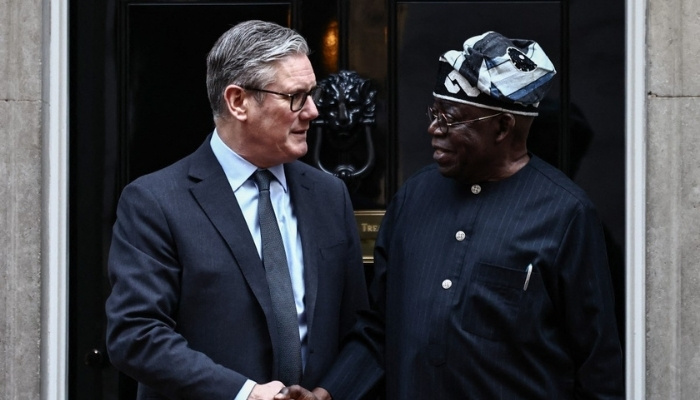
President Bola Tinubu signed a £746 million (N1.4 billion) financing agreement with the United Kingdom government during his state visit last week for the redevelopment of the Lagos Port Complex (Apapa Quays) and the TinCan Island Port Complex, two of Nigeria’s primary yet outdated trading seaports.
The deal moves the needle on a project that Nigeria’s maritime sector has awaited for decades, as repeated plans to rehabilitate the ageing facilities stalled despite mounting pressure from congestion, declining efficiency and the diversion of cargo to better-equipped ports in the African region.
The financing structure
According to the UK government, the £746 million loan will be delivered through the UK Export Finance’s (UKEF) Buyer Credit Facility, coordinated and arranged by Citibank. The Nigerian Ports Authority (NPA) and the Federal Ministry of Finance are involved in the project.
“As the Coordinator of the transaction, we are pleased to have worked in close partnership with the team at UKEF to deliver one of the largest Export Credit Agency supported Buyer Credit Facilities ever seen in West Africa,” Richard Hodder, global head of export and agency financing at Citi said.
The deal requires that Nigeria spend a portion of the loan on UK goods and services. At least £236 million of the total sum has been directed to British suppliers.
A major win for British Steel
Peter Kyle, the UK’s Business and Trade Secretary, called the deal “a major win for British Steel.”
The company secured a £70 million contract to supply 120,000 tonnes of steel billets to construction companies Hitech Nigeria and ITB Nigeria, run by Gilbert Chagoury, a Lebanese-Nigerian businessman with close ties to Tinubu, for the ports redevelopment, representing British Steel’s largest export order backed by UKEF.
“This is a record-breaking contract for British Steel and a major boost to our 4,000 employees and many more people in our supply chains,” said Allan Bell, ceo of British Steel.
The announcement comes alongside the Government’s newly announced Steel Strategy, which seeks to revitalise the steel sector that has seen decades of decline due to overcapacity and high operating costs.
“Through our new Strategy we’re backing British steelmakers for long-term success at home and abroad, and this contract will reinforce British Steel’s world-class expertise while supporting jobs and growth in Scunthorpe,” Kyle said. Scunthorpe is an industrial community in England dominated by steelmaking operations based on imported ore.
Expected outcomes for Nigeria
According to Adegboyega Oyetola, minister of marine and blue economy, successful execution will improve turnaround times for vessels and reduce cargo dwell times as automated processes replace paperwork-heavy procedures and expanded capacity removes longstanding bottlenecks.
Read also: Nigeria’s ports still battle colonial problems @65
The Sea Empowerment and Research Centre, a maritime think tank, reported an average vessel turnaround of five to seven days at Nigerian ports compared to two to three days in Lome and three to four days in Tema. Cargo dwell time remained between 10 and 18 days, far above Lome and Tema’s seven to 10 days and global best practices of three to five days.
“The modernised infrastructure will enable faster clearance of imports and exports, reduce demurrage and logistics costs for businesses, significantly improve the predictability and transparency of cargo movement and generate,” he said.
The upgrades are also expected to generate increased revenue and “significant economic benefits to the Nigerian economy over the coming years,” representatives at Citi said.
Specific operational timelines for port upgrades and project completion were not detailed in the government announcement. Key financing terms, including the interest rate and repayment timeline, were also not disclosed.
During the visit, the UK and Nigeria also signed a Memorandum of Understanding establishing a framework for potential future collaboration, setting out Nigeria’s priority project pipeline seeking UKEF finance and support, with the UK set to benefit directly through substantial supply chain participation.

Join BusinessDay whatsapp Channel, to stay up to date
Open In Whatsapp