
Second and multiple citizenship has long been associated with visa-free travel. For Nigerian entrepreneurs and globally minded families, however, its role is evolving as their business and personal activities become more international.
Old narrative: second citizenship as a travel tool
For years, second citizenship was seen as a way to move more freely. A stronger passport meant easier entry into more countries, reducing uncertainty for travellers.
Visa processes often required planning weeks ahead and involved delays, and missing a deadline could disrupt plans. In this context, a second passport made travel more predictable.This approach reflected a time when international activity was more limited and mobility was mainly about physical movement rather than operations.
What has changed: a shift in priorities
As Nigerians expand internationally and manage cross-border activities, mobility is no longer limited to travel. Business operations, banking, and family decisions increasingly involve multiple jurisdictions, which makes legal status more relevant.
At the same time, the environment has become more complex. Working across borders now requires opening bank accounts, setting up companies, and interacting with financial systems that apply strict compliance standards. In many cases, these processes depend on how an individual is classified within a legal and regulatory framework.
Expectations have also evolved. Wealthy individuals are planning beyond short-term convenience and focus on long-term decisions such as where their families will live, where their children will study, and how assets are structured across countries.
As a result, second citizenship is no longer viewed only as a travel benefit. It is becoming part of a broader approach to managing business, accessing financial systems, and planning for the future.
Beyond travel: four ways second citizenship creates value
Second citizenship is no longer just about travel. It supports how people operate across countries and becomes a practical tool rather than a simple convenience.
Cross-border business operations
Operating across borders requires more than occasional travel. Entrepreneurs need to stay involved in international activities, manage teams in different countries, and oversee ongoing projects.
Holding second citizenship helps improve coordination and decision-making, especially when business spans multiple jurisdictions. Instead of reacting from a distance, entrepreneurs can operate as part of the markets they work in.
Access to financial and corporate infrastructure
Access to financial systems and business structures often depends on legal status. With second citizenship, it can be easier to open bank accounts, use financial services, and work with institutions that apply strict compliance rules.
Second citizenship can also simplify setting up companies in different jurisdictions by providing a clearer legal profile, which helps when dealing with regulators, partners, and financial institutions.
Family planning and education pathways
For families, the focus is on flexibility and long-term planning. Education options for children expand, and access to schools and universities can become simpler. Living arrangements can also change over time. Families choose where to live based on their needs, rather than committing to a single country.
Risk diversification and personal security
Second citizenship adds an additional layer of security. It provides a backup option if conditions change in one location and allows families to diversify geographically. This reduces dependence on a single country and increases resilience in uncertain situations, which gives individuals more control over their decisions.
How Nigerians are approaching second citizenship today
Relocation is no longer the default. Many Nigerians keep their main residence and business in Nigeria while building a presence abroad to access international markets.
People often organise their lives across countries: business remains in Nigeria, finances are handled elsewhere, and children study abroad.
The decisions are connected. Education can support residency, while business expansion shapes financial structures. Second citizenship becomes part of a broader strategy, not a standalone goal.
The focus is on optionality, as well as maintaining the flexibility to operate across countries and adapt as conditions or priorities change.
Pathways to second citizenship: what options exist
Nigerians can obtain additional citizenship through several pathways. These include descent, naturalisation, and investment. Each route has its own requirements, limitations, and timelines.
Citizenship by descent is available if a person has parents, grandparents, or sometimes earlier ancestors from another country. With documents such as birth or marriage certificates, the process is usually relatively simple and often does not involve relocating to the country.
Citizenship by naturalisation requires living in a country for several years, usually 5—10, holding a residence permit, and showing integration, such as language skills and a clean record. It is usually the longest path available.
Citizenship by investment programmes in countries such as Caribbean states, Vanuatu, or Türkiye allow Nigerians to obtain passports by investments. The most common options include real estate, government contributions, or business ventures.
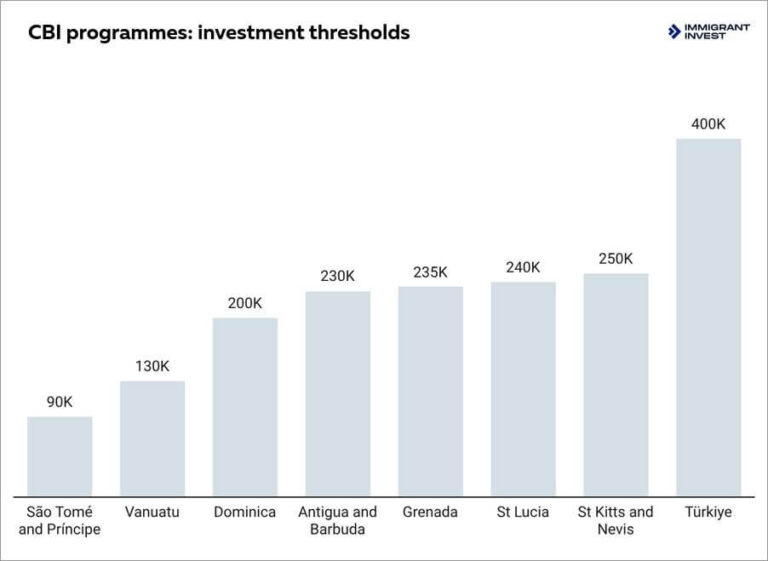
Investment programmes are faster and more predictable than other routes and usually take 2—8 months. However, they require significant financial commitment and thorough Due Diligence, with investment thresholds starting at about $90,000 and reaching $400,000—500,000 depending on the country.
In many cases, individuals cannot apply for citizenship by investment directly. Governments of countries operating them require investors to file applications through licensed agents such as Immigrant Invest.
Conclusion: a mindset shift
Second citizenship is no longer just about travel. It now plays a practical role in how individuals manage business, plan for their families, and make long-term decisions.
Nigerian high-net-worth individuals are increasingly structuring their lives across multiple countries rather than relying on a single location. In this context, global mobility becomes a deliberate advantage, one that supports flexibility, access, and resilience in a changing economic environment.

Join BusinessDay whatsapp Channel, to stay up to date
Open In Whatsapp