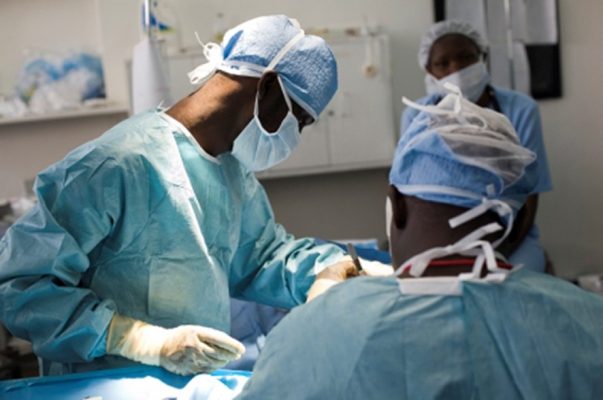
The nation’s health sector is in urgent need. The government must not pretend that all is well there. If those who propose and approve annual budgets for the health sector truly believed that quality healthcare could be accessed with such budgets, they would not have been embarking on medical tourism to foreign lands. We must eat what we plant.
An annoying episode is playing out in Abia where former governors of the state and the Deputy Speaker of the House of Representatives are engaging in a laughable theatrical. I think it is a distraction because Ndi Abia has moved on. Even Lucifer is aware of this Canon truth!
Read also: FG proposes N42bn to provide healthcare for 10 million vulnerable Nigerians in 2026
A case for a vibrant health sector
Like everything Nigerian, healthcare has since been politicised. While the ‘haves’ go to better hospitals to seek treatment, the ‘have-nots’ patronise the ill-equipped centres all over the place.
For many years, a large number of citizens have continued to die needless and unnecessary deaths in many health facilities across the country, and the government has also continued to feign ignorance of the mass death.
The government only gets animated when the negligence of hospitals and personnel results in the death of a prominent citizen or their relations.
It would be safe to say that those in charge of the country, the political leaders, are aware of the precarious nature of the nation’s health institutions, even the privately-owned ones, that they are afraid to patronise them, but delight in jetting offshore for medical attention.
But this should not be the case in a country where laws are effective. It is because people are allowed to behave anyhow and see themselves as above the law that incompetence and negligence thrive in Nigeria.
Apart from the excuse of unequipped government-owned health facilities where people die on a daily basis, what has been the response of the government to the legions of cases of irreversible consequences of negligence in many hospitals across the country beyond verbal condemnation?
When I read about the efforts made by Chimamanda Adiche and family to save the life of their son, and the plans to move him to the United States (US), the message I got was that they were also skeptical about the quality of healthcare here.
According to Adiche, “He (Nkanu) was to travel to the US the next day, January 7th, accompanied by Travelling Doctors. A team at Johns Hopkins was waiting to receive him in Baltimore. The Hopkins team had asked for a lumbar puncture test and an MRI…”
It was in the process of what ordinarily should be a simple procedure that the boy died.
“We brought in a child who was unwell but stable and scheduled to travel the next day. We came to conduct basic procedures. And suddenly, our beautiful little boy was gone forever. It is like living your worst nightmare. I will never survive the loss of my child,” she lamented.
It is high time the government got serious with healthcare. The question is, how can they be when annual budgets for health have continued to fall far below the 15percent Abuja Declaration target?
Although the federal government’s budgets for the health sector have continued to grow in figure, they have not been able to scratch the surface of the yawning needs in the sector.
Read also: US, Nigeria sign $5.1bn MoU to boost healthcare, support faith-based facilities
Figures from 2015 till date have shown huge budgets but little impact.
In 2015, N259.7 billion was budgeted, representing about 6.15 percent of the total federal budget. In 2016, N221.7 billion was allotted to the health sector, representing about 4.13 percent of the total budget.
In 2017, the FG proposed N304 billion, representing about 4percent of the total N7.2 trillion budget. Abuja’s Health Budget in 2018 was N340.46 billion, making up about 4 percent of the total federal budget. It was N417billion in 2019, but was later increased to N424billion after the National Assembly review.
In 2020, N441 billion was the budget, which was about 4.14 per cent of the entire annual budget of N9.97 trillion. Initially, it was N10.33 trillion but was revised due to the coronavirus (COVID-19) pandemic.
The FG allocated N549.83 billion to the sector in 2021.
In 2022, the health sector received N711.28 billion, which was significantly less than the recommended 15 percent of the total budget, falling short of global benchmarks despite some increases.
In 2023, about N1.17 trillion was budgeted, representing 4.9 percent of the total N21.83 trillion budget, a modest increase but still below the 15percent target.
It was N1.23 to N1.38 trillion in 2024, representing about 4.5-5 percent of the total budget. In 2025, N2.48 trillion, which was approximately 5.18 percent of the year’s entire budget.
In the current year, 2026: N2.48 trillion out of N58.18 trillion was allocated, representing 4.2 percent of the total budget size.
From the foregoing, it could be deduced that, though Nigeria’s health sector has been receiving more budget increments on a yearly basis, the sector seems to be faring worse than it did years before.
There are many factors that may be responsible for the lack of impact. The Federal Government must do everything possible to ensure that the nation’s morass state of healthcare does not continue. As it is said, a critical situation demands decisive action.
Read also: Nigeria’s medical tourism spending crashes 96% as local healthcare capacity deepens
The gathering of foes around Governor Otti
Barren trees with no fruit on them hardly receive a bombardment of stones and sticks from anybody. It is a tree that has something to offer that people’s eyes feast on. Such trees are constantly disturbed as long as ripened fruits are found on them.
By the same token, performing governors are usually the envy of their predecessors, who feel uncomfortable that the sterling performance of such successors could expose their underbelly. This is perhaps the situation in Abia State, right now.
There is nobody who has visited Abia in the last two years who would deny the intentional and re-engineering work going on under the current administration in the state. It is no secret.
Before Governor Alex Otti mounted the saddle, people talked and wrote about Abia in a derogatory manner, but the state is taking shape. Aba, the commercial nerve centre of the state, which was deserted at a point because it was taken over by flood and filth, has bounced back to life. Yours sincerely, I could not believe my eyes when I visited Aba last May.
Before Otti’s arrival, the Umunneochi axis along the Enugu-Port Harcourt Motorway was a notorious flashpoint for rampant kidnapping and other criminal activities with numerous reported incidents. But Governor Otti took it in his stride to end the nightmare. One particular feat was the reorganisation of the Lokpanta Cattle Market after Okigwe, inbound Umuahia, after a government investigative panel had discovered dozens of decaying human bodies, apparently those that were murdered because they could not pay ransom after they were kidnapped.
Politicians must not just be playing politics for the sake of it. They must do so in the best interest of the people. If an elected governor is delivering the dividends of democracy to the admiration of the masses of the state, why must a few self-driven political practitioners be revving up baseless allegations just because of party differences?
For crying out loud, nobody eats party platforms; what the people want to enjoy is good governance.
Many indigenes of the state today, even non-Abians, may believe any other story being dished out by Otti’s opponents, but not that his administration is not performing. It is easily and unarguably one of the well-run states in the present dispensation.
Read also: Abia emerges top performing state in primary healthcare in South-East
It is only the long-suffering people of Abia that can tell the truth if their life was better in the days of Senator Orji Uzor Kalu, Theodore Orji, and Okezie Ikpeazu than it is now under Otti. Why harangue a performing governor just because he is in a different party?
What well-meaning Nigerians expected the former governors (under whose watch Abia became an estate that investors loathed to bet their kobo on) to do was to rally round Otti because he has redeemed their battered image, because what they lacked the mental capacity to pull off, Otti is doing that effortlessly.
Sadly also, the dangerous rhetoric by the Deputy Speaker, House of Representatives, Benjamin Kanu is both unfortunate and unbecoming of a person of his standing. He should be happy that he has a state he can visit any time he likes without stress, because a governor like Otti is working for the people.
The former governors of Abia and the deputy speaker of the House of Reps must know that power is ephemeral; a few years from now, all that they are today will become history. That is the way of all mortals.
Their combative disposition these days reminds one of the days of Sam Egwu as governor of Ebonyi State and Senator Anyim Pius Anyim as president of the Senate. Both men, though members of the same party, made the state uncomfortable for poor indigenes of the state with their supremacy war.
Each time Anyim visited Abakaliki from Abuja, there were always bloody clashes among their supporters. The question is, where are these men (Egwu and Anyim) today? They have become yesterday’s men!
People must not continue to play God. The real and genuine people of Abia, those who bore the brunt of the dark days, are happy and excited about what is happening in their state today.
We must learn “to live and let live.”

Join BusinessDay whatsapp Channel, to stay up to date
Open In Whatsapp