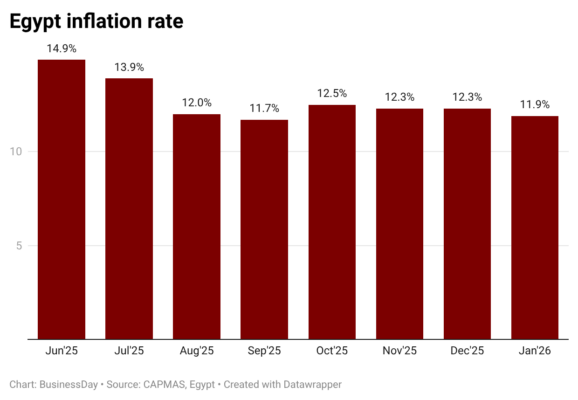
Egypt’s inflation slowed to its lowest level since September, strengthening expectations of another interest rate cut later this week as price pressures continue to ease.
Data released on Tuesday by the state statistics agency showed annual consumer-price growth in urban areas moderated to 11.9 percent in January, down from 12.3 percent in December. On a month-on-month basis, inflation rose 1.2 percent, compared with 0.2 percent in the previous month.
Food and beverage prices— the largest component of the consumer basket— increased 1.9 percent year-on-year in January, while monthly food inflation stood at 2.3 percent.
Annual core inflation, which excludes volatile and regulated items, also slowed slightly to 11.2 percent from 11.8 percent in December.
Africa’s second largest economy began one of its most significant monetary easing cycles in more than two years in 2025, cutting its key policy rate by a cumulative 725 basis points to 20 percent between February and December. The easing followed an extended tightening phase aimed at containing inflation triggered by currency devaluations and fiscal pressures.
The central bank of Egypt’s first monetary policy meeting of the year is scheduled for Thursday, with some analysts expecting a 100-basis-point cut in overnight interest rates as inflation continues to decline.
The latest readings also come ahead of the Muslim holy month of Ramadan, which begins later this month and is typically associated with a surge in household spending as families prepare meals to break the daily fast.
Inflation dynamics remain closely watched in the Middle East’s most populous country, where price growth surged to a record 38 percent in September 2023 before authorities secured a $57 billion international support package.
Although headline inflation has since fallen sharply, a sustained return to single-digit levels has been constrained by factors including subsidy-reform measures backed by the International Monetary Fund.
Still, easing inflation allowed the central bank to lower borrowing costs from record highs through five rate cuts last year, including one in December.
Despite the reductions, Egypt continues to offer among the highest inflation-adjusted interest rates in emerging markets—supporting foreign investor demand for local debt while leaving room for further monetary easing.

Join BusinessDay whatsapp Channel, to stay up to date
Open In Whatsapp