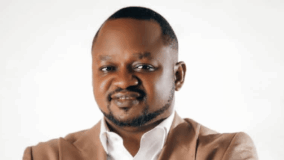
At the core of the Afreximbank-backed African Medical Centre of Excellence (AMCE) lies a resolute vision to retain patients within the continent by providing advanced medical care that rivals the highest international standards. Leading this charge is Brian Deaver, Chief Executive Officer of the newly opened world class medical facility in Abuja. Deaver brings nearly 30 years of executive leadership in the healthcare sector. He began his career as Chief Financial Officer at Idaho Emergency Physicians and has held senior roles across U.S. hospital systems and consulting firms, including Executive Vice President at HMC HealthWorks and Alea Health LLC, Senior Vice President at Surgical Care Affiliates, and Division President at Triad Hospitals. He also served as CEO of Samaritan Surgicenters and President of Bard Castle LLC. Deaver holds an MBA in Health Policy and a Bachelor’s in Accounting. “Our goal isn’t just to slow medical tourism — we are here to reverse it through unrivaled patient experience,” he says in this insightful, exclusive interview with Onyinye Nwachukwu, Abuja Bureau chief and Godsgift Onyedinefu, health correspondent at BusinessDay…Excerpts
Can you start by providing a brief background on the Abuja Medical Centre of Excellence—its inception, key partners, and core mission? Building on that, what specific gaps in the regional healthcare ecosystem is the centre designed to fill, and how does it differentiate itself from existing institutions in Nigeria and West Africa?
The inception of the African Medical Centre of Excellence started over a decade ago. While AFREXIM Bank has had a kind of healthcare strategy for quite a while, the African Medical Centre of Excellence came about as a result of the president’s personal experience with a life-threatening illness, 12 or 13 years ago, which ended up in treatment at King’s College Hospital in London. He was treated successfully there by some very skilled physicians and specialists, one of whom is on our board and who has been very instrumental in this particular project and making the African Medical Centre of Excellence come alive, and that’s Professor Ghulam Mufti. When the president had such a positive result from that experience at King’s College Hospital of London, he went to the board of the Afreximbank and said, We need these capabilities in Africa, and not just in one place but in several. So, feasibility studies and gap analyses were done, and ultimately the decision was made to start in West Africa.
The project was put out to bid, and Nigeria was successful in winning the hosting of the very first African Medical Centre of Excellence. In the course of that, King’s College Hospital of London and Afreximbank signed a memorandum of understanding to partner together. And to this day, as you can see on the building, King’s College Hospital of London is our clinical partner, as well as the Christie Foundation in Manchester. That is the beginning of the African Medical Centre of Excellence. Over the following years, there were agreements worked out with the Federal Republic of Nigeria, plans were made, contractors were selected, and the project broke ground in November 2021, and ultimately, just completed construction a couple weeks ago. That is the inception of the African Medical Centre of Excellence. As we look now at what we intend to accomplish here, the gaps analysis showed that while there are a lot of really good hospitals in Nigeria, very good health care, even greater medical professionals, specialists, and nurses, there are a couple of needs. One is in the area of cardiovascular needs, oncology, and haematology.
We felt like those were the best areas to focus on; there was no need to duplicate the great work that’s being done in trauma and some other general acute services that are readily available. Even here in Abuja you’ve got public and private hospitals: the National Hospital, the Federal Hospital, the teaching hospital in Gwagwalada, and then you’ve got some private hospitals as well that are doing a great job. There was no point in competing there. What we wanted to do was enhance what’s being provided currently in those three speciality areas.
Now, getting back to the professionals, no matter where you go in the world, in the top institutions you’ll find Nigerian doctors and nurses, very skilled. And they usually begin their training here in Nigeria, and then they add to it either in the U.K. or in the US, and we’ve had a problem with them leaving Nigeria. Now, knowing that the cost of living is dramatically higher in the UK and in the US, I have come to understand that their departures are at least as much about their desire to enhance their medical and clinical skills as they are to make additional income. So when you look at those opportunities – technology, types of procedures, other skilled physicians that they can work with – what you see is a departure with the intent to enhance their capabilities. And now, as we recruit them globally, we’re seeing this, and they are ready to come home. One of the key things that the doctors and nurses tell me that they’re looking for is an assurance of proper governance in the hospitals and proper funding, and that’s one of the unique things that we have here. As a private hospital, we’ve been able to access capital markets that may be a little more difficult for some of the public hospitals.
Afreximbank has largely funded the entire development of this hospital, being the first of at least five that we’ll build throughout Africa. And since the hospital began construction, we have added a couple of investors: NNPC and Bank of Industry. And so we’ve got three magnificent financial partners to ensure that we have the capital required to not only open this beautiful place with all of the technology and equipment and skilled physicians but that we will be able to continue to maintain it indefinitely. I also want to emphasise that from what we’ve seen so far, our diaspora are anxious to come back. For any given position that we recruited, we would have over a thousand applicants from all over the world wanting to come here. So we’ve been very fortunate in being able to recruit and select some of the best of the best to bring them here.
So those are two things. One, filling gaps in care; the second, bringing our extremely skilled Nigerian doctors and nurses back home. The third thing is to not only slow outbound medical tourism, which exceeds a billion dollars a year just here in Nigeria, but we want to reverse it. We believe that the research that we intend to do and the publications that will come out of this hospital will attract patients, not just physicians and surgeons, but patients from the very countries that are currently providing some of the outbound medical tourism. So we will expect to see patients coming in from the US, the UK, Europe, China, and India for their care.
Nigeria loses over a billion dollars annually to outbound medical tourism, like you mentioned. What’s your strategy for positioning the Centre as a viable, high-quality alternative to established international healthcare destinations like India, the UAE, or the UK?
To successfully not only slow outbound medical tourism but also reverse it and attract patients from more advanced or developed countries with more developed health care systems requires a multi-pronged approach. The first is accreditation. Within about 18 months we will be seeking a joint commission in national accreditation. That is an accrediting organisation that comes in, looks at your health care facilities, its policies, procedures, clinical pathways, equipment, staff, training, all of that, and then can give you a seal of approval or an accreditation that says, ‘this is one of the best health care facilities’, not just in the area, but in the world. So, the Joint Commission International accreditation is one of the things that we will use to draw attention to the African Medical Centre of Excellence, Abuja. The other thing will be the research and publications that will be ongoing here. While we currently have three buildings – the main hospital building, an ancillary building that houses our power, water treatment, and some other things, and then we have a cyclotron building which houses the cyclotron bunker that produces nuclear material for some of the work that we’ll do in this hospital.
But we also have three other buildings currently under development. One is for housing our staff; there will be over a hundred units available. There’ll be a hotel for patient families and then a six-storey medical office building. In addition to that, there will be another building dedicated to clinical trials. Now that’s important as we partner with the likes of Novartis and some of the largest pharmaceutical companies in the world. We have to look at the drugs and pharmaceuticals available to the African population. Most of what is being taken and prescribed today in terms of medication has been developed on the North American and European genome. And we know that as you look throughout the world, each little pocket in the world has its own fingerprint in the genome. And as a result, we metabolise drugs a little differently. So while they appear to be working pretty well for Africans, they can work better. And so one of the things that we’ll want to do is engage in clinical trials that will allow Novartis, Roche and some of the other large pharmaceutical companies to make those fine adjustments to medications to ensure maximum metabolism of these drugs and maximum effect. Those are two key areas – research and accreditation.
Then we announced about 20 months ago with King’s College of London the development of a medical school. So we’ll be doing training of new physicians and specialists as well as a nursing school and allied health. That also will attract patients from abroad. One of the things that is very important to my team and to me is to make sure that our patients have an experience like none other they’ve ever had in a hospital. Over the years, I have shot television commercials that did nothing but advertise the food in a hospital. It’s all about patient experience. We want our patients to feel at home. Not just at home, but in a very special place that they know that our staff truly care for them and want them to be as comfortable as possible given the circumstances as to why they’re here. And as people leave this facility and talk about the incredible care they received, the great outcomes and the wonderful experience that they had, they will have an impact on others wanting to come here. There are some other things that we’ll do in terms of positioning ourselves. We returned from Accra in Ghana recently, where we met with the leadership of the University of Ghana Medical Centre. We’ve met with medical centres all over Nigeria and others in West Africa to form collaborative working partnerships. So when there are diagnostic needs or therapeutic needs that can’t be handled elsewhere, they know they can send them to us. We’ll take care of their patients and send them back, and vice versa.
There will be things that we don’t do. We are not a general acute hospital. We’re focused on three specialities. For instance, we’re not going to take trauma. For the large part, we will not be focused on orthopaedics or urology or some of those other incredibly important specialities. We’ll be returning the favour when we have patients show up with those needs. So establishing collaborative working relationships, not only with external partners and hospitals but also with governments, the ministries of health in West Africa and other patient advocacy groups throughout West Africa, will be levers that we will pull to attract patients here from outside the country and also keep Nigerians here at home.
I’ll add that with the addition of our new investor, NNPC, they have their own HMO. They’re responsible for around 120,000 lives between their own employees and their employees’ families. They also have other oil companies, Shell and others, who subscribe to the HMO that they have. And when they send patients out of the country, it’s extraordinarily expensive. So they see an opportunity to keep those patients home and are excited to send them here. Same with Bank of Industry. So we’ve got a lot of momentum. We’ve been told throughout Nigeria that there is a backlog of diagnostics and therapeutic work that needs to be done. We are rapidly ramping up so that we can see these patients as soon as possible. Within the first day of the facility opening, and without asking, we had over 90 patients registered. While we’ve attempted to be very deliberate and measured in our approach to beginning to see patients, we want to make sure the facility is clean after all the commissioning. But even so, we’ve had embassies sending some of their staff here for consultation, and some of those are already scheduled for treatment.
Are patients already coming in for treatment?
They have, in spite of our attempt to slow it down. Patients have come in for consultation and they have been scheduled for treatment in a couple of weeks.
What about the cost of treatment—are there any plans to leverage affordability as a potential competitive advantage?
Let’s talk about our fee schedules, and we’ll be very transparent with those. As you can see, we are in a beautiful building, well-structured with the latest technology and equipment. In fact, we have equipment that even our clinical partners in London don’t have. We’ve recruited globally for the very best specialists and brought them in. So there are costs. There are a lot of costs associated with this building, not to mention the ones that we all struggle with in terms of power and trying to keep the lights on. We just had 30,000 liters of diesel fuel delivered yesterday. So there are a lot of costs involved. At the same time, we recognise the need for every patient to be able to come here for treatment and for diagnosis, regardless of their ability to pay. You’ll find that our fee schedules for some of the most common things like general consultations, the most common labs, x-rays, are very competitive in the marketplace. Once you get into specialty areas, if something is found, then the cost, as is the case anywhere, will be a little bit higher. But keep in mind that part of our strategy is to be a better alternative than can be found outside the country. Aside from the lower tariffs or lower fees that you’ll find here, patients will also be saving in terms of transportation costs, hotel costs, and that sort of thing. So we are working hard to be very deliberate in our approach to keeping the fees affordable.
Additionally, the board established a foundation last year. That foundation has three main objectives. One is subsidising patient care. Another is funding research, the third is to provide needed capital for various pieces of equipment if we need to expand. I’m very happy to report that before we even opened, we were successful in receiving $75 million in donations for that foundation. That doesn’t include commitments that have been made from some of our partners at Novartis and other places. We anticipate being able to handle and take care of everybody that comes through regardless of their ability to pay.
What types of ailments or medical cases will the centre specialise in?
One of our specialty areas is cancer. We have the latest equipment, and very high technology. We have the only operating 18 MeV, and that speaks to the energy level, of the cyclotron in West Africa. That produces radioisotopes that we use to create radiopharmaceuticals, which are injected into patients. And then we can scan them with our PET CT scanner, and it causes cancer to light up. We can spot it easier and sooner, and with greater precision than has ever been done before. The other specialty areas are cardiovascular, and we are sitting in a cardiac catheterization lab. This particular room is used to deal with blockages that can cause heart attacks. So, in a matter of minutes, we can bring someone in here, and through blood vessels, we can insert stents that open up blocked arteries that would otherwise cause heart attacks. So, we will daily be saving lives in this room, in the specialty area of cardiovascular services. The third key specialty is hematology. Hematology refers to blood disorders or blood cancers, like leukemia, that we’ll be able to treat.
But I think even more importantly, and wider spread, is the problem of sickle cell disease. The sickle cell anaemia gene is carried by 25% of the population in Nigeria. Everywhere you turn, it’s a problem. The crises that these patients face on a regular basis is devastating and costly. We have a stem cell lab, in which we will be able to work with these sickle cell patients. We’ll be able to not only treat their sickle cell symptoms, but cure it permanently. We will perform bone marrow transplants on patients with sickle cell, and ultimately reprogram the patient’s bone marrow to properly produce red blood cells which will cure sickle cell.
One of Africa’s chronic healthcare challenges is the exodus of skilled professionals. How is the Centre approaching medical talent—both in terms of attracting top-tier specialists and creating a pipeline of local capacity?
Aside from recruiting globally and drawing our Nigerian doctors and nurses back home, we are developing a medical school. We’ll be training new doctors and new nurses. Aside from that, our partnership with King’s College Hospital in London allows us to send doctors from here to London to work with some of the world’s top specialists and train them there. So, we’ll be expanding capabilities and expertise of the Nigerian doctors that are here with our training partnership with King’s College Hospital in London. In addition to that, we’ve met with all of the governors in Nigeria. And in each state, there are doctors and nurses that need training. We have developed an outreach program to work with the doctors and nurses in each of the states. They will have an opportunity to come here and do rotations. We’ll have opportunities to go to each state and work alongside the doctors and nurses there and provide training. We’ve got a number of strategies, initiatives that we will be engaging in to expand the capacity of Nigeria and its capabilities and numbers of doctors and nurses.
What investments have been made in terms of medical technology and global accreditation standards, and how will the Centre ensure quality parity with global centres of excellence?
Fortunately, and in the great wisdom and foresight of Afreximbank, they recruited the executive team very early. I’ve been here since September of 2022, as have the rest of my executive team. And in the course of those three years, we’ve been developing all the policies and procedures, clinical pathways that the hospital will follow to make sure that patients are taken care of in a very safe and effective manner. What that means is, knowing that we were going to go through accreditation, we have embedded the Joint Commission International Accreditation Standards into all of our protocols. In the very DNA of this hospital’s policies and procedures are global standards. From that standpoint, we are very well positioned to not only receive the surveyors and our accreditation, but to do spectacularly well on it. And we’re excited about that. We look forward to the opportunity to showcase what we can do. Aside from that, I’ve talked about the clinical partnership with both King’s College Hospital in London and the Christie Foundation in Manchester.
Now, the whole focus of Christie in Manchester is on cancer. We’ve been there and we will continue to go there to work, observe, and train. The Christie is hands down one of the top cancer diagnosis and treatment institutions in the world. We will continue to enhance the capabilities of all of our staff here, from physicians to nurses to aides, through those partnerships with some of the top health care institutions in the world. And that will be further enhanced by the accreditation that we receive through Joint Commission International.
To what extent is the Abuja Medical Centre of Excellence working with the Nigerian government and regional health ministries, and what specific roles do you see the Centre playing in strengthening public healthcare infrastructure?
That’s an incredibly important aspect of the African Medical Centre of Excellence, Abuja. If we just use the cyclotron as an example, that cyclotron will be able to produce not only the radio pharmaceuticals that we need for our patients, but we’ll be able to supply at least four to five other hospitals as well. So we’ll be encouraging other hospitals to invest in PET-CT so that we can expand the overall capabilities. There are over 200 million people in this country. We can’t begin to see all of them. We are going to see as many as we can, and then help encourage other hospitals, public and private, to expand their capabilities and even work together, and collaborate. We foresee sharing staff, training, cross-training on equipment and procedures. There’s a very well-organised plan to work with not only the private and larger public hospitals, but even the district hospitals. We’ve been to at least district hospitals in the area, to meet with their leadership, talk about what we want to do together.
We’ve requested to be one of the first, or actually the first private member of the Health Care Council for FCT, which is made up of the district hospitals. We would like to participate on that council so that we know what the needs are and how the AMCE can participate and really cause all boats to rise in this health care sector. So there are numerous opportunities for us to work together.
And of course, we’ve got outreach programs that we engage in with patient advocacy groups like Medicaid, the Medical Society, and others. We’ve met with and worked fairly closely with the FCT Ministry of Health. We have great respect for and appreciate all of the support of the Federal Ministry of Health and the minister there, who has been extremely supportive going back to our first African Health Forum in February of last year. And we’ll have another one later this year. So we’ve worked hard to integrate ourselves with some of those government agencies that can not only help us accomplish what we need to do, but we hope to be in a position to help them as well. To add to that, the Blood Services Commission is going to need blood and getting blood donors is not an easy thing. And very often I’m the first in line to donate to set the example. But we’re excited at the work we’re doing with the Blood Services Commission, the Nursing and Midwifery Council, the Nigerian Medical Society, and a lot of organisations and agencies that play critical roles in what we need to do going forward.
Large-scale healthcare facilities in Africa often struggle with financial and operational sustainability. What’s your long-term model—financially and operationally—for ensuring this Centre doesn’t just survive, but thrives over the next decade?
Well, that does seem to be a bit of an issue for hospitals, not only in Nigeria, but throughout the world. I get reports every day of hospitals that are closing in the US. So the hospital business, contrary to popular belief, is usually operating on single digit margins – one or two percent profit. They may make a considerable margin in one area, but it often doesn’t make up for the losses occurred in another area. For instance, you look at what goes through an emergency department, for whatever reason, most patients coming through an emergency department will be uninsured. And those are very often losses. Everything that you do for a patient to stabilise them, to save their life, you’ll never get paid for. Adding to that, we still have to take care of immigrants who come in, legal or illegal, when they come through. So it is a very tight balancing act to be financially viable. If you look at some of the private hospitals here and in Lagos, I’ll name a few; Nisa Premier, Cedar Crest, and Nizamiye. If you go to Lagos, you’ve got an incredible organisation in Evercare, Redington, Dutchess. All of these hospitals have been around for a while. Some have had their ups and downs, as will happen anywhere, but they’ve been successful financially and long term. That is a possibility, and it has happened in all of the facilities that I’ve mentioned.
We’ve been fortunate to have worked with some very good consultants in Deloitte and Price Waterhouse Coopers (PWC) to help us develop our financial models and understand what we should be doing and the things that we won’t do as well. We feel like we have maximised ability to offer what Nigerians need in those three specialty areas and in some general medical supporting areas. And we’ve been fortunate to have set up the organisation with its cost structure to be able to support all of that long term.
So we do not anticipate needing to rely on the investors for constant streams of investment. Once we open fully, we anticipate we will probably be in the red for a couple of years, but by year two, we’re hoping to break even and then from that point forward, have enough of a margin to keep the hospital running well maintained, all of the equipment serviced and that sort of thing. I’ve been at this for a long time, about 30 years. I’ve worked with easily over 150 hospitals. I’ve never lost financially, and I’m confident from the experience that I’ve had. And we are implementing the game plan that I and other members of my team have used to be successful in the past.
Afreximbank has clearly made a significant commitment to the Abuja Medical Centre of Excellence. What the bank’s motive for this huge healthcare investment and how does it align with its broader mandate to drive Africa’s economic development?
Before the facility was conceived for the African Medical Center of Excellence, the intent was to build one in each sub-region of Africa. There may be more. Since we’ve started this one, there’s been a lot of interests from other countries in establishing them in their areas as well. But before this came along, AfrexinBank was already engaged in and interested in the development of health care services and capabilities in Africa. If you look at what the bank does, it’s all about enhancing the lives of Africans. It’s about keeping raw resources here, processing and adding value to those resources here, and really creating its own African economy, promoting intra-African trade. The bank, in its wisdom and mission, had already been involved in promoting, establishing and enhancing better health care. I think the president’s experience just accelerated and deepened the commitment to what it was willing to do in terms of promoting health care in Africa.
As you look at the bank and its assessment and review of opportunities to fund and finance businesses that will help the African economies, I think they realised that they weren’t seeing what they had hoped to see in terms of new development of world-class hospitals. So they rolled up their sleeves and said, ‘if we don’t see someone else doing it, we’ll do it ourselves’. And that’s exactly what they did. They brought in medical advisors, partnered with King’s College Hospital and King’s Commercial Services, and really surrounded themselves with the world’s best minds that they could, to develop this project. This project fits squarely in the Afreximbank’s strategic plan around health care. It’s now the cornerstone from which they will continue to develop and enhance health care throughout Africa.
Is there a timeline for when the remaining planned facilities across Africa will be established?
I can’t pinpoint that. Being involved with this one, my focus is on making sure that that we ramp up services here as quickly as possible. But I can tell you that I have met with officials from Cameroon and from Tanzania. And if you’ll recall, we had the minister of health from Tanzania attend the commissioning event. Independent of her visit, we also had a visit from the minister of finance. So my guess is that Cameroon will be next. And that groundbreaking could occur in the next 12 months. They’ve already found property to put it on. They’ve shown the most preparation to get things going. Now, any sort of snag can be hit and it may take longer to get a host country agreement established. But it wouldn’t surprise me to see the next one under construction, groundbroken in the next in the next 12 months in Cameroon. And then very shortly thereafter, Tanzania as well.
Beyond healthcare delivery, what economic multipliers do you anticipate the Centre will generate—whether through job creation, medical supply chains, or the development of a local biotech ecosystem?
It’s easy to start with employment. At any given point in time, we’ve had as many as a thousand workers on this construction site. Just on the other side of the rock that you see back here is the Wumba village. The Wumba chief and I are very good friends. We had at least 150 of their men working on the site here. So employment has been a benefit to the area on the construction side. We are opening with about 450 staff. When you include everybody from the physicians to the nurses and other caregivers, administrative, patient registration, security, catering, cleaning, we expect to be somewhere around 1,100 staff by the end of the first 12 months. So employment is a big deal and we’re very excited about that. Not only employment, but skilled employment. We will be training many of these people ourselves. Aside from that, there are the ancillary services and providers that will grow as a result. There are vendors that will be supplying us with all of our consumables, equipment. We try to use local vendors when we can.
In terms of pharmaceuticals and things like syringes, other types of gauze, tape, all of those things we are getting from local. Tanit, who is a very large and successful equipment supplier here in Nigeria, supplied all 15,000 pieces of equipment that you see here in the hospital. Our hospital scrubs, uniforms, towels, bed sheets, and linens are coming from Benin. Afreximbank invested about a billion dollars in not only textile manufacturers, but other manufacturers. And so we have been fortunate to be able to place our orders with them. Last year, during the African Health Forum, which is the AMCE’s health forum, Afreximbank announced a $1 billion endowment or funding allocation in partnership with the Nigerian Ministry of Health to fund health care companies who wanted to come and establish themselves here. So whether they’re pharmaceutical companies or the manufacturing, there’s a billion dollars in funding. And to date, very little of it has been used. We will want to attract as many suppliers as we can here and make use of that generous funding by Afreximbank.
In addition to the suppliers that we talked about, we are engaged in trying to draw pharmaceutical companies back to Nigeria. We lost one a couple of years ago that had been here for a few years. And that was largely due to exchange rate, currency exchange problems. But we are hopeful that we can attract the likes of Novartis and some others to produce and sell here in Nigeria as a result of the research that we are doing. Any time you are engaged in clinical trials, there is that opportunity to attract those that are manufacturing those drugs.
Given Afreximbank’s involvement, can you walk us through the Centre’s funding structure and expected return on investment—both in financial terms and in broader developmental impact for Nigeria and the sub-region?
First off, it’s worth noting that the initial cost of this building, the cyclotron building and the ancillary building came in just under $240 million. When all is said and done, you’re looking at this first phase costing roughly $300 million. Obviously, the bank needs to be able to show a return, as does the other investors. The returns are very modest, and I think both new investors, BOI and NNPC, as well as Afreximbank, look to the African Medical Center of Excellence, not just as an investment, but more so as a way to enhance healthcare – really as a much needed addition to the healthcare landscape, and a game changer here. So the margins here are going to be very modest. You’re probably looking at maybe 11% when we are mature. And that may drop depending on how much free care that we’re providing. But to ensure that the investors and the debt we got are covered, we have financial models that go out five years. We have very specific and strategic plans to achieve the volume and revenue growth that we need, and ultimately service that debt, make sure that the investors are happy, and make sure that we keep all of our equipment serviced and our staff very happy.
Can you give us a sense of what each partner brought to the table?
The easiest thing to do is to say that Afreximbank funded the whole thing to begin with. I’ve shared with you what the total cost of the project is. I’m not privy to the amounts that the other two investors brought in, but I can tell you that they were material amounts. If you want to follow up with Afreximbank or the other two investors, I’m sure that they would be happy to share the information with you.

Join BusinessDay whatsapp Channel, to stay up to date
Open In Whatsapp