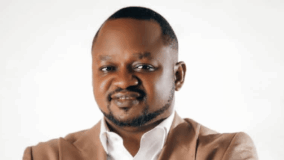
MUHAMMAD BELLO WAZIRI DOGO-MUHAMMAD, FRSC, mni, is the Chief Medical Director of Baze University Hospital (BUH). A UK-trained consultant general surgeon and urologist, also a former executive secretary and CEO of the National Health Insurance Scheme (NHIS, now NHIA,) is passionate about healthcare and its delivery, an area where BUH is ensuring patients get the value they deserve. In this interview with KEMI AJUMOBI, he shares about BUH, his medical experience, and also proffers solutions to healthcare challenges in Nigeria. Excerpts.
What key experiences shaped your career as a consultant surgeon and urologist?
My experiences in the general surgical space started right at the very beginning when I crossed from preclinical to clinical years of my training as a medical student at Ahmadu Bello University Zaria. Getting engaged in the accident and emergency unit gave me the unique opportunity to get hands-on experience in managing critically ill/accident cases. When a patient gets over the critical situation and is stable, the management becomes less distressful, and when he/she gets transferred to the ward, the care becomes routine with few complications (if any). These scenarios subsequently built my confidence in the management of any case. Going to the operating room to watch/assist how different surgeons did their operations and the cordial atmosphere of the theatre team, which was/is always jovial, spiced my appetite to want to become a surgeon. By nature, I like solving problems as soon as possible, and I don’t have the appetite for the management of chronic cases; as such, I found surgery best fits my psyche. Years later, after becoming a qualified doctor (1978), in as much as I was attending to all kinds of patients, the proportion of surgical cases overwhelmed them all. This led to my wanting to go for further training in General Surgery and I was privileged to be sponsored by the Bauchi State government to go to the United Kingdom (UK) for my fellowship in general surgery (1981-1985). On returning to Nigeria, I was posted to Azare General Hospital as a General Surgeon. However, for the first 2 years of my stay at Azare, 26 percent of all the surgical cases I attended-to were urological in nature. This singular observation compelled me to go for further training at the Institute of Urology, University College London (UCL), in urological surgery (1987-1988). On my second return from the UK, I continued to practise in Azare and Bauchi for the next 13 years till 2001, when I moved to the National Hospital Abuja.
How has your international training influenced your approach to medicine in Nigeria?
I was lucky to have been sponsored 3 times in my career for overseas training, i.e., in general surgery (UK), urological surgery (UK), and an MBA in International Health and Hospital Management (IHM Option) in Germany. My professional training exposed me to practice at Guy’s Hospital in London, where I did my residency, and other hospitals such as New Cross Hospital, Cuckfield Hospital, St John, Middlesex, St Paul, and so on. These exposed me to the state-of-the-art management of patients and helped me to manage our patients in accordance with international best practices and to improvise where there was no appropriate or adequate equipment here in Nigeria.
In your view, what are the most pressing public health challenges facing Nigeria today?
The definition of health according to the World Health Organisation (WHO) is “Health is a state of complete physical, mental and social well-being and not the mere absence of disease or infirmity.” As a developing nation, Nigeria is facing many public health challenges, which could be put broadly into 2 categories, i.e., indirect and direct challenges. The indirect challenges are environmental degradation, poor handling of domestic and industrial wastes, lack of potable water fit for human consumption, pools of stagnant water bodies that provide breeding places for mosquitoes, and so on. These require collaborations between relevant ministries, departments, and agencies in finance, health, education, environment, water, budget offices, agriculture, power and electricity, the legislative arm of government, and so on. The direct challenges are due to a very weak healthcare system which is characterised by inadequate health facilities that are lopsidedly distributed in favour of urban areas while the burden of diseases is in the non-urban areas. The available health facilities are not well equipped or have dilapidated and obsolete equipment. There’s also a lack of a guaranteed supply of reagents, drugs, vaccines, and consumables. Currently, we are faced with the menace of communicable and non-communicable diseases and new emerging diseases, the likes of COVID-19, avian flu, and so on. What further weakens our health system is the “Japa syndrome”, where Nigerian health workers across all cadres are leaving the country for greener pastures.

What specific changes do you believe are necessary to improve healthcare delivery in Nigeria?
There’s the need to overhaul the health system. First, there must be adequate funding of health in the budget at all tiers of governance to the minimum of 15% level and releases as declared by the WHO assembly of the Heads of African countries held here in Abuja in April 2001. To provide adequate, well-equipped, well-staffed, and equitably distributed health facilities across the nation. Primary healthcare must be very adequate in all the 774 LGAs of the country. Routine vaccinations must be done for all children. The emergency preparedness level must be adequate to confront any epidemic or pandemic incidence(s). Provide qualified and dedicated health workers in all the nooks and crannies of the country who will be undergoing regular training and continuous professional development (CPD). There is a need for the country to have pharmaceutical companies that produce drugs and vaccines, reagents, and other hospital consumables. As financing health from taxation alone may not be able to serve us, there’s the need to enforce social health insurance for all Nigerians and legal residents now that it’s mandatory.
“We are constantly monitoring our KPIs related to capacity utilisation and adjusting strategies accordingly to ensure continuous improvement.”
During your tenure as executive secretary of the NHIS, what were some of the key policies you implemented, and what were the outcomes?
I was posted to the NHIS at a time when it was in crisis. There has been a high turnover of chief executives in the organisation. So, when I started, we did a rapid needs assessment, SWOT and PEST analyses and made a presentation to the Federal Executive Council of President Olusegun Obasanjo, GCFR. It was a 10-slide PowerPoint presentation, and I spoke in detail from the slides. Thereafter, we fashioned a roadmap on how to unravel the jinx. Among some of the problems then was a total rejection of the scheme by all and sundry, as only about 450,000 enrollees had ID cards. So, we hired more IT guys, processed all registration forms, and gave ID cards (produced in-house). Next, we engaged all the accredited HMOs and made it a duty to meet quarterly. A forum to meet with healthcare providers was created, and we were meeting from one geopolitical zone to another, but it was not as regular as that with the HMOs. The staff of the NHIS were essentially my “customers”. Therefore, we had to address various concerns, such as stagnation without promotion for years; a skill-gap analysis was carried out to identify areas of need for every staff member, followed by training to resolve deficiencies and issues of remuneration attended to, among others. To address the general cry by the populace about when the programmes of NHIS will reach more people, we developed more programmes along the different categorisations of the populace. Such programmes as the Community Social Health Insurance Programme (CSHIP), the Voluntary Social Health Insurance Programme (VSHIP), the Tertiary Institutions Social Health Insurance Programme (TISHIP), the Maternal and Child Health Insurance Programme (a collaboration with the MDG Office), the Vulnerable Social Health Insurance Programme, and the Retiree Social Health Insurance Programme (not completed before I left the scheme). The outcome was that we were able to increase the number of enrollees by 5.6 million from 450,000. The pool of resources multiplied from ₦12 billion to about ₦95 billion. Generally, the scheme was accepted, and the states of Bauchi and Cross Rivers joined the scheme. The MDG-NHIS Maternal and Child Health Programme won an award for the best maternal and child healthcare programme from the International Social Security Association (ISSA) in Arusha, Tanzania. NHIS also joined the Joint Learning Network for Universal Health Coverage.
What do you see as the future of health insurance in Nigeria under the NHIA?
Much needs to be done to make health insurance mandatory in the country by way of more awareness creation campaigns and advocacy visits to relevant stakeholders. All private companies provide their employees coverage, and all states and local governments should do so. As for citizens living below the poverty line, the government should pay their contributions. With this stepwise approach, most of the Nigerian people should be covered adequately. So, the future is bright.
If you were to lead a new health reform initiative today, what areas would you focus on?
For me, new health reform initiatives must include the following: –
a. Strengthen primary healthcare services, including maternal and child healthcare.
b. Make healthcare accessible, affordable, and adequate by balancing inadequacies in the physical presence of health facilities within a maximum of 5 km radius which must be well stocked and well staffed for optimum service delivery.
There should be a smooth referral flow of patients from the primary level to the secondary level and to the tertiary level. Tertiary-level hospitals must be in top form, with each of them having a flagship service in addition to other general services. We should have centres of excellence for diseases with a high preponderance in the populace.
How does Baze University Hospital approach the issue of healthcare affordability, especially for underserved populations in the community?
Healthcare affordability has become a global concern with the increasing cost of healthcare production occasioned by the wholesale adoption of cutting-edge technology and the rising cost of consumables due to the fall in the value of the local currency. This burden worsened the private sector woes, which had no government grants or subventions. Balancing the need to provide affordable service to the populace with business survival has been challenging, with the continuous downward spiral of the local currency reducing the citizens’ purchasing power. The general apathy towards insurance by Nigerian citizens, including health insurance, worsens the situation, thus making the out-of-pocket style the predominant healthcare financing model despite its shortcomings. Therefore, we encourage citizens to embrace health insurance, where people pool their health risks at minimal cost per head to ensure adequate coverage.
What are the biggest challenges currently faced by BAZE University Hospital (BUH), and how are they being addressed?
Presently, the biggest challenge faced by BUH is low-capacity utilisation leading to financial strain and inefficiency. Low-capacity utilisation is a significant challenge that can lead to financial strain, reduced quality of care, and inefficiencies. Financial strain occurs because fixed costs remain high even when low occupancy leads to reduced revenue and profitability. Also, there is inefficient resource use due to underutilisation of staff, equipment, and facilities, leading to waste and decreased operational efficiency. To surmount these challenges, the hospital adopted a flexible staffing model that allows for adjustments in non-critical areas based on patient volume, such as part-time, visiting or on-call staff. Also, we have enhanced our marketing and community outreach within ethical limits through increased awareness of services through marketing campaigns and community engagement to attract more patients. Similarly, we have established partnerships and collaborations with other healthcare providers to share resources and refer patients, enhancing overall capacity. Nevertheless, we are focusing on improving service quality to enhance patient satisfaction. Improved service quality can lead to increased referrals and higher patient volumes by implementing care models that emphasise patient engagement and satisfaction, which can help retain old patients and attract new ones. Also, we are constantly monitoring our key performance indicators (KPIs) related to capacity utilisation and adjusting strategies accordingly to ensure continuous improvement.
How does interdisciplinary collaboration occur within the hospital, and how does it enhance patient care?
Healthcare is a team effort that requires the input of many personnel with diverse skills. With this knowledge, personnel must treat every team member as an essential contributor to the hospital’s product – quality healthcare for its clients. Therefore, every practitioner must respect the contribution of all other team members and regard them as essential parts of the healthcare team, without whose efforts the service will be suboptimal. Mutual respect among team members ensures the promotion of harmonious working conditions that consistently provide quality services. At BUH, our personnel have understood the concept of healthcare provision as teamwork and have come to respect every team member as a valuable contributor, without whose effort the service quality is affected.
What were the primary goals in establishing Baze University Hospital, and how have those goals evolved over time?
From the onset, the vision of the BUH promoters was to be “the trusted leaders in quality healthcare.” Therefore, continuous quality improvement (CQI) has been fostered through a systematic approach to enhancing patient care, operational efficiency, and organisational performance. Also, the hospital encourages its staff at all levels to participate in CQI efforts by empowering them to identify problems and propose solutions. Furthermore, decisions in the hospital are data-driven. The hospital regularly collects data on key performance indicators (KPIs) related to patient care, safety, and operational processes by leveraging electronic health records (EHRs) and data analytic tools to monitor performance and identify areas for improvement. The hospital encourages a team culture by forming multidisciplinary teams to address specific quality improvement projects. Diverse perspectives lead to more innovative solutions.

Join BusinessDay whatsapp Channel, to stay up to date
Open In Whatsapp