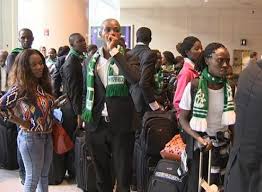
On the heels of a new academic year, Nigerian students, graduate and undergraduate, are setting sail for the United States of America (USA) in search of quality education.

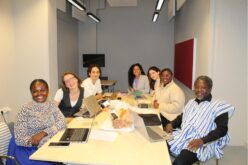
To help prepare those who will be leaving to the US for the next academic year, EducationUSA, an arm of the US Consulate General responsible for information about US higher education, recently organised a pre-departure orientation for these prospective students.

Frank Sellin, deputy public affairs officer at the US Consulate, Lagos, addressing the students told them to always bear in mind their primary objective of going to the US, which is academic excellence. At par with academic excellence are social and cultural excellences. “Connect with opportunities outside campus, visit the beaches, climb mountains, socialise, mix with everyone and remember you are ambassadors of Nigeria in the USA,” Sellin said.

Toluwanimi Ogbonmide, a biochemistry student at the Liberty University, Virginia, narrated his experiences, spiced up with anecdotes, and encouraged the students to make use of the resources availed them by school authorities.

“Your professors will always have time to listen to you. They have office hours and you need to go to them before you have problems. Let them know you by name. Engage in social activities, sports, drama clubs and whatever catches you fancy, be unique and contribute your cultural heritage,” Toluwanimi said.

The 2015 Open Doors Report on International Educational Exchange reveals that the number of international students at US colleges and universities had the highest rate of growth in 35 years, increasing by ten percent to a record high of 974,926 students in the 2014/15 academic year. This significant growth confirms that the US remains the destination of choice in higher education. The US hosts more of the world’s 4.5 million globally mobile college and university students than any other country in the world, almost double the number hosted by the UK, the second leading host country.

International students’ spending in all 50 states contributed more than $30 billion to the US economy in 2014, according to the US Department of Commerce. Additional breakdowns of the economic impact of international students by host state are available from NAFSA, which conducts a detailed regional, state, and congressional district analysis on the economic benefits of spending by international students and their dependents to the US economy, using Open Doors data combined with calculations of the local tuition and cost of living rates.

Some Nigeria students who were already studying in the US shared their experiences with those setting sail for the next academic year. Their experiences ranged from how to interact with professors, to getting involved on campus and tips for survival while in the US.

As of last year, there were 31,113 students from sub-Saharan Africa and they comprised 4 percent of the 886,052 international students in the US The top sub-Saharan African countries of origin are Nigeria, Kenya, Ghana, South Africa, Cameroon and Ethiopia. The US is by far the most popular destination among Nigerian and South African students: it was ranked the first choice for 89 percent of prospective Nigerian and 92 percent of South African students.

Nigeria's leading finance and market intelligence news report. Also home to expert opinion and commentary on politics, sports, lifestyle, and more

Join BusinessDay whatsapp Channel, to stay up to date

Open In Whatsapp