Nigeria’s top anti-corruption official has sounded the alarm over what he calls a crisis hiding in plain sight: the majority of university students in the country may be engaged in internet fraud.
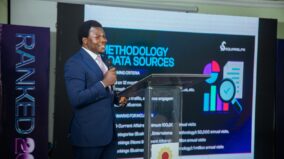
Ola Olukoyede, chairman of the Economic and Financial Crimes Commission (EFCC), made the claim on Tuesday at the opening of the 8th biennial conference of the Committee of Pro-Chancellors of State-Owned Universities in Nigeria (COPSUN), held in Kano. The gathering was themed around artificial intelligence and university governance.
“My research in the last one year has shown that about six out of 10 students in our universities are into cybercrime,” he told delegates. “It is a very disturbing situation.”
The figures, drawn from the commission’s field operations over the past year, paint a troubling picture of undergraduate life in Nigeria — one where internet fraud is not the exception but, increasingly, the norm.
Read Also: The trial of citizen Nasir el-Rufai and matters arising
Olukoyede attributed the problem to deep rot within the university system itself, arguing that weak oversight and poor accountability had allowed it to fester unchecked. He went further, claiming that some students had placed lecturers on informal payrolls — effectively bribing academic staff to look the other way — thereby compromising the integrity of the academic system.
He also referenced the mass arrest of 792 suspected cyber fraudsters in Lagos in December 2024, described at the time as the largest single-day operation of its kind in the country’s history. A significant number of those detained, he said, turned out to be students.
Olukoyede raised additional concerns about a trend known locally as “Yahoo Plus”, in which fraudsters combine digital crime with fetish rituals — a phenomenon he regards as a sign of how far the situation has deteriorated.
His message to university authorities was direct: tighten institutional controls and collaborate more closely with law enforcement agencies.
“A university that lacks financial accountability cannot credibly train future professionals,” he said. “The integrity of our universities is a matter of national security.”
Olukoyede also made the case for deploying artificial intelligence as part of the response — fitting, given the conference’s theme. AI tools, he argued, could flag suspicious financial transactions, detect irregular salary payments and strengthen academic integrity systems in real time.
He added that the EFCC had already begun integrating artificial intelligence into its investigative work, including digital forensics and financial tracking.
Join BusinessDay whatsapp Channel, to stay up to date
Open In Whatsapp