…Bobtract says new policy must

Billions of naira investments in Nigeria’s auto and tractor manufacturing subsector may be washed down the drain by the new tax law that provides for duty-free auto and tractor imports.

Investors called the provision dumping, saying it would end up cheaper to be a tractor importer than manufacturer.

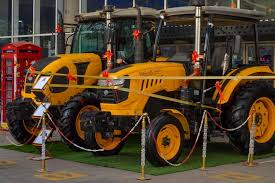
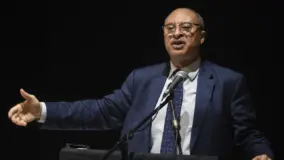
Lamenting in an interview with BusinessDay in Port Harcourt, Ibifri Bobmanuel, founder and CEO of Bobtrack Tractor Limited, the tractor manufacturer who also has an assembling facility in Nasarawa State, said duty-free import of fully-built tractors would wipe off investments by local direct investors who he said took huge loans to invest in Nigeria.

Bobmanuel said hundreds of billions of naira have gone in to build the manufacturing facility in Port Harcourt to 80% by Bobtrack Tractor Ltd, only for the FG to come up with such a new dumping policy. “So, why would any investor spend billions of naira of loans? We secured a facility worth $100 million with a foreign partner that we’re expanding on, which is a second phase of what we’re doing. It is such audacious. And you, FG, wake up today and strike so deep? Why would that investor go into such a strategic investment partnership?

“We did that because of the potentials in the market. Now, you wake up all of a sudden and you say no, anybody can bring tractor from anywhere they want, anybody can bring implement from where they want to bring, and they don’t pay duty and they just bring it into the market? Who does that?

“This has automatically killed the prospects and the investment that we put into this sector, building it to where it is. So this is not far away from what happened to ANAMCO, it’s not far-fetched from what happened to Toyota, to Fiat. Remember, all these companies were in Nigeria. It’s not far-fetched from what happened to Peugeot, it’s not far-fetched from what happened to Volkswagen. They were all in Nigeria assembling and manufacturing cars before they all migrated to South Africa and wherever.”

What happened to Peugeot:

When the stakes in Peugeot were being put up for sale, we were courted by the then company that was midwifing the sale of that facility. I was courted, I looked at the books, they gave me all the documents that I requested. But what put me off was the reason why that factory was put up for sale. It was a good step for us to migrate from where we are to where it is, because if we had taken over Peugeot, our business would have been in a different pedestal because we would have been fully big-time into auto manufacturing and production. But we decided to pull off our brakes when we did our feasibility study and did a chronological analysis of what led to the rundown of that place. And what we found out is not too far from government policy flip-flops.

How the tax policy will kill the Dangote/Peugeot/Renault deal:

And that is exactly what is happening. Of recent, I heard Dangote and Peugeot in France, that deal I think was brokered with the President of France, Emmanuel Macron. Dangote and Peugeot and Renault are understood to be coming into a partnership where they’ll be producing Peugeots in Kaduna State. But with this policy, that whole dream dies automatically. Because with the same policy, Dangote, Peugeot, and Renault, if they attempt to assemble in Nigeria or manufacture maybe 40% in Nigeria and get the other completely-knocked downs (CKDs) to assemble, it would automatically die because it will take only a stupid or a mentally deranged person to come and bring CKDs into the country and manufacture 40% of whatever he’s going to manufacture to make up the 100% and compete with a fully built manufactured car that they will bring from wherever to Nigeria to sell.

Automatically, that business will die because in Nigeria, we don’t have electricity. The commonest of things, we don’t have electricity. In every other country they have electricity but you don’t have here. So, electricity on its own consumes 60-70% of your operational expenses (OPEX). So, if you take all of that into consideration, then the country becomes an officially branded dumpsite again for the second time or the third time.

This is because different governments come with different economic policies. When that happens, another regime comes and decides to do the opposite thing. They decide to make Nigeria a dumpsite.

If Nigeria remains a dump site, we can never grow this economy. With the amount of potentials, the amount of technological know-how we have in Nigeria, we can’t continue on this path, on this trajectory.

We must begin to have government operators that understand business:

We must begin to have government operators that understand what it takes to grow businesses. If we don’t have government operators that understand what it takes to grow businesses, our economy will never grow; our economy will always be at the expense of more serious-minded countries.

How new exemption law will kill Nigeria’s auto industry and agriculture:

So this policy on one hand is going to affect the auto production in Nigeria, and on the other hand, it’s going to affect majorly the agricultural developments we’re having in the country and all of that. Look at a situation whereby you say okay, even things like rice and so on would come in for free, things like agricultural equipment like tractors, implements, and so on will come in for free. I can only shut down my facility. It’s most likely either going to be shut down or will run at a low-key just to keep the place afloat.

Rwanda, our last option:

He said his company may accept the offer dangled for it by Rwanda.

He said: Maybe we’ll begin to think out of the box or out of the country and see how we could survive. This is because we had an offer from Rwanda, a blank cheque, where they asked us to come over to Rwanda to set up. And in part of their discussions we had, they were willing to give us some amount of protectionist agreements for a period of 10 to 20 years for us to get off the ground before anything happens. You know, but in this case, the Nigerian government just sits down and wakes up to do anything they like and it is really affecting our businesses.

Jobs are going to be lost in droves:

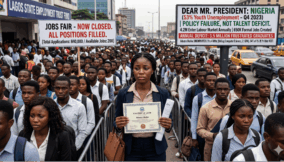
So, jobs are going to be lost; they’re going to be lost in droves if this comes into effect. And not just jobs being lost in droves, we would waste a whole lot of our effort. Some of the governors travel abroad to buy 50 or 100 tractors and see it as a big deal. But no tractor manufacturing company in Europe or in America or in China will sell you 100 tractors and you think you’ve done something big to them that they would come and set up in Nigeria. Nobody does that because of the size of their market, and they understand the importance of agriculture.

If you go to China, there’s no stretch of land in China that is not under cultivation. China is arguably times two the size of Africa, but I’m telling you there’s no strand of land, no one square meter of land that is not being cultivated for agricultural purposes. And China has a ban on even exporting cultivated products out of China. Meaning you go to farm, cultivate and you are not allowed to export it. If you put one bag of grain of rice in a ship or in a plane out of China, you’ll be locked up for doing that. Those are countries that understand where they’re going to. Because if a man is not well-fed, that man cannot think. They understand that if a man goes to war with all your ammunition and you don’t have food in your stomach, you can’t fight the war.

Zero duty on electric cars, why?

Now, you look at the electric cars matter we’re talking about. Today you they have come up with a policy of zero duty on electric cars. Who does that? Today, Bobtrack has pivoted into electric cars. (You can see a handful of electric cars out in our showroom here.) We have our own brand of electric cars that we’re supposed to launch in three months. Now the factory that we’re building has a section for electric and the other section is for tractors and implements. So all of these dreams, just one government policy flushes all of that down the drain.

Govt has lost its thinking cap:

That’s to tell you how the government has lost its thinking cap. In America today, if you’re to buy an electric car, you must buy a home-grown electric car from America. Even if the Chinese electric cars are cheap, for you to import a Chinese electric car into America, you’ll pay a 100% duty before they allow you drive it on the streets of America. Why? Because they want to encourage you to buy Tesla (the American brand). There are other electric car manufacturing companies that are coming up; they’re protecting the market for those companies to be strong enough to fend or compete globally with the Chinese brands.

How we kill our own:

But what are we doing here? We have different companies that are already in this same trajectory. I know about Innoson having his own electric car line. I know about Nord having two of the units, two of their products as electric, their brands as electric. Bobtrack, we now have two, we have the I-bus and we have the new saloon vehicle, they’re all electrics. We felt Nigeria is ripe and the market is now for us to open up.

What govt can do:

What we expected the government to do is to call the major players in all of these spaces and ask us, “How can we enhance your business? Now Bobtrack, you are at this point, you people have invested this amount of billions into your manufacturing processes, your quality is huge, is very good, your products are in Dubai, in Ghana; your products have been in China. How do we work with you to get your products to even get into further markets?” That’s where most of the trips that the federal government, the president goes for, those trade trips, that’s where they need to get people like us, the nucleus of us come together, travel with the president, travel to America. Government people will tell America, we are coming into America, we are coming to sign a trade partnership with you, we’re coming with our businesses. Our businesses should be given these waivers, let them have these waivers to bring in their products into America as you are bringing your own products into Nigeria. It must not be that the American products, the European products, the Chinese products, Korean, every part of the world brings in their products into Nigeria for zero duty and you can’t secure the same deal for them to take your own homegrown products into their country into their market for zero duty. Does it make sense?

Govt advisers are not thinking:

It doesn’t make sense. So I wonder who teaches this government or who helps this government with their economic policies. We are being shortchanged on a daily basis in this country. We cry that we don’t have jobs; we don’t have jobs because our economic handlers don’t advise the president on what is expected for the president to do. Period. That’s what it is.

So we need to walk the talk. Nigeria can get its economy to where it should be, but Nigeria needs to understand that its strength is actually in the private sector. When the Nigerian government begins to draw its strength from the private sector, then the Nigerian economy will then go to where it should be. Every other thing is working very well in Nigeria, every other thing, believe you me. The only thing that is not working well in Nigeria is the government, the policies. The government, the policies are not streamlined to drive growth in the private sector. Because the government always sees itself as a group of people that are at extreme opposite ends with the private sector. That’s our problem.

You hear every day in the fintech, you see different investments coming all the way from Europe into our space to invest in different fintechs. The government knows little or nothing about it because they don’t care. Because if they cared, they would understand if they had such meetings as I’m telling you, such very critical meetings with such players, they would understand that they would know the day such investment flows into the economy. But they don’t; it’s only the ones that are publicly quoted, companies that are publicly quoted that they can relate to. But the ones that are private, they will not relate to them.

So I think the federal government is losing a lot with all of this effort it’s making on the wrong direction. They need to find a way to sit down with the key players and see how we could work together and drive growth.

FG should halt this tractor duty exemption:

Federal government has to halt the duty exemption to key sectors till after negotiations with those sections or those sectors. And those key sectors are agriculture, automobile, very important. Why did I say it’s important? Because for a plant at its optimum would employ as much as 10,000 people directly and indirectly at its optimum. So if you could get up to 10 or 20 of such number of plants to work, you find out that you have a major mop up over 100m of your unemployed youth out of the unemployment market. And the more you keep incentivizing those sectors, more of such investment will come into the country.

Because today I’m talking about partnership that Bobtrack went into with a foreign company. And if other players see how viable it is, more investors will obviously stream into that space to see how they could enhance it.

If Nigeria fails to play the role we’re supposed to play, that’s why Africa would remain where it is. Because our share size in Nigeria and our potentials is so huge that if we can get Nigeria to work well, then every other African country would work well because if we can produce in mass in Nigeria, then Africa’s problem would be halfway solved. That’s what it is.

So for the government to come up with this kind of policy where they now slap zero import duty on finished automobile electric vehicles and tractors and implements, I think it’s a no-brainer.

Government has to put a stop to it. If they don’t put a stop to it, they will lose out on our local technology—that’s most important. And they will lose out on the local direct investment that had flown into that space.

You can only imagine the amount of exposures to banks and investors such companies would have exposed themselves to. So if you slap this kind of policy and everybody now turns Nigeria into a dumpsite and bring every other product into Nigeria and dump, those home-grown businesses will die. And when they die, it will take another circle for us to get to, which might take another 20-30 years for us to get back to where we are. You know, so I think the government needs to think it through. It’s very important.

Background:

To give a brief context to this issue, Bobtrack Tractor Limited is an indigenous tractor manufacturing and assembly company in Nigeria. We’ve been in assembling and manufacturing of agricultural tractors and implements for upwards of 10 years now. And we’d comfortably say we’re the leading tractor manufacturing outfit in Nigeria.

We have a healthy share of the market, though it hasn’t been easy; it has been very difficult. But with our firm belief and commitment to redefining the Nigerian agricultural equipment space, we stuck to our guns, and today we are working with every serious mechanized farm in Nigeria and indeed, mostly in West Africa.

We met the market in a state where Nigeria was then seen as a dumpsite for foreign equipment that were of no use to the Nigerian environment and market. You can imagine a situation whereby a governor or a president hops on a flight after collecting subventions from the centre, hops on a flight to America, for instance, and what is he going to do in America? He is going to buy a tractor. You’re voted in newly and you want to do agriculture. Yes, you promised your people agriculture, a noble promise. And when he wakes up, the first thing he does with all the money he gathers is to hop to America and he buys tractors.

Now, typically of most of those kind of visits, they try to see if they could make some kind of bilateral partnership agreement with the foreign manufacturers. They go and buy tractors abroad and bring them into Nigeria.

The ridiculous thing is that when they go to buy a few hundred units, they think it makes sense to the foreign countries. The most ambitious so far has been the Governor of Niger State that went as far as buying 500 units. He actually wanted to buy 1000 units, but eventually bought 500 units for starters.

I have a lot of respect for him, you know. And he buys 500 units, signs an agreement with them and they come back. For him, it’s a big deal. By Nigerian standards, the Federal Government of Nigeria had not been that audacious in decades to buy tractors of that number. So, it’s a big deal to the state.

If, however, you think like an American where a state buys up to 10,000 tractors at a time, you can see what 200 or 500 units would mean to you as an American. That is how deep they are in agriculture.

So when you come as a Nigerian and you want to buy 500 tractors and you think they see you as doing something significant, it’s nothing to them. On a good day, you may not be allowed to have a sit-out with the CEO of the agricultural company selling 500 units to you. They may at best ask a sales executive to discuss and sign the deal with you. That’s the best you’d get. And you discuss with a sales executive, you sign agreements with him, you do whatever you want to do, you come back to Nigeria. And you tell them to come and set up in Nigeria? Who’s going to come and set up in Nigeria when even in the US he sells 10,000 or 20,000 tractors to a state in that country? He would not pack his operations and come to Nigeria to set up to service your 500 tractors.

So, that’s the mentality our people came into the business space with. We came into the space because we felt our market deserves proper attention to nurture it to what it should be.

We invested billions of naira to become global beaters

And that’s why we invested the billions of naira in the Nigerian agro-space. And today, our tractors are global beaters. Anybody that hops on a Bobtrack tractor would understand that the tractor is built with a passion for service, the passion to redefine the space. That’s why we did it.

And we just did not differentiate our products in the market; we differentiated our products not just in Nigeria.

Globally, our products have been branded as audacious and pure quality. This is because, if you juxtapose our products in the market today, our prices are justified. And if we were looking at profitability, we would have priced our products way higher than where they are.

So we’ve taken our products and showcased them in Dubai and we have sales partnership where our products are being sold in Dubai. We tried that in China; we were invited to a trade fair. That was one of the very first outings we did after we were done 10 years ago. We tried it out in a trade fair and it sold like mad the very first day that it got into the trade fair, we sold out.

How China stopped our tractors:

We were making arrangements to get more units into the trade fair and they discovered that the products were from all the way from Nigeria. They said, “Wait a minute, how did you get to do this?” And they put a stop to us and they told us we can’t sell our products in China. They said we needed to go through different layers of accreditations for us to sell in China. So we felt it was a worthwhile market, a market we just experimented in and we sold that swiftly. It pointed to the fact that there were lots of potentials for us in that market.

But till date, we’re having one documentation level to overcome; one accreditation to another accreditation to another accreditation. So we’ve been going through several rounds of accreditation till date, and we’re not done.

Protectionism all the way:

We had the same ambition in America; the same thing happened there too. The market is there, the pricing and the quality of our products point to the fact that when you have a good product on your hands and you look at the market and you see the potentials, you know that immediately it hits the ground, it automatically will translate into a boom. But because the market is being protected for the home-grown businesses, that protectionist ideology restricts us from expanding into those markets. The same thing is happening in the UK market, the same thing is happening in the EU market, and every other place.

Nigeria in flip-flop:

Now, by last year, we had a feeling that the present administration had very good economic policy. We were rooting for President Bola Tinubu until when he went to Belarus to buy 3000 tractors. We felt that if the administration had the interest of the local economy in mind, it would not wake up to shortchange homegrown agricultural producers by going to buy a product all the way from Belarus. They went to buy, I think, 3,000 tractors and implements. Such a deal of 3,000 tractors and implements from Belarus to Nigeria was a rip off and a disservice to our Nigerian workers. This is because if they had bought at least half of that (1,500) at home and bought the other half wherever they wanted to, they would have secured and further enhanced employment for our youth.

So, these are the flip-flops that our government keeps perpetuating that erode the progress that the government or the good people of Nigeria or the Nigerian economy had been making. These are the issues.


Join BusinessDay whatsapp Channel, to stay up to date

Open In Whatsapp