

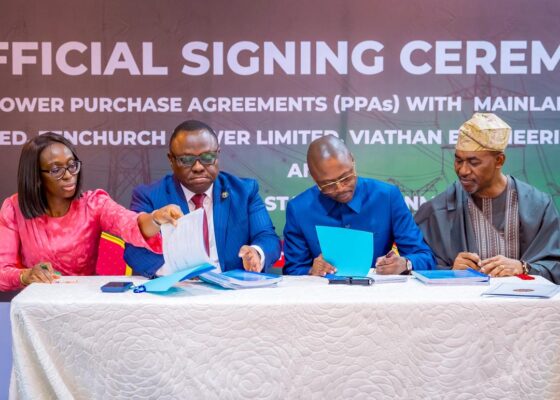
Fenchurch Power Limited has secured a concession to rehabilitate and expand the dormant Akute Independent Power Plant (IPP) in Lagos, in a deal that highlights the state’s shift to stricter, market-driven electricity contracts.
The company, through its special purpose vehicle, Aggregate Utilities Limited, will take over the non-operational plant and scale it to 26 megawatts (MW), starting with an initial rollout of about 8MW.
“We’ve been on this transaction for two years, and our intention is to change the game… to add a development narrative in the power space of Lagos State and Nigeria as a whole,” Olufemi Bakare, chief executive officer, Fenchurch Power, said at the signing.
The Akute plant, originally built to power Lagos State Water Corporation facilities, had been idle for about five years following the expiration of its previous agreement. Fenchurch plans a full overhaul. “The engines are not working… so we’re totally swapping all that out,” the CEO said.
The project will prioritise power supply to key water infrastructure, including Adiyan, Iju and Akute waterworks, which depend on stable electricity for pumping and distribution. “Water needs power… so that’s our first priority,” he added.
Read also: Nigeria, South Africa seek to boost energy infrastructure through collaboration
The company also plans to sell excess power into the distribution network. “We’re not only supplying power to Lagos State’s infrastructure… we’re also talking to the DisCo… its our intention to sell bulk power into their network on an embedded system… it’s a win-win for all parties,” Bakare said.
The deal is part of a broader restructuring of Lagos State’s embedded power programme, covering three of its IPPs. The state said it has revised its contracts to reflect a transition to a competitive electricity market.
“All agreements have been revised to reflect our transition to a market environment,” said Biodun Ogunleye, Lagos State Commissioner for Energy and Mineral Resources, noting that the plants are being positioned as “anchor” generators within their networks.
A key change is the removal of legacy payment structures that allowed generators to earn without delivering power.
Read also: Tax credits, development levy to steer capital into infrastructure, energy
“We have eliminated concepts such as take-or-pay and deemed energy… enforcing payment at delivery points for metered supplies,” the commissioner said.
The shift is expected to reduce the state’s energy costs and improve accountability across its IPP portfolio.
Lagos, which currently operates less than 60MW in embedded generation, is targeting between 200MW and 400MW within the next two to three years, largely through private sector investment.
“From a current capacity of less than 60MW, we see these plants scale up to over 200–400MW… without draining the treasury,” Ogunleye said.
The Akute project is supported by existing infrastructure, including a 13-kilometre gas pipeline and a distribution network, and is backed by financiers such as Zenith Bank and United Capital.

Join BusinessDay whatsapp Channel, to stay up to date
Open In Whatsapp


