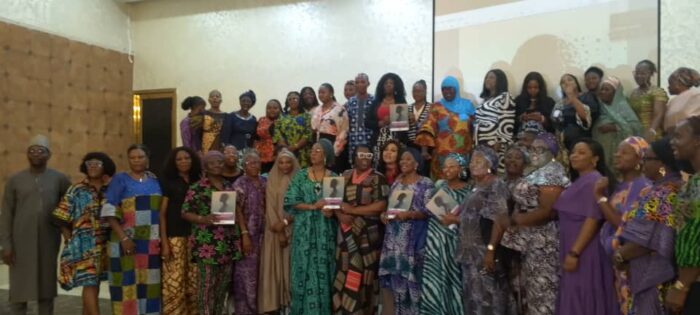
The internet, once widely viewed as a space for freedom of expression and empowerment, is increasingly becoming a hostile environment for women and girls in Nigeria and Kenya, where abuse, harassment, and digital violations are rising with limited accountability, the Technology -Facilitated Violence Against Women and Girls (TFVAWG) Report has stated.
The report, titled ‘The Digital Harm Effect: Confronting Technology-Facilitated Violence Against Women and Girls in Africa’, was published by the Women Advocates Research and Documentation Centre and formally launched in Abuja on Friday as part of WARDC Africa’s UNTF-supported project titled “Strengthening Inter-generational Movements/Networks to Demand Accountability, Combat Technology-Facilitated Violence, and Other New Forms of Violence Against Women and Girls in Sub-Saharan Africa.”
The project was executed in collaboration with the International Federation of Women Lawyers (FIDA) Kenya, and aims to foster
solidarity and strengthen collective action among women’s movements and coalitions, documenting a growing pattern of technology-driven abuse, including non-consensual image sharing, cyberstalking, and persistent online harassment, describing them as everyday realities for many women.
The report in its findings warned that existing response systems remain weak and poorly adapted to the speed and complexity of digital spaces.
According to the findings, survivors often face stigma, distrust law enforcement systems and encounter a justice framework that struggles to recognise online abuse as a serious form of violence. This gap, it noted, leaves many cases unreported or unresolved.
The study highlights that young people, particularly those between the ages of 15 and 25, are the most exposed. Despite their high level of internet use, they lack adequate protection, awareness and targeted interventions to navigate digital risks safely.
While acknowledging that Nigeria and Kenya have made some legal and policy progress in addressing gender-based violence, the report stressed that online harassment, stalking and image-based abuse remain widespread. It called for a comprehensive response that strengthens laws, institutions, community engagement and feminist advocacy movements.
Speaking at the launch, Adedayo Laniyi-Benjamins, mandate secretary for women affairs in the Federal Capital Territory, described technology-facilitated violence as a lived reality that must be urgently confronted.
She said digital abuse now extends beyond traditional forms of violence, citing the emergence of artificial intelligence-generated manipulation of images and identities as a new and dangerous frontier.
Laniyi-Benjamins emphasized that the cost of inaction is high, urging citizens to actively report abuse, support victims and demand accountability. She called for stronger public awareness and collective responsibility in challenging online violence against women.
Also speaking, Princess Olufemi-Kayode, acting executive director of WARDC, said online violence is not separate from offline realities but an extension of existing gender-based abuse.
She noted that increased access to mobile devices and the internet, even in rural communities, has widened exposure to digital risks without a corresponding increase in digital literacy.
Olufemi-Kayode stressed the need to empower women and girls with knowledge of online safety, privacy settings and digital etiquette. She added that laws and policy frameworks must evolve alongside rapid technological advancements, particularly with the rise of artificial intelligence tools capable of manipulating images and identities.
On the grassroots impact, Evelyn Ugbe, executive director of the Race Centre, cited cases of young women facing blackmail and psychological distress after classmates used AI tools to alter and circulate their images on social media platforms.
She warned that such incidents are contributing to mental health challenges and, in some cases, disrupting education, as victims withdraw from school due to shame and fear.
Ugbe said the organization is responding by establishing digital safety clubs in schools to educate students and teachers on ethical technology use. She also announced the creation of a “feminist digital watch,” a support platform designed to provide survivors with access to mental health care, legal assistance and psychosocial services.
The report ultimately calls for urgent, coordinated action across governments, civil society and technology platforms to address what it describes as a rapidly escalating crisis.
It concludes that without stronger protections, awareness and enforcement, the digital space risks becoming increasingly unsafe for women and girls, undermining both their rights and participation in public life.

Join BusinessDay whatsapp Channel, to stay up to date
Open In Whatsapp