…state governments urge farmers to embrace agro-insurance for resilience
Leadway Assurance, in partnership with the Presidential Food Systems Coordinating Unit (PFSCU) and PULA Advisors, has disbursed a total of N396.7 million in insurance claims to smallholder farmers to mitigate losses incurred during the 2025 wet season.
The payout, conducted under the National Agribusiness Planning Mechanism (NAPM), targeted farmers in Plateau, Borno, Kaduna, and Taraba states, providing a critical financial safety net against climate-related disasters such as heatwaves and irregular rainfall.
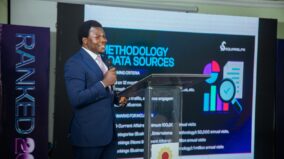
Speaking during payout event in Abuja on Thursday, Gboyega Lesi, managing director of Leadway Assurance, described the ceremony as a “tangible demonstration” of insurance as a pillar for economic resilience, noting that the payout reinforces the company’s promise to protect the labor of thousands of farmers.
He emphasized that the pay-out reflects what is possible when public and private sector partners align around a shared vision for agricultural transformation, adding that by leveraging data-driven insurance solutions, vulnerable fmitigating be protected in the face of climate uncertainties.
“This payout affirms our promise to stand by our farmers when it matters most. Agricultural insurance is a vital tool for building resilience within Nigeria’s food systems, and we are proud to support farmers in mitigating the impact of climate risks.
“This pay-out reflects what is possible when public and private sector partners align around a shared vision for agricultural transformation. By leveraging data-driven insurance solutions, we ensure that vulnerable farmers are not left behind amid climate uncertainties,” he said.
Also speaking at the event, Ayoola Fatona, Global Head of Agricultural Risks Solutions at Leadway, noted that agricultural resilience is critical to Nigeria’s food security, adding that the company’s commitment to claims payment exemplifies this ethos.
He said,”We understand that empowering farmers to recover from losses, rebuild, reinvest, and sustain their operations fosters the trust and confidence needed to continue investing in the production of food that nourishes the nation and build our food systems.” Furthermore, he commended the PFSCU’s NAPM template which was conceptualized to clearly outline functional public-private partnerships in action
In Borno State, the insurance scheme covered 39,395 rice farmers with a total sum insured of N5.21 billion. Bukar Kurama, Director of Agric Services, representing the Borno State Commissioner for Agriculture, confirmed that a heatwave triggered a specific payout of N127.1 million for affected farmers.
Murtala Dabo, Kaduna State Commissioner for Agriculture, stressed that the necessity of insurance by highlighting the devastating impact of the previous season’s ginger blight outbreak.
“It is capital intensive to grow ginger, and the livelihoods of our farmers were completely wiped out, which shows the importance of insurance. If they don’t cultivate, where is the food security we are talking about? Food sovereignty is key,” Dabo warned, noting that high input costs and global supply chain disruptions remain significant threats to the sector.
Michael Enahoro, Country Director of PULA Advisors, characterized the program as a “proof of concept” designed to incubate a habit of insurance among farmers over four farming cycles.
“The goal is to increase production of food. We want to teach this habit so that in the future, the farmer is looking at dealing with any insurance company in the world they want to, having taken on the responsibility of insuring their own farm,” Enahoro explained.
Stakeholders from Plateau State also stressed on the importance of data integrity and the capacity building of extension agents. Yilkudu Elisha, representing the Plateau State Commissioner, noted that extension agents must understand the insurance process to build farmer confidence.
“The story before and the story after when it comes to claiming is where the issue is. This payout is unheard of and will build the confidence of farmers going forward, provided we ensure the integrity of the data so the real people farming get the support,” Elisha remarked.
The PFSCU highlighted that the 2025 payout provides a foundation for more predictable agricultural planning, moving the sector away from assumption-based decision-making. Marion Moon, Board Secretary of the PFSCU, noted that the value of the mechanism goes beyond compensation.

Join BusinessDay whatsapp Channel, to stay up to date
Open In Whatsapp