…As Umahi flags design concerns, pushes Nigerian model

Nigeria’s push to drive regional integration through infrastructure came into sharp focus in Abuja on Thursday as the Federal Government reaffirmed its commitment to the 1,028-kilometre Lagos–Abidjan Corridor, a flagship West African highway expected to reshape trade and mobility across the coast.

The project will link Cote D’Ivoire from Abidjan, Ghana, Togo, Benin, and Nigeria from Lagos forming a key transport network along the West African coast.

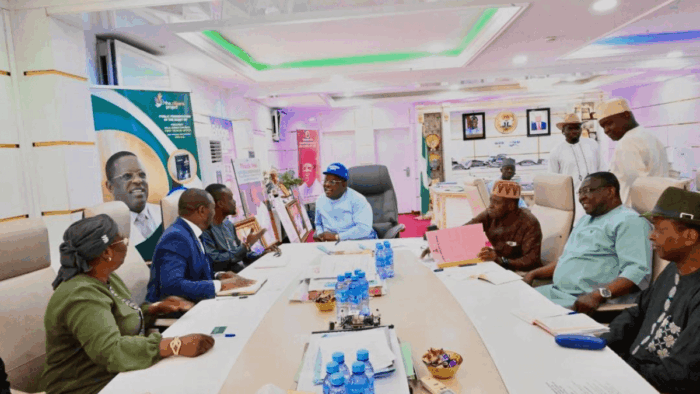
At a high-level meeting in Mabutshi, Abuja, David Umahi, minister of Works, hosted delegations from the ECOWAS Commission and the African Development Bank (AfDB).

The team made review of progress, challenges and next steps. Speaking as Chairman of the project’s Steering Committee, Umahi delivered both reassurance and a firm position on unresolved technical issues.

Carrying the message of President Bola Tinubu, Umahi underscored that infrastructure remains central to Nigeria’s economic strategy. He described the Lagos–Abidjan Corridor as comparable in ambition to the Sokoto–Badagry Superhighway, noting that Nigeria intends to construct its section using reinforced concrete and a three-lane dual carriageway—standards he said are critical for durability and long-term value.

“We are not just building roads; we are building economic corridors,” Umahi said, linking the regional project to a broader web of ongoing highway developments across the country. He highlighted progress on the Sokoto–Badagry route, ongoing works in Badagry, and plans to present the Uyo section for Federal Executive Council approval, positioning the Lagos–Abidjan Corridor as part of a larger national and regional transport ecosystem.

He further tied the initiative to other legacy projects, including the Lagos–Calabar Coastal Highway and additional corridors cutting across Nigeria’s six geopolitical zones. According to him, these interconnected routes are designed to unlock trade flows not only within Nigeria but across West Africa’s coastal belt, with some coastal highway sections already completed and others nearing commissioning.

However, the meeting was not without friction. Umahi openly raised concerns over the project’s engineering framework, pointing to what he described as unresolved design issues and inequities in how corridor lengths are distributed among participating countries. He insisted that such matters require intervention at the level of heads of state.

“I will be direct, there are unresolved issues,” he said, adding that Nigeria would not adopt elements of the existing ECOWAS design it considers impractical. He revealed that Nigeria’s portion of about 79.5 kilometres would exceed the originally proposed standards, while a new design framework tailored to local realities is being developed and expected within weeks.

Umahi reaffirmed Nigeria’s commitment to the project and announced plans for continued engagement with ECOWAS and technical teams, while the AfDB commended the Tinubu administration’s infrastructure drive, describing the Lagos–Abidjan Corridor as a “game changer” for regional integration and economic growth.

On funding, the minister stressed caution, warning that procurement and financing cannot proceed without consensus among member states. “The funding model must be agreed at the highest political level,” he maintained, reinforcing Nigeria’s position that technical alignment must precede financial commitments.

Earlier, ECOWAS Director of Transport Chris Appiah described the visit as part of ongoing consultations across member states. He noted that engagements had already been held with Côte d’Ivoire, Ghana and Togo, with Benin next in line, and said the mission in Abuja was to present findings, resolve technical questions and align with Nigeria in its leadership role on the project.

From the financing side, the African Development Bank delegation led by Salawou Mike Moukaila, signaled strong institutional backing for the corridor. He described the project as a top priority for the bank, revealing that an extensive identification mission spanning 25 countries is underway to shape a viable financing structure and attract co-investors.

“There is strong interest from co-financiers within and outside Africa,” Moukaila said, emphasising that the bank is positioning itself to lead funding mobilisation. He also highlighted Nigeria’s strategic importance, noting that a significant share of trade along the corridor originates from the country.

Join BusinessDay whatsapp Channel, to stay up to date

Open In Whatsapp