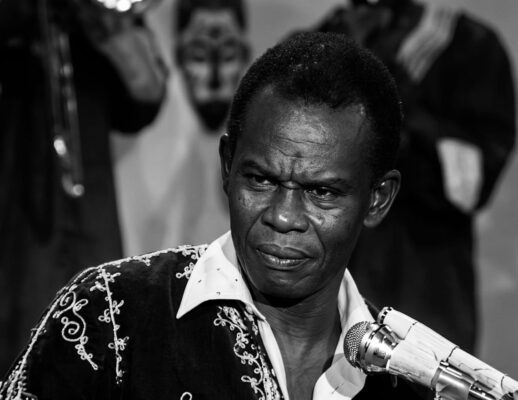
Bala Miller occupies a special place in Nigerian music history because he stood at the meeting point of three traditions: the discipline of the church band, the elegance of highlife, and the national reach of television. He was not simply a musician who appeared on screen; he was a bandleader, arranger, mentor, cultural host and bridge-builder. His career moved from school bands and hotel performances to FESTAC ’77, the Music Pyrameeds of Africa and, ultimately, The Bala Miller Show, one of the memorable variety programmes of Nigerian television in the 1980s.
Born in 1928, Miller’s early exposure to music came through church and school environments, where instruments, choral discipline and band culture shaped his musical imagination. That early grounding mattered because it gave his music a sense of order. Even when his performances were celebratory, they rarely sounded loose or careless. He belonged to a generation of Nigerian musicians who understood that popular music could be joyful and disciplined at the same time. His later career took him through the Calabar Brass Band, Sam Akpabot’s band, the West End Club band, the Nigerian Ports Authority Harbours Band, FESTAC ’77 and the founding of the Pirameeds of Africa.
What made Bala Miller important was not only that he played highlife, but that he expanded its geography. Nigerian highlife is often remembered through Lagos, Onitsha, Ibadan and Ghanaian influences, but Miller helped give the music a northern cadence. His work fused highlife’s brass-driven sophistication with Hausa lyricism and northern melodic sensibility, creating a sound that was urbane without being rootless, national without being bland. He showed that highlife did not belong to one region alone. It could travel, absorb local idioms and return with a new accent.
The Sound of Bala Miller
Miller’s music carried the polish of the big band era. It was arranged, layered and ceremonious. The horns did not merely decorate the songs; they announced them. The rhythm section moved with the relaxed authority of highlife, while the vocals often carried the communal warmth of social music. His famous association with songs such as “Kusimilaya” and later “Ikon Allah” shows a musician who understood how to make popular music sound both festive and dignified.
That dignity was one of his strongest artistic qualities. Miller’s music did not depend on aggression, gimmickry or excessive theatricality. It had confidence. His arrangements allowed instruments to breathe. The brass lines carried the brightness of celebration, the percussion supplied motion, and the vocals gave the music its human invitation. In an age when many bands competed through volume and showmanship, Miller seemed more interested in poise, clarity and ensemble control.
His later band, Bala Miller and the Music Pyrameeds of Africa, gave fuller expression to his pan-Nigerian ambition. The name itself was revealing. “Pyrameeds of Africa” suggested scale, antiquity, continental pride and cultural architecture. It was a band name with imagination. It suggested that music could be rooted in entertainment but still carry a larger symbolic burden. The ensemble’s big-band structure allowed Miller to create a fuller and more theatrical sound, one that could fill a hall, command a stage and translate effectively to television.
The Arrival of The Bala Miller Show
The Bala Miller Show was the natural extension of Miller’s artistry. By the 1980s, Nigerian television had become a major cultural platform, and NTA variety shows helped bring musicians, comedians, dancers and entertainers into living rooms across the country. Miller’s show arrived in that important era when television was still a shared national experience. Families gathered around the screen. Programmes became social events. Theme songs, opening sequences and recurring hosts entered public memory.
The show worked because Bala Miller had the perfect temperament for television. He was not loud in the manner of a carnival master, nor distant like a formal orchestra conductor. He had charm, poise and warmth. His presence suggested an older entertainment ethic: the host as gentleman, the bandstand as court, the studio as a civic room where Nigeria’s many sounds could meet.
That hosting style was crucial. Miller did not merely introduce performances; he framed them. He gave the impression of a man who respected both his guests and his audience. There was ceremony in the way he carried himself, but not stiffness. There was authority in his presence, but not arrogance. He understood that a variety show needed movement, but also needed a centre. He became that centre: calm, musical, confident and welcoming.
The opening sequence itself became part of the memory of the programme. Miller’s arrival, the band’s readiness, the musical cues and the studio atmosphere combined to create a ritual. Viewers were not just watching a performance; they were being invited into an evening of curated entertainment. In that sense, The Bala Miller Show belonged to a period when Nigerian television still treated music as a national cultural language, not just as background content.
Why the Show Mattered
The importance of The Bala Miller Show lies in what it preserved and what it projected. At one level, it preserved the live-band tradition. In an era before today’s digital shortcuts, performance still required rehearsal, timing, musicianship and ensemble discipline. The show placed the band at the centre of entertainment, reminding viewers that popular music was not only about the singer but also about arrangers, instrumentalists, backing vocalists and conductors.
This is one of the reasons the programme deserves historical respect. It captured a time when Nigerian popular music still had a visible infrastructure of musicianship. The viewer could see the band, not merely hear the finished product. The brass section, the percussionists, the keyboard players and the vocalists were part of the drama. The show made the act of performance visible. It reminded audiences that songs were built by people, in real time, through discipline and collaboration.
At another level, the show projected a national musical imagination. It reportedly featured major stars and emerging performers of the period, bringing together different strands of Nigerian entertainment under one televised roof. That range is significant. It means the show was not simply a Bala Miller vanity project. It was a platform. It functioned as a television bandstand, a place where different kinds of Nigerian popular music could appear before a national audience.
There is also a deeper cultural argument to be made. The Bala Miller Show helped demonstrate that television could do more than broadcast imported formats or official ceremonies. It could create its own national entertainment grammar. It could bring the nightclub, the concert hall, the cultural festival and the family living room into conversation. It could make music intimate without making it small.
A Northern Voice in a National Conversation
One of the most compelling aspects of Bala Miller’s legacy is his northernness. Nigerian popular music history often tilts heavily toward Lagos, eastern highlife, juju, Afrobeat and later Afropop. Miller complicates that map. He reminds us that northern Nigeria also contributed musicians, bandleaders, instrumentalists and television personalities to the national soundscape.
His base in Kaduna mattered. The Bala Miller Show being associated with NTA Kaduna gave the programme a distinct cultural texture. It was not just Lagos broadcasting itself to Nigeria. It was northern Nigeria participating in the shaping of national entertainment. That is one reason Miller’s work feels historically important today: it challenges the narrow geography through which Nigerian music is often remembered.
Miller’s northern identity did not isolate him; it expanded him. He moved across regions and styles with ease. He understood the brass-band tradition, the highlife idiom, the social music culture of hotels and clubs, and the possibilities of broadcasting. His career suggested that Nigerian music was at its strongest when it refused confinement. He was proof that national music could be made from regional confidence rather than regional anxiety.
This is why his work still matters in any serious conversation about cultural federalism in Nigerian music. Long before today’s language of inclusion, representation and cultural visibility became fashionable, Miller was already practising it musically. His sound, career and television presence made northern musical sophistication visible to audiences across the country.
The Review: Elegant, Warm, Occasionally Under-Archived
As a television experience, The Bala Miller Show seems to have thrived on warmth rather than spectacle. Its strength was not visual extravagance by modern standards, but musical credibility. The band was the engine. The host was the anchor. The guests brought variety. The mood was hospitable, formal and celebratory.
Its charm lay in its human scale. The show did not need the frantic editing, oversized stage effects or digital spectacle that define much of contemporary entertainment. It depended on presence. A band had to play well. A guest had to perform. A host had to hold the room. The camera had to respect the rhythm of the performance. That slower, more attentive style gave the show its grace.
Its limitation, from today’s standpoint, is archival scarcity. Like many Nigerian television treasures of the 1970s and 1980s, the show survives more through memory, scattered clips and nostalgic recollections than through a carefully preserved public archive. That makes proper critical assessment difficult. We can speak confidently about its cultural importance, but many episodes remain inaccessible to younger audiences who deserve to see the programme in full.
This archival absence is not merely a technical problem. It is a cultural loss. When programmes like The Bala Miller Show are not properly preserved, an entire generation’s understanding of Nigerian modernity becomes thinner. Young listeners may know the names of contemporary stars, but not the broadcast ecosystems, band cultures and performance traditions that made earlier forms of popular music possible. Miller’s legacy, therefore, is also a reminder of the urgent need to recover, digitise and study Nigeria’s television archives.
Still, even the fragments reveal a programme with a clear identity. Bala Miller’s show was not imitating American late-night television or British variety formats wholesale. It belonged to Nigeria’s own broadcast culture: musical, multilingual, socially warm and proudly live. Its signature lay in the feeling that music was a public good, not merely a commercial product.
Bala Miller as Institution-Builder
Perhaps the most important way to understand Bala Miller is not simply as a performer, but as an institution-builder. He trained musicians, led ensembles, gave structure to performances and helped create a televised space where Nigerian music could be presented with dignity. That institutional quality separates him from many entertainers whose influence is confined to hit songs alone.
Miller’s career shows that musical legacy is not only measured by records sold or songs remembered. It is also measured by platforms created, younger musicians influenced, standards maintained and cultural memory shaped. His work with bands, his presence on national television and his role in popularising a refined highlife idiom all point to a musician who understood the value of structure.
There is something deeply instructive in that. Bala Miller represented an era when the bandleader was both artist and administrator. He had to know music, people, timing, rehearsal, presentation and public taste. He had to hold together the invisible architecture behind visible entertainment. That is why the title “gentleman bandleader” fits him so well. His elegance was not cosmetic; it was organisational.
Legacy
Bala Miller died in 2003, leaving behind a legacy that cuts across performance, mentorship, broadcasting and cultural memory. His influence deserves renewed attention because he represents a kind of musician Nigeria no longer produces in abundance: the bandleader as public cultural figure.
He trained people, led ensembles, built platforms, appeared on television and carried regional culture into national space without making it provincial. He made music that was refined but accessible, northern but national, traditional in feeling but modern in presentation. His genius lay in balance. He knew how to entertain without cheapening the art. He knew how to lead without overwhelming the ensemble. He knew how to use television without surrendering the discipline of live music.
The Bala Miller Show was therefore more than an entertainment programme. It was a weekly act of cultural assembly. It gathered the elegance of highlife, the discipline of the orchestra, the warmth of northern hospitality and the reach of national television into one memorable format. Bala Miller did not merely host a show. He hosted an era.
And in that era, Nigerian music appeared not as noise, novelty or passing fashion, but as civilisation: arranged, rehearsed, generous, communal and alive.
Join BusinessDay whatsapp Channel, to stay up to date
Open In Whatsapp