


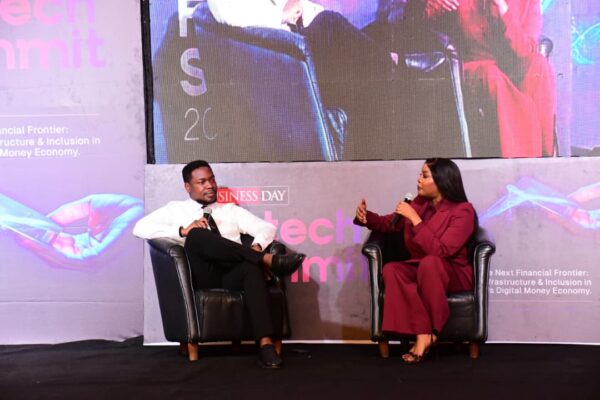
Olu Oyinsan, managing partner, Qui Capital, said Nigeria’s capital market has the potential to unlock long-awaited exit opportunities if structural gaps are addressed.
This was disclosed during his panel session titled “Unicorn Without Exits: Who Owns Africa’s Fintech Boom” at the BusinessDay Fintech Summit 2026 on Wednesday.
Oyinsan said venture capital has already proven that strong businesses can be built on the continent, but the next phase requires functional exit pathways
“Africa has shown that it can build valuable fintech companies,” he said. “Now the opportunity is to evolve the market so that value can be realised locally.”
Oyinsan highlighted early investments in infrastructure-focused companies, pointing to firms like Interswitch that solved critical challenges such as transaction failures and interoperability across banks.
“What we backed were companies solving real problems at scale, those that make payments work seamlessly,” he said.
While acknowledging current liquidity constraints, Oyinsan noted that Nigeria’s market still presents a foundation to build on.
“The issue is not absence of opportunity, but depth,” he said, explaining that the market’s size and concentration, dominated by players such as Dangote Group and Zenith Bank, limit the ability of large fintech firms to list without significant impact.
He also pointed to a valuation gap between private and public markets, where high-growth startups seek higher multiples than traditional listed firms.
Despite this, Oyinsan maintained that with the right reforms, including improved market infrastructure and investor education, Nigeria can support more exits locally.
Adding a capital markets perspective, Arese Ugwu, writer, filmmaker, and capital market strategist, who moderated the session, said the Nigerian equities market—now valued at about N140 trillion, is already showing signs of strength.
“The market is growing, but participation is still limited,” she said.
Ugwu argued that expanding retail participation and creating alternative listing platforms could bridge the gap between private innovation and public investment.
“We’ve digitised payments, but we haven’t digitised ownership,” she said. “If Nigerians can invest in the companies they use every day, it deepens trust and liquidity.”
She added that fintech itself could serve as a distribution layer to bring more Nigerians into the capital market, enabling broader wealth creation.
Both speakers agreed that the future of Africa’s fintech boom will depend not just on building unicorns, but on creating systems that allow investors, local and global, to share in that growth.

Join BusinessDay whatsapp Channel, to stay up to date
Open In Whatsapp


