The National Assembly on Tuesday adjourned plenary in both chambers in honour of a deceased colleague, even as mounting political activities ahead of the 2027 general elections continue to thin legislative engagement and disrupt governance.

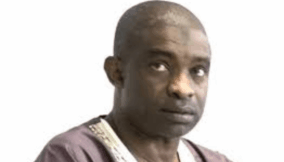
The adjournment followed the announcement of the death of a member representing Dawakin Kudu/Warawa Federal Constituency of Kano State, who passed on after a prolonged illness.

At the Senate, Barau Jibrin, the Deputy President, presided over plenary and led lawmakers in observing a minute of silence, describing the loss as painful and significant.

In the House of Representatives, Benjamin Kalu, the Deputy Speaker, announced the adjournment in honour of the late lawmaker.

Clad in black attire and a matching cap, Kalu described the development as a “dark moment” for the Green Chamber, noting that the deceased was an active member of the Constitution Review Committee.

“The mood of the House reflects the depth of this loss.

“He was committed to national service and contributed meaningfully to the Constitution Review process,” Kalu said.

Beyond the solemn mood, however, the adjournment underscores a broader pattern in which legislative work is increasingly overshadowed by political calculations.

With the National Assembly resuming plenary after its Easter break, only a few lawmakers returned to Abuja following a series of adjournments and postponements that limited sittings to just 17 days in the first quarter of 2026.

This resumption came barely 48 hours before party primaries, scheduled from April 23 to June 30, placing lawmakers at the centre of a direct clash between governance and full-scale electioneering.

Data from the Policy and Legal Advocacy Centre (PLAC) shows that since its inauguration on June 13, 2023, the 10th National Assembly has spent 581 out of 1,003 days on recess, with only 422 days devoted to plenary sittings.

Under Section 63 of the 1999 Constitution, the legislature is required to sit for not fewer than 181 days in a year.

However, the legislative calendar, which runs from June to May of the following year, now appears increasingly compressed, with limited room to accommodate both governance and intensifying political activity.

The disruptions have been compounded by repeated adjournments.

After resuming from the Christmas and New Year break on January 27, plenary was quickly suspended for committee-level budget defence sessions.

Lawmakers briefly reconvened in February to pass the Electoral Act 2026 before embarking on further adjournments that shifted resumption dates multiple times.

Following a Sallah break, the Assembly reconvened on March 31 to pass the revised ₦68.32 trillion 2026 Appropriation Act, only to adjourn again for Easter, returning on April 21.

Amid this unstable calendar, early signs of political repositioning have become more pronounced.

Solomon Adeola, Chairman of the Senate Committee on Appropriations, has come under scrutiny over his recent absence from key legislative duties as he intensifies his political ambitions.

Widely linked to a governorship bid in Ogun State, and now confirmed to have secured his party’s ticket, Adeola was notably absent during the screening of a key finance nominee, Taiwo Oyedele, only appearing toward the end of the session.

His absence from recent plenaries marks a departure from his reputation as a consistently present lawmaker during critical fiscal engagements.

This development has raised concerns about the Senate’s ability to maintain coordination during sensitive legislative processes.

Beyond Adeola, a broader wave of political repositioning is sweeping across the legislature.

Ahmed Lawan, former Senate President, is widely speculated to be eyeing the Yobe governorship, while Abdulfatai Buhari has openly declared his intention to contest the Oyo governorship, stating he will not return to the Senate. Sharafadeen Alli is also believed to be pursuing the same ticket.

In Nasarawa, Aliyu Wadada and Mohammed Onawo have stepped up political activities, while in Bauchi, Abdul Ahmed Ningi has declared his ambition, with Shehu Buba Umar also positioning for the APC ticket.

In Kwara State, all three senators; Lola Ashiru, Saliu Mustapha, and Umar Sadiq are believed to be eyeing the governorship, with Ashiru already declaring his interest and Mustapha intensifying grassroots mobilisation.

The Deputy Speaker has also, in recent months, stepped up political engagements across Abia State in moves that suggest early positioning ahead of the state’s 2027 governorship race.

In recent months, Kalu’s political footprint in Abia has become more visible from stakeholder meetings to community gatherings, consultations with party leaders, and appearances across the three senatorial zones indicating engagements that appear more deliberate than routine constituency work.

This became more evident in Isiala Ngwa in early April, where local leaders and political stakeholders openly urged him to contest the governorship in 2027.

The calls, made at a political gathering that also featured the inauguration of a grassroots movement and the declaration of a House of Representatives aspirant, reflected a growing alignment within one of the state’s key political blocs.

Kalu neither dismissed the calls nor gave a direct answer. Instead, he acknowledged the growing support and said he would respond at the “appropriate constitutional venue.”

“I have received your request,” he told supporters, adding that he would not respond community by community, but would rather address stakeholders collectively in Umuahia after weighing the level of support.

“All of you will come in your numbers and make that request again at the state capital. When I hear it clearly on that day, I will respond,” Kalu said.

The increased activity comes at a time when the constitution review process, under the purview of the committee he chairs, has entered a quieter phase, even as timelines to conclude the exercise have elapsed.

While such lulls are not unusual in legislative work, the overlap of national responsibility and rising state-level political engagement highlights the competing demands shaping the Deputy Speaker’s schedule.

The committee has not held any notable engagement in months. It had been scheduled to conclude the Constitution Review through the procedural voting process in October 2025, but that process was postponed repeatedly and is yet to hold.

Another lawmaker, Gboyega Nasir Isiaka, has remained consistent in the governorship conversation in Ogun State.

As Chairman of the House Committee on National Planning and Economic Development, he has continued to deepen his political involvement through stakeholder meetings while seeking broader endorsement and support.

Those not seeking governorship seats are equally engaged in political survival, frequently returning to their constituencies to secure re-election tickets, engage party delegates, and consolidate grassroots support.

In the coming days after the primaries, a number of defections are also expected across party lines, as lawmakers seek platforms that offer the easiest path to securing tickets.

These movements have had a visible impact on legislative activity.

Observations show declining attendance at plenary and reduced committee engagements, with some hearings postponed due to the absence of key lawmakers.

Many committees are reportedly inactive, as members remain outside Abuja, focusing on consultations, stakeholder meetings, and political rallies.

The cumulative effect is already evident in governance outcomes.

The 2026 budget was passed well into the fiscal year, while the constitutional amendment process remains pending despite the December 2025 deadline having elapsed.

As the momentum of party primaries intensifies, legislative engagement may continue to decline, leaving a narrow and uncertain window for governance.

Despite repeated assurances from leadership that legislative duties will not be compromised, the reality within the chambers suggests an institution increasingly pulled between its constitutional mandate and the demands of electoral politics.

Reacting to the development, Innocent Okechukwu said the trend of lawmakers prioritising political activities over governance, though troubling, is not entirely unexpected.

“It is not surprising to see election activities overtaking governance. Don’t forget our politicians are already selfish in nature, so they prioritise their future before the duty of office,” he said.

He, however, warned that the growing dominance of politicking poses a deeper risk to democratic stability and policy delivery.

“Elections are meant to renew leadership, not to replace governance. When politicking begins to dominate too early, the real casualty is often policy continuity, because attention shifts from delivering results to securing political advantage,” Okechukwu added.

According to him, the implications of this shift are far-reaching, particularly for citizens who depend on the outcomes of governance.

“Democracy weakens when governance becomes secondary to electoral positioning. The implication is that citizens pay the price of unfinished priorities,” he said.

Join BusinessDay whatsapp Channel, to stay up to date

Open In Whatsapp