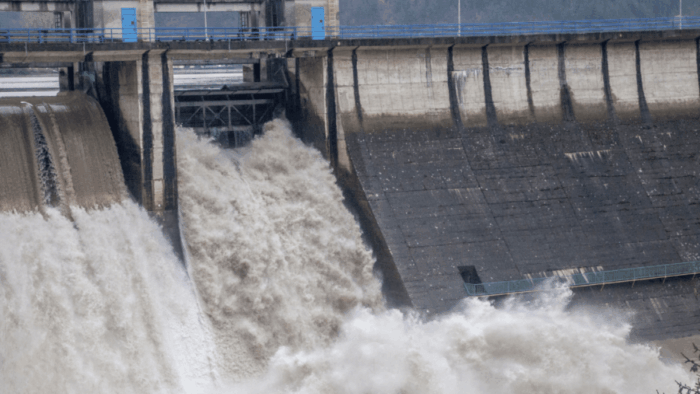
Ibrahim Almustapha Aliyu, Chairman of the House of Representatives Ad Hoc Committee on Power Sector Reforms, has described the Dadin Kowa Hydropower Plant in Gombe State as a strategic asset driving electricity stability in Nigeria’s North-East.
Mr Aliyu made the remarks while briefing journalists on Tuesday, following an oversight visit to the 40-megawatt facility. The committee’s visit was intended to assess the plant’s operational performance and its contribution to ongoing reforms within the power sector.
Private investment bolsters national grid reliability
Aliyu stated that the plant serves as a practical example of how private sector investment can complement government efforts to strengthen electricity generation and improve grid reliability. Operated by Mabon Limited under a Build, Operate, and Transfer (BoT) arrangement, the facility is currently generating approximately 17 megawatts.
While current output is dictated by prevailing water levels, the plant maintains an impressive operational availability rate of 98 per cent. Mr Aliyu explained that such variations are typical of hydropower plants globally, as generation is influenced by seasonal water inflows. The facility retains the capacity to reach full output during peak periods.
Read also: Africa Soft Power Summit to focus on linking finance, creativity and talent
Renewable energy milestones in the North-East
Since commencing commercial operations in December 2021, the Dadin Kowa plant has delivered over 750 million kilowatt-hours of electricity to the national grid. This output has significantly bolstered Nigeria’s renewable energy mix while reducing the nation’s dependence on fossil fuels.
The committee chairman highlighted the plant’s specific impact on regional grid stability. He noted that its strategic location and steady generation have improved voltage quality and enhanced power reliability across the North-East. This improved supply has directly supported local economic activities, including operations at the Muhammadu Buhari Industrial Park.
Resilience and the future of public-private partnerships
Aliyu also pointed to the plant’s resilience during national grid disturbances. He noted that the facility has the capacity to provide localised support, sustaining critical services when wider transmission challenges arise. He further commended the supporting infrastructure, particularly the transmission and evacuation systems developed alongside the project.
The lawmaker emphasised that the project, executed under a Federal Government-approved concession, demonstrates the viability of public-private partnerships (PPPs) in addressing Nigeria’s energy deficit. The success of the Dadin Kowa Hydropower Plant, he concluded, underscores the necessity of encouraging structured private investment to achieve long-term energy security.
Join BusinessDay whatsapp Channel, to stay up to date
Open In Whatsapp