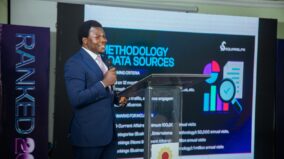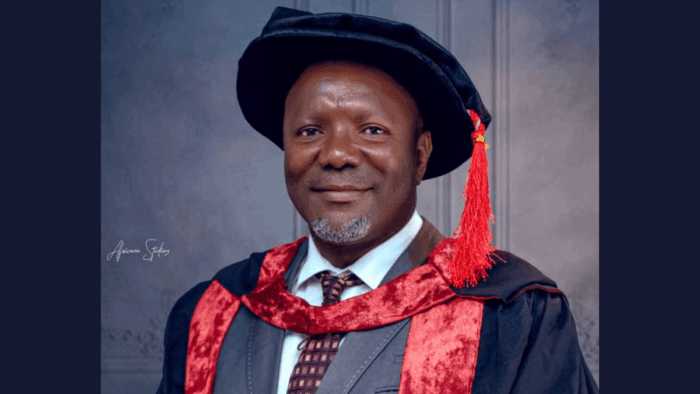
Ogochukwu Nwangene, Dean, Faculty of Management Sciences of Chukwuemeka Odomegwu Ojukwu University (COOU), Igbarim, Anambra state, has seeks for harnessing indigenous knowledge and digital innovation for sustainable development.
Nwangene, a professor, made the call on Monday when he hosted the institution’s 5th International Conference 2026, which drew academicians, lawmakers, administrators, traditional rulers and students.
He appreciated what he described as “this important academic gathering by the Faculty of Management Sciences”in his address, themed: “Decolonising Management: Harnessing Indigenous Knowledge and Digital Innovation for Sustainable Development”
He said that the Theme “is both timely and compelling. It speaks to the major intellectual duty of our time. It also speaks to practical development challenges before Nigeria, Africa, and the wider global South.
“This conference invites us to reflect deeply on a simple but important question: Can sustainable development be achieved in our society if management knowledge, management systems, and management practice remain disconnected from our local realities? The answer, as many of the papers presented here suggest, is no.”
The Dean further posited that “For many years, management thought and practice in our environment have leaned heavily on foreign assumptions, foreign models, and foreign institutional experiences. Many of these have offered useful insights.
Yet, many have also failed to fully account for our social structures, enterprise systems, communal networks, informal institutions, and indigenous ways of organising production, trust, leadership, and exchange”.
Nwangene explained that the Faculty of Management sciences would be living up to its billings and responsibilities of training students to be critical thinkers to produce knowledge with transformative impact to provide pragmatic approaches and panaceas to development challenges in Nigeria in particular and Africa in general.
He said: “The advancement of knowledge in Management sciences cannot be left to the university alone.The world of business and the world of scholarship must work together. Industry has practical problems that require research-based solutions.
According to him, the university has ideas, methods and human capacity that can generate those solutions. When both sides meet in trust and purpose, society benefits.
“We therefore call for strong support in the following areas: collaborative research, endowed lectures, sponsored conferences, staff development support, students internships, field-based projects innovation hubs, enterprise laboratories, data access, , partnerships, and funding for solution-driven studies in management, entrepreneurship finance, procurement, marketing, accountancy and related fields”
Ifeoma Mary Okwo, a professor, Department of Accountancy, Enugu State University of Science and Technology (ESUT), while appreciating the Faculty for finding her intellectually worthy to demonstrate her grasp of the theme, contended that sustainable development in Nigeria requires deliberate effort to decolonize management by reducing overdependence on foreign management systems and integrating indigenous knowledge with digital innovation.
The professor of Accountancy submitted that “The central problem identified is that, despite political independence and economic indigenisation efforts, many Nigerian organisations still rely heavily on foreign models of management and imported technologies, which has created serious challenges such as technological dependence, environmental degradation, inequality in access and ethical concerns including privacy security, job displacement, and cultural erosion. This creates the need for a more balanced development model”.
To frontally address this gap, Okwo proposed the integration of indigenous knowledge systems with modern digital tools, positing that “Indigenous Knowledge is presented as community-based knowledge built over generations through lived experience, culture, and interaction with the local environment.
Such knowledge remains important for livelihood sustainability, cultural identity, and environmental stewardship, but is increasingly threatened by globalisation and rapid technological change. As a result, management practice in Nigeria should consciously draw from local realities, values, and traditional systems while also embracing relevant technological advances.
In his remarks, the Speaker of Anambra state House of Assembly, Hon. Somto Udenze, who was given an award, commended the Dean, Management Sciences, for the highly valued and results-oriented conference, and promised that the House would encourage and support Governor Chukwuma Soludo’s efforts towards such innovations.
Also speaking, the Mayor of Orumba North local government council, Casmir Chinonso Nwafor, commended the timely conference and pledged his local government’s unalloyed support.
The Mayor who was the National Award winner for the best performing local government councils Chairman in Nigeria, said that government cannot do everything.
He said that his local government council is taking up such mentorship to drastically improve the living standard of the rural dwellers more, especially the youths geared towards actualising their potentials and making them self-reliant, creators of employments, wealth creation and subsequent reduction of underemployment and grinding poverty and penury in the rural areas.
In his brief remarks, the Royal Father of the day, Igwe John Ewuno of Nando praised the institution for such innovative conference and requested the Dean to draw the attention of the state government to the vast deposit of clay in his community which should be explored and exploited for plate making to enhance the programmes of industrialization in the state.

Join BusinessDay whatsapp Channel, to stay up to date
Open In Whatsapp