For all the talk of an African trade renaissance, the continent still does more business with the rest of the world than with itself.
Intra-African trade accounts for only 15 percent of the continent’s total – a gap that the Access Bank aims to address through its annual African Trade Conference (ATC).
With the African Continental Free Trade Area (AfCFTA) now ratified by 47 countries, the continent has established the legal framework for a $3.4 trillion single market. Unlocking AfCFTA potential hinges on three levers – infrastructure, finance, and standards.
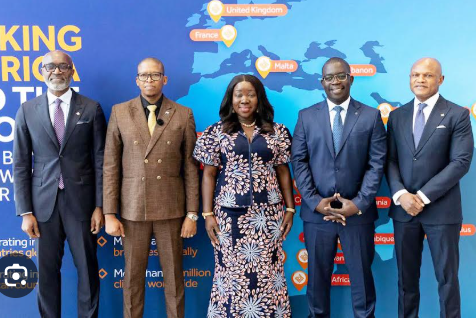
Access Bank held the second edition of the ATC in Cape Town, South Africa, last month, themed ‘Turning Vision into Velocity: Building Africa’s Trade Ecosystem for Real-World Impact,’ to unlock the continent’s trade potential and accelerate trade within its own borders while strengthening its role in global commerce.
The conference brought professionals together from both the private and public sectors who are champions of entrepreneurship to discuss how to redefine and reset African trade for shared prosperity.
The 2026 gathering was designed as a continuation of the inaugural ATC held in 2025, at which participants agreed on a set of priorities to reshape Africa’s trade ecosystem.
Those priorities included breaking down long-standing silos among policymakers, financial institutions, and businesses; building trade systems supported by reliable data and analytics; and creating platforms that serve both large corporations and smaller enterprises seeking to operate across multiple African markets.
Both editions of the ATC conference outcome serves as an input for policymakers and countries to provide solutions to factors hindering trade across the continent.
Bridging the gaps
The experts at the ATC 2026 stated that the building blocks of AfCFTA are taking shape to deepen intra-African trade.
However, they noted that there is still a great deal of practical work to be done, including regulatory harmonization, logistics infrastructure development, and the establishment of a trade financing system to unlock Africa’s full trade potential.
Roosevelt Ogbonna, chief executive officer and managing director at Access Bank, which hosted the event, said progress had been made in advancing African trade since last year’s edition of the conference.
“There has been the establishment of value chains across various business sectors,” he said.
However, he identified high cost of finance, fragmented payment systems, infrastructure gaps, and limited trade information as key constraints affecting businesses seeking to operate across African borders.
He added that trade is concentrated in only some corridors and markets on the continent. “Many of these improvements are concentrated in specific markets and corridors, and that is not good enough if we are to truly unlock the potential of Africa’s trade,” he said.
Ogbonna stressed that addressing these key constraints would require sustained collaboration among institutions that have historically operated in isolation.
The African potential
Africa is home to the world’s youngest population, some of the fastest-growing markets, vast deposits of critical minerals, enormous agricultural potential, and a booming agri-tech ecosystem.
With about 1.4 billion consumers, Africa is positioned to have robust domestic demand. Turning this demand into intra-African trade means producing more of it at home and moving it across borders without friction.
In his presentation, Tolu Oyekan, managing director and partner, Boston Consulting Group, highlighted the contrast between the continent’s demographic and economic potential and its current trade performance.
Africa, he noted, possesses several structural advantages that could support deeper economic integration and position itself in global trade.
According to him, while many other markets are experiencing structural population decline, the African market comprises 1.5 billion people and AfCFTA is the world’s largest free trade area.
He added that Africa holds large reserves of critical minerals that are becoming increasingly central to global industrial supply chains.
Together, Oyekan noted that these elements provide the foundation for stronger intra-African trade. However, he explained that the challenge lies in translating these structural advantages into consistent trade flows and productive regional value chains.
Increasing value addition
A recurring theme at the conference was the structure of Africa’s exports. Many economies across the continent remain heavily dependent on primary commodities such as crude oil, minerals, and unprocessed agricultural products.
The dollars flow in, but the value does not. While these exports generate foreign exchange, they often capture limited value within Africa itself. Processing, industrial learning, and technological development frequently occur elsewhere, where raw materials are transformed into finished products.
Also, despite efforts to diversify its trading partners, Africa’s economy remains exposed to commodity price volatility due to the region’s reliance on commodity exports.
Oyekan noted that while Africa engages in trade, it extracts too little value, saying about 77 percent of its exports consist of primary commodities, and the ratio of trade to GDP is volatile and low compared to other regions.
Some progress
Despite the challenges, experts at the conference pointed out that the landscape is gradually evolving. Agriculture, light manufacturing, and services are gradually emerging.
Oyekan pointed out that it is not all doom for the continent, saying that there are beginnings of a viable light manufacturing sector in many trade corridors, growth in pharmaceutical production capacity, and initiatives to process some of the export commodities.
African brands are also establishing a stronger presence across the continent, building regional recognition and, in some cases, expanding into global markets. These developments signal a modest shift away from the continent’s historical dependence on exporting raw commodities toward a more diversified economic structure.
Technology plays an important role in this transformation. Digital platforms are reducing friction in payments, logistics coordination, and market access, enabling businesses to navigate cross-border trade more efficiently.
“Some African brands are now being exported locally and globally, and several technology platforms developed in Africa are alleviating the friction in payments and logistics systems that previously hindered trade on the continent,” Ogbonna noted in his welcome address.
Infrastructure, financing challenges
Africa’s trade push is stalling on infrastructure. Kennedy Mbekeani, director general of the Southern Africa region of the African Development Bank, noted that poor transport networks, energy supply gaps, and inefficient logistics systems has made moving goods across the continent more expensive.
Port and road upgrades could cut transport costs that run 50 percent above global averages, while digitised customs and payment rails would address delays that leave goods stranded for weeks.
Many governments face fiscal constraints that limit their ability to finance large infrastructure projects through public expenditure alone. As a result, mobilising private capital has become increasingly important for closing Africa’s infrastructure gap.
Yet, Oyekan experts argued that the relationship between infrastructure and trade is more dynamic than often assumed.
Rather than waiting for perfect infrastructure before expanding commerce, rising trade volumes can themselves attract investment by demonstrating the commercial viability of transport corridors and logistics hubs.
He argued that accelerating trade across the continent creates a compelling economic case for major infrastructure investments, noting that as trade volumes grow, the viability of key projects improves, attracting crucial investment and driving growth.
“Trade creates the economic case for infrastructure. It generates the revenue base that sustains it and attracts the capital that finances it,” he said. “Trade becomes the catalyst for the Africa that we want to see,” he added.
Also, expanding trade finance for SMEs — which face a $81 billion annual gap — is equally critical to move beyond raw commodity exports into processed goods and services.
According to Kwabena Ayirebi, managing director of banking operations at Africa Export-Import Bank (Afreximbank), the continent can no longer rely on foreign banks for funding, as these banks invariably prioritise the interests of their own country’s client companies.
Ayirebi mentioned that Africa Export-Import Bank has already created a funding facility focused on boosting intra-African trade, which now constitutes 22 percent of the bank’s funding disbursements.
A compelling case for intra-African trade
Global trade is becoming increasingly unpredictable; experts at the conference emphasised the strategic importance of strengthening commerce within Africa itself.
They noted that the full implementation of the AfCFTA could significantly increase exports across the continent, raise incomes, and reduce poverty over the coming decades.
Greater intra-African trade could enable firms to scale production, deepen supply networks, and build regional competitiveness before entering global markets.
Oyekan noted that with global trade becoming increasingly unpredictable, the solution lies in deepening intra-African trade and building scale on the continent before the global market.
However, they stressed that trade agreements alone cannot deliver these outcomes. Implementation, through financing platforms, payment systems, logistics corridors, and regulatory coordination, is what ultimately transforms policy frameworks into commercial activity.
From talk to action
At the end of the conference, the message was clear: Africa’s trade overhaul will depend less on new declarations and more on coordinated execution.
Platforms like the Access Bank Africa Trade Conference are intended to bring together the institutions capable of driving that execution, from policymakers and financiers to manufacturers and entrepreneurs.
For Ogbonna, the task ahead is straightforward but demanding. Africa must move beyond discussions and begin translating its economic potential into tangible trade flows. “This conference must not end as another talking shop,” he said.
The blueprint for integration has been on the shelf for years; however, there are indications that the continent’s trade debate is gradually moving from aspiration toward implementation. What matters now is the speed and coordination needed to bind 54 markets into one.
Join BusinessDay whatsapp Channel, to stay up to date
Open In Whatsapp