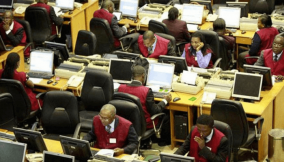
The Nigerian stock market is currently charging toward a historic N140 trillion valuation, catalysed by a massive buy signal from the international investment community. This bullish momentum follows the pivotal April 7 announcement of Nigeria’s reclassification from “unclassified” back to Frontier Market status, a move that has already seen equities market capitalisation surge by approximately N10 trillion.
As of Friday, April 17, the market’s primary performance indicators reflect this aggressive growth. The All Share Index (ASI) and total market capitalisation, which stood at 202,584.88 points and N130.4 trillion on April 8, have climbed to 217,167.57 points and N139.826 trillion, respectively. This rally is underpinned by a remarkable streak of eight consecutive days of positive closes, signalling a renewed and robust confidence in Nigeria’s evolving financial landscape.
Read also: Investors interest in build-to-let dying despite $2trn rental boom
Temi Popoola, Group Managing Director and Chief Executive Officer of the NGX said, “This milestone reflects the steady strengthening of Nigeria’s market fundamentals, driven by improved liquidity, more efficient price discovery, and rising domestic participation, all of which have supported the growth in market capitalisation.”
“It also underscores the market’s increasing visibility globally, positioning Nigeria to attract more sustained flows from investors seeking diversified exposure across frontier and emerging markets.”
Meristem Research analysts said they expect the reclassification to improve investor confidence, attract fund inflows into the Nigerian market, boost foreign participation, and strengthen buying activity, particularly in liquid, fundamentally sound stocks.
Banking giants like GTCO and Zenith Bank have continued to see heavy volume as foreign portfolio investors (FPIs) favour liquid, large-cap stocks.
Seplat Energy and Aradel Holdings remain key drivers in the oil and gas sector, benefiting from both high energy prices and local production milestones.
Seplat recently traded above N10,000, a first for the exchange. Guinness Nigeria, now a N1 trillion market cap stock and Nestlé have seen aggressive buying as domestic and international investors bet on a consumption rebound.
The market’s return year-to-date (YtD) increased to +39.53 percent, following a 6.55 percent increase in the trading week to Friday, April 17.
“The traction in the index coverage names may also catalyse some re-rating, even for other stocks, with investors likely to leverage peers’ trading strategies,” said CardinalStone research analysts.
They expect the reclassification to provide support to the Nigerian equities market, “with stocks previously linked to the index likely to see notable traction between the announcement and the effective date of September 21, 2026”.
“Stocks such as GTCO and Zenith in the banking space and MTNN, Dangote Cement, Seplat, and Nestle in our non-banking universe are likely to benefit from improved sentiments.
“The indices’ broad sectoral coverage and the material changes to Nigeria’s stock market since September 2023 (including huge listings) suggest that the index may eventually capture stocks such as Aradel,” CardinalStone analysts noted.
Read also: Dangote offers dollar dividends to attract investors into refinery IPO
According to Vetiva Research analysts who noted the impressive performance of Zenith Bank, their stock pick in the review trading week, “the move was underpinned by institutional demand, as reflected in its dominant turnover and sustained bid pressure throughout the session.”
“Price action indicates a clean breakout into new highs, suggesting continued momentum as investors position ahead of dividend expectations and earnings catalysts,” they added.
The Frontier status, effective September 21, 2026, essentially green-lit global passive funds to start buying back into Nigeria’s specific tickers.
Global index-tracking funds that mirror FTSE indices are now mandated to increase their exposure to Nigerian equities.
Also, the upgrade confirms that Nigeria has met stringent criteria regarding foreign exchange (FX) accessibility and settlement efficiency (maintaining a T+2 cycle).

Join BusinessDay whatsapp Channel, to stay up to date
Open In Whatsapp