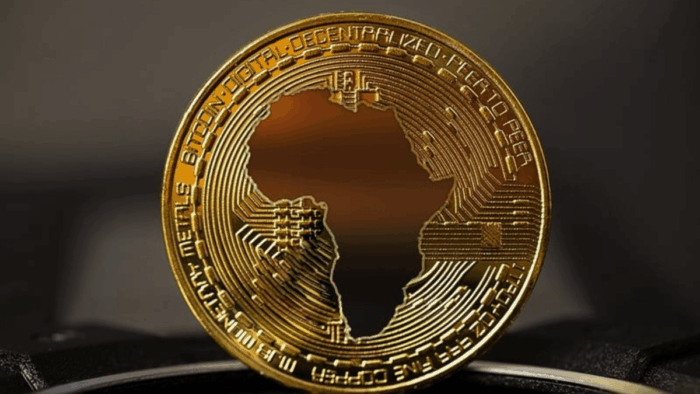
Washington D.C.|| Nigeria has intensified efforts to host the African Union’s African Monetary Institute (AMI), signalling renewed momentum toward a single African currency and deeper monetary integration across the continent as preparations advance for the institute’s planned take-off in September 2026.

The push was reinforced on the sidelines of the ongoing IMF/World Bank Spring Meetings in Washington DC, where Nigerian authorities reaffirmed their commitment to meeting all requirements needed to operationalise the institute on schedule, positioning the country at the centre of Africa’s evolving financial architecture.

Speaking at a high-level engagement on the AMI, Muhammad Sani Abdullahi, deputy governor, Economic Policy at the Central Bank of Nigeria (CBN), representing Olayemi Cardoso, governor of the CBN, said the establishment of the institute marks a critical step toward achieving a unified monetary framework for the continent.

“The African Monetary Institute is an important moment for our continent’s financial architecture, and it is also a moment that calls for clarity on where we are, what has been achieved, and what remains to be done to ensure that the AMI takes off on schedule,” Abdullahi said.

He noted that Nigeria has moved beyond declarations of support to concrete implementation, describing the institute as a practical instrument to drive macroeconomic convergence and strengthen monetary cooperation across African economies.

Following its adoption by African Heads of State and Government in February 2026, Nigeria has accelerated “last-mile” actions required to transition the AMI from a legal framework into a fully operational institution. As part of its host country obligations, the Central Bank has provided a dedicated office facility in Abuja, already opened for inspection by the African Union Commission.

“Nigeria remains fully committed institutionally, politically, and operationally to supporting the timely establishment of the AMI,” Abdullahi said. “We are ready to sign the Host Country Agreement and complete all necessary steps to ensure the institute commences operations as scheduled.”

Wale Edun, minister of Finance and Coordinating Minister of the Economy, represented by Permanent Secretary Raymond Omachi, echoed this commitment, stressing that Nigeria is prepared to provide the political, institutional, and logistical backing required to deliver the project within the timeline.

“We are ready, and we have all the infrastructure and the facilities in place. We know the importance of this institute as the first step in the financial integration of the African continent,” Omachi said.

At the continental level, the AMI is seen as a foundational pillar in the long-term ambition of creating a single African currency. Francisca Tatchouop Belobe, commissioner for Economic Development, Trade, Tourism, Industry, and Minerals at the African Union Commission, said the initiative is central to strengthening economic integration and enhancing policy coordination.

“A single currency would not only build on the African Continental Free Trade Area to create one of the largest markets in the world, but it would also consolidate monetary strength and significantly enhance countries’ ability to self-determine their policies and development paths,” Belobe said.

She emphasised that monetary policy remains a critical development tool, noting that more structured and unified frameworks, such as those seen in advanced economies, have historically strengthened economic resilience and coordination.

Also speaking, Kevin Chika Urama, chief economist and vice president at the African Development Bank, described the AMI as both necessary and overdue, underscoring its role in addressing longstanding structural weaknesses in Africa’s financial system.

“From the perspective of the African Development Bank Group, the African Monetary Institute is a must-have and a must-have that is already belated,” Urama said.

He added that the institute would support convergence in key macroeconomic indicators such as inflation, fiscal deficits, and debt management, areas that continue to pose risks across many African economies.

Urama further noted that monetary coordination would help reduce exchange rate volatility, limit speculative pressures, and improve debt sustainability, while strengthening regional cooperation.

“We cannot have a functional AfCFTA with more than 40 currencies on the continent,” he said.

With the September 2026 timeline approaching, the operationalisation of the AMI is increasingly viewed as a decisive step toward Africa’s long-standing ambition of monetary unification, even as significant structural and political challenges remain.

Hope Moses-Ashike is an Associate Editor, Banking and Finance, with more than a decade of experience reporting on Nigeria’s financial system and broader economy. She closely tracks market movements, monetary policy decisions, company disclosures, regulatory actions, economic indicators, and global developments, and interprets what they mean for businesses, investors, policymakers, and households. Her reporting helps readers understand complex issues such as inflation trends, foreign exchange market dynamics, interest rate decisions, bank performance, and investment risks. She also covers major international events and periodically travels to Washington, D.C., to report on the World Bank/IMF Spring and Annual Meetings. Her dedication to financial journalism has earned her multiple recognitions and invitations to high-level professional development programmes. She is an alumna of the International Visitors Leadership Programme (IVLP) in the United States and holds an Advanced Financial Journalism Certificate from the Press Association Training in London, UK. Her other notable achievements include completing the Lagos Business School CMC Programme, the Bloomberg Media Africa Initiative Programme, and a Master Class in Journalism at Rhodes University in South Africa.

Join BusinessDay whatsapp Channel, to stay up to date

Open In Whatsapp