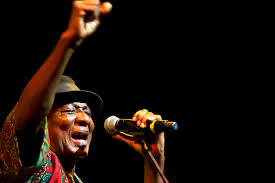
Ebo Taylor was not merely a Ghanaian music legend. He was one of the quiet architects of modern West African sound — a musician whose fingerprints are all over the evolution of highlife, Afro-funk and the broader sonic language that later fed Afrobeat and contemporary African pop. Across more than six decades, Taylor worked not only as a guitarist and singer, but as an arranger, composer, bandleader and producer who understood that music could be both rooted and restless at once. He built a style that carried the bounce of Ghanaian highlife, the discipline of jazz arrangement, the urgency of funk and the emotional force of African storytelling. When he died, Africa did not simply lose a veteran performer; it lost one of the master builders of its popular music tradition.
The Quiet Architect of Highlife’s Evolution
To speak of Ebo Taylor only as a contemporary of Fela Kuti is to understate his importance. Yes, the comparison is inevitable. Both men were products of a transformative era. Both travelled to London in the early 1960s, studied music, absorbed jazz and funk, and returned to West Africa determined to reshape African popular music on African terms. Their careers would later reflect parallel ambitions: to take the familiar pulse of highlife and toughen it with the rhythmic intensity of funk. But while Fela became a storm — confrontational, theatrical and politically explosive — Taylor became something else: a craftsman of structure, groove and continuity.
He was less interested in spectacle than in architecture. If Fela was the insurgent frontman of a movement, Taylor was one of the patient musical engineers who helped make that movement sonically possible. His greatness was never confined to celebrity. He belonged to the class of musicians whose influence often exceeds their visibility. In that sense, he was not merely a performer in African music history. He was one of its underlying designers.
A Ghanaian Master Between Tradition and Reinvention
In Ghana, Taylor emerged from the post-independence highlife tradition at a moment when the nation itself was trying to define its identity. Highlife had already become more than party music. It was turning into a language of public feeling, carrying elegance, satire, aspiration and national memory. Taylor entered that stream and pushed it forward. He fused indigenous rhythmic ideas with jazz horns, tightly wound guitar lines and the muscular pulse of American funk. In doing so, he helped move highlife from a polished dance-band idiom into something rawer, deeper and more adventurous.
What made Taylor exceptional was that he did not modernise highlife by abandoning it. He modernised it by listening more deeply to what it already contained. He understood that tradition was not a cage; it was a living resource. That instinct allowed him to treat Ghanaian musical forms not as relics to be preserved behind glass, but as dynamic material that could stretch, absorb and evolve.
His return to Ghana in the mid-1960s proved decisive. There, he formed and led bands, including the New Broadway Dance Band and later the Blue Monks, both of which reflected his determination to expand the expressive possibilities of highlife. He also worked closely with singers such as Pat Thomas, whose own career would become a major force in West African music. Their collaboration was not accidental. Taylor had a rare ability to create musical frameworks in which other artists could shine.
That is one reason his legacy is so large. He was not only making his own records; he was shaping the sound of an era for other musicians. His role as an arranger, guitarist and producer for the influential Essiebons label widened his impact even further. From behind the console as much as from the stage, he helped define how highlife, Afro-funk and related West African sounds could be recorded, arranged and presented to the public.
How He Bridged Highlife, Funk and Afrobeat
Taylor’s greatest contribution to African music was not simply that he made great songs. It was that he built a bridge between musical worlds that often seemed to run side by side. Highlife and Afrobeat are connected traditions, but they are not identical. Highlife is more melodic, more socially fluid, more closely tied to ballroom bands, palm-wine roots and urban West African dance culture. Afrobeat, particularly in its Nigerian form, became more militant, groove-heavy and ideologically charged. Taylor occupied the rare territory between them.
He understood both the sweetness of melody and the force of repetition. His guitar could seduce, but it could also drive. His arrangements had sophistication without stiffness. His music carried movement in every sense: movement of rhythm, of history, of ideas across borders. He gave highlife more grit, more tension and more rhythmic bite, while preserving its grace. He helped prove that African music could be urbane and earthy, elegant and insurgent, danceable and conceptually rich all at once.
This is why Taylor’s work remains so important to any serious understanding of African modern music. Long before “fusion” became a fashionable marketing term, he was doing the harder work of synthesis. He was creating music in which Ghanaian identity, African pride, jazz training and global Black influence could meet without any of them erasing the others. He did not imitate Western forms. He absorbed them, translated them and sent them back out through an African musical imagination.
Music for a Nation Finding Its Voice
Taylor’s story also belongs to the story of Ghana itself. He was born into a colonial world and came of age as Ghana moved toward independence and then into the difficult years that followed. Highlife, in many ways, was the soundtrack of that transition. It accompanied the optimism of nationhood, the cultural ambition of self-definition and the anxieties that came with economic decline and political instability. Taylor’s music emerged from that atmosphere and responded to it.
This is part of what gave his work its weight. Even when he was making dance music, there was something larger moving beneath it — a sense of people trying to hear themselves clearly in a changing world. His songs carried not only rhythm, but worldview. They echoed pan-African feeling, dignity, social awareness and the determination to create modern African art without apology.
That grounding in history helps explain why Taylor’s music never feels superficial. The grooves are inviting, but they are not empty. The arrangements are graceful, but they are not ornamental. Beneath the pleasure of the music is a deeper argument: that African cultural confidence could be expressed through innovation rather than imitation, and that national identity could be heard in sound as much as seen in politics.
The Hidden MVP of West African Sound
For all his brilliance, Taylor was never the loudest figure in the room. He did not cultivate mythology the way some of his peers did. He did not turn himself into permanent spectacle. Instead, he often took the role of the builder behind the scenes — arranging, producing, guiding and giving shape to other people’s work. That quieter path may have limited the scale of his celebrity for a time, but it enlarged the depth of his influence.
He was, in many respects, the hidden MVP of West African music. His artistry was embedded in ensembles, recordings and collaborations that helped define a broader cultural moment. He made things happen for other people’s sound. That alone would have secured his importance. But he also maintained a distinctive solo identity, one marked by grooves that felt both precise and relaxed, and by songs that seemed to carry memory inside movement.
To many who loved his music, he was “Uncle Ebo,” a nickname that carried affection as much as reverence. That title feels right because there was warmth in his art. Even at its most musically complex, it remained open, welcoming and human. Taylor’s music did not seek to intimidate the listener with sophistication. It invited the listener in, then revealed just how rich and layered it was.
The Long Silence and the Late Revival
Like many African musical pioneers, Taylor also experienced the injustice of delayed recognition. Economic shifts, changing tastes and the brutal instability of the recording industry pushed many foundational artists to the margins long before the world fully grasped their achievement. For a time, the spotlight moved on. The stages grew quieter. The industry seemed to have passed him by.
Yet he endured. Through teaching, session work, production and an unshakable fidelity to music, Taylor remained present even when he was no longer central to the mainstream conversation. He spent part of his later years teaching at the University of Ghana and contributing to other people’s projects, a role that reflected both humility and depth. He stayed in the work.
Then came the revival. It was not simply nostalgic rediscovery. It was a correction. The global audience, especially from the 2000s onward, began to catch up with what Ghana and much of West Africa had long known: that Ebo Taylor was one of the essential figures in African popular music. His 2010 album Love and Death reintroduced him powerfully to international listeners and broke a long hiatus from recording. Later works such as Appia Kwa Bridge and Yen Ara confirmed that he was not just an old master being ceremonially honoured. He was still a living artist, still capable of renewal, still able to make music that felt urgent and alive.
Why the World Finally Caught Up
The late rediscovery of Ebo Taylor says something important about global listening habits. For years, many African pioneers were celebrated locally yet overlooked internationally until reissue culture, crate-digging communities, sampling and specialist labels began excavating their catalogues. Taylor benefited from that shift, but his endurance cannot be explained by trend alone. The deeper reason his music found new audiences is that it remained startlingly fresh.
His grooves were too rich to age into irrelevance. His arrangements were too intelligent to remain buried. His guitar lines carried both atmosphere and propulsion. Younger listeners, DJs, producers and musicians heard in his recordings something more than historical curiosity. They heard a complete musical language — disciplined, danceable, emotionally resonant and endlessly reusable in new contexts.
That is why his work travelled so well across generations. Artists in hip-hop and R&B sampled his records not simply because they sounded old, but because they sounded alive. His music contained rhythm sections that still knocked, melodic fragments that still shimmered and compositional ideas that still felt contemporary. The world did not revive Ebo Taylor out of charity. It revived him because the music demanded it.
The Final Years of a Master
One of the most poignant dimensions of Taylor’s late-life renaissance was the fact that he reached new audiences at an age when many artists have long since left the stage. After decades of foundational work, he made his U.S. live debut only in his eighties. That detail says as much about the long neglect of African pioneers in Western markets as it does about Taylor’s resilience. Yet there was something fitting about the timing. He had lived long enough to see the world come looking for the very sound he had helped build.
By then, he had nothing left to prove. And yet he kept recording. He kept performing. He kept demonstrating that mastery is not static. His later albums did not sound like echoes of former glory. They sounded like the work of a musician whose imagination had remained intact, whose rhythmic instincts had not abandoned him, and whose presence still carried authority.
When he died in Saltpond, the town of his upbringing, there was a kind of historical symmetry in the moment. He had spent a lifetime translating the roots of Ghanaian sound into modern musical language, and he returned in death to the landscape that first shaped his ear. It was there, in the cultural texture of coastal Ghana, that the foundations of his sensibility had been laid.
A Legacy That Will Not Fade
Ebo Taylor’s death closed an extraordinary chapter, but it did not diminish the force of what he made. His story is, in many ways, the story of African popular music itself: born in colonial shadow, sharpened in the fever of independence, challenged by political and economic upheaval, then rediscovered by a global audience that was late to understand its value. Through all of that, Taylor remained steady.
He did not need noise to make history. He made it in the arrangements, in the grooves, in the discipline of craft and in the conviction that African sound could endlessly renew itself without losing its roots. That is what makes him such an important figure, not only in Ghanaian music but in the larger story of African modernity. He understood that modern African art did not need to sever itself from tradition in order to move forward. It needed only the courage and intelligence to transform tradition from within.
That is why Ebo Taylor endures. Not simply because he was great, but because he helped define what greatness in African music could look like: inventive without dislocation, cosmopolitan without surrender and timeless without ever becoming static. His music still moves because it carries a whole world inside it — Ghana’s memory, West Africa’s motion and the enduring confidence of a man who understood that the future of African sound would be built not by abandoning tradition, but by teaching it how to dance again.

Join BusinessDay whatsapp Channel, to stay up to date
Open In Whatsapp