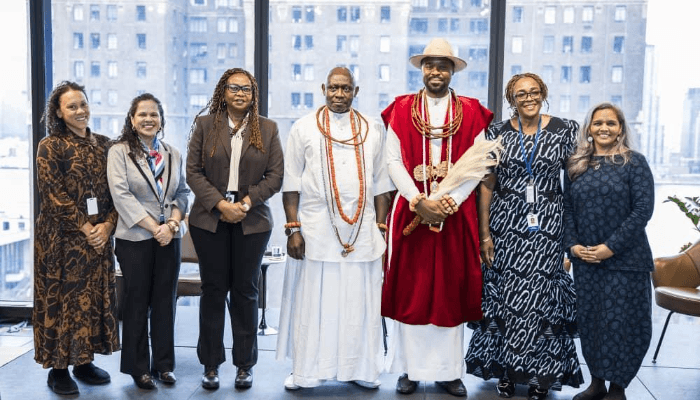
The Ford Foundation has called on First Ladies across the ECOWAS region to deploy their influence more strategically in tackling gender-based violence (GBV).

The Foundation described the First Ladies’ “soft power” as a critical driver of social change and institutional accountability.

The call was made by ChiChi Aniagolu, West Africa Regional director of the Ford Foundation, while delivering a goodwill message at the ECOWAS First Ladies’ Forum on Zero Tolerance for Gender-Based Violence, held in Banjul under the SWEDD+ platform in partnership with the World Bank and the United Nations Population Fund.

Aniagolu warned that despite existing frameworks and commitments, gender-based violence remains widespread, with one in three women globally affected. In West and Central Africa, she noted, harmful practices such as child marriage persist, with over 30 percent of girls in some countries married before the age of 18.

She also highlighted the economic burden of GBV, estimating losses of up to 3.7 percent of Gross Domestic Product in affected countries figures that exceed investments in key sectors such as education.

“We have the frameworks. We have the commitments. But we do not yet have outcomes at scale,” she said, noting that survivors continue to face barriers to justice due to fragmented and often inaccessible systems, despite instruments like the Maputo Protocol.

First Ladies as change agents

Aniagolu stressed that while First Ladies are not formal policymakers, their ability to shape public discourse and influence decision-making remains significant across the continent.

“Across Africa, First Ladies have shaped priorities, shifted narratives, and moved governments to act,” she said.

She cited examples including Maryam Babangida, whose Better Life for Rural Women Programme brought rural women into national development discourse, as well as Fatima Bio, whose “Hands Off Our Girls” campaign contributed to a national emergency declaration on rape in 2019.

Aniagolu also referenced Jeannette Kagame for her sustained advocacy on adolescent girls’ health and protection, noting that such efforts demonstrate how “soft power, when used intentionally, can move systems.”

Moving from commitments to action

The Ford Foundation, she said, has continued to invest in strengthening GBV prevention and response systems across West Africa, including partnerships with platforms involving First Ladies and governors’ spouses in Nigeria.

According to her, these interventions have focused on advancing advocacy efforts, improving evidence-based response systems in several Nigerian states, addressing harmful social norms, and strengthening regional coordination and standards on GBV prevention.

Aniagolu emphasised that laws and policies alone are insufficient without public trust and accessibility, pointing to persistent silence among survivors driven by stigma, fear and weak institutional confidence.

“A law can exist, but if communities do not believe in it, it will fail,” she said, adding that breaking the cycle of silence requires “visibility, empathy and leadership.”

Referencing recent regional initiatives such as the GBV Roadmap (2026–2028), Legal Scorecard and Joint Communiqué, she urged First Ladies to move beyond commitments by encouraging safe reporting, challenging harmful norms and strengthening accountability systems.

“No girl should grow up believing silence is her only option, and no woman should be denied justice because of where she lives,” she said, reaffirming the Ford Foundation’s commitment to supporting advocacy, strengthening systems and amplifying women’s voices across the region.

Join BusinessDay whatsapp Channel, to stay up to date

Open In Whatsapp