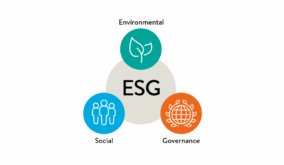
There was a time when ESG (Environmental, Social and Governance) was dismissed as a “nice-to-have”. That time has passed. Today, ESG is shaping global capital allocation at a scale too significant for any serious business leader to ignore.
Let us start with the numbers, because they tell a compelling story.
According to the Global Sustainable Investment Alliance, over $30 trillion is already invested in sustainable assets globally (gsi-alliance.org).
Bloomberg Intelligence and other market analyses further project that ESG-linked assets could exceed $40 trillion by 2030 (Bloomberg).
So yes, the assertion that the global ESG investment market sits within the $30–$40 trillion range is not only valid; it is conservative. What we are witnessing is not a trend. It is a structural reallocation of global capital. This assertion changes the rules of the game. When capital at a $30–$40 trillion scale is being reallocated based on ESG considerations, it means sustainability is no longer a side conversation. It is now a core determinant of who gets funded, who scales, and who becomes obsolete.
The real question for African businesses is not whether ESG matters. It is about whether we are positioned to benefit from this capital shift or be excluded from it.
Capital is no longer neutral
Global investors are no longer just asking, “What is your return?” They are asking, “How sustainable is your return?”
This shift is profound. Capital is becoming values-driven. Pension funds, sovereign wealth funds, development finance institutions, and even private equity are embedding ESG filters into their investment decisions. In practical terms, this means:
-Companies with poor governance structures are becoming uninvestable.
-Businesses with weak environmental practices face a rising cost of capital.
-Organisations that ignore social impact risk reputational and regulatory backlash.
-Conversely, companies that demonstrate strong ESG credentials are attracting patient, long-term capital.
For African markets where infrastructure gaps, climate risks, and social inequalities are pronounced, this presents both a challenge and an opportunity.
The African opportunity
Africa is not starting from zero. In fact, we are uniquely positioned to attract ESG capital because many of our development needs align directly with global sustainability priorities.
Take renewable energy. Nigeria’s off-grid solar sector has attracted increasing investor interest because it solves both an environmental and a social problem. It is clean energy access. Companies like Lumos and Daystar Power are not just energy providers; they are ESG investment cases.
In agriculture, climate-smart farming initiatives across Kenya and Ghana are drawing funding from impact investors seeking both returns and resilience.
Even in extractives which are often viewed as ESG laggards, there is a shift. Forward-thinking oil and gas companies in Nigeria are beginning to integrate methane reduction, community development, and governance reforms into their operating models. This is not philanthropy; it is strategy.
And then there is reforestation, which is an area where I do a lot of work. Large-scale afforestation and carbon sequestration projects across West Africa are increasingly being positioned as investable ESG assets, tapping into global carbon markets and sustainability-linked financing.
From compliance to competitive advantage
One of the biggest misconceptions I encounter is that ESG is about compliance; it’s just tick-box reporting, glossy sustainability reports, and meeting regulatory minimums.
That mindset is false, limiting and misleading.
The businesses that will win in this new era are those that treat ESG as a value creation strategy, not a reporting obligation.
What does that look like in practice?
First, governance must move from form to substance. Boards must actively oversee ESG risks and opportunities, not delegate them to junior teams. Investors can tell the difference.
Second, environmental responsibility must be embedded in operations. This includes energy efficiency, waste reduction, and resource optimisation which, in addition to being good for the planet, improves business margins.
Third, social impact must be intentional. From workforce diversity to community engagement, businesses must demonstrate that they create shared value.
When done right, ESG drives efficiency, reduces risk, enhances brand equity, and unlocks new markets.
The cost of inaction
There is another side to this conversation, one that African businesses must take seriously.
As global ESG standards tighten, companies that fail to adapt risk being locked out of global value chains. Already, regulations such as carbon border adjustment mechanisms in Europe are beginning to penalise carbon-intensive imports.
For Nigerian exporters, this is not a distant threat. It is an emerging reality.
Similarly, international lenders are increasingly tying financing to sustainability performance. Poor ESG ratings can translate directly into higher borrowing costs, or no access to capital at all.
A leadership imperative
Ultimately, ESG is not a sustainability issue. It is a leadership issue.
The flow of $30–$40 trillion in ESG capital is not accidental. It is the result of deliberate choices by global leaders to redefine what “value” means in business.
African leaders must respond with equal intentionality.
We must build businesses that are not only profitable but also responsible. Not only resilient but also regenerative. Not only locally relevant but also globally competitive. Because in this new world, capital will not simply follow opportunity. It will follow responsibility.
And those who understand this will not just attract investment; they will define the future of business in Africa.
Sarah Esangbedo Ajose-Adeogun is the Founder and Managing Partner at Teasoo Consulting Limited, a foremost ESG consulting firm. She is a former community content manager at Shell Petroleum Development Company and served as the special adviser on strategy, policy, projects, and performance management to the Government of Edo State. She is also the host of the #SarahSpeaks podcast on YouTube @WinningBigWithSarah, where she shares insights on leadership, strategy, and sustainable growth.

Join BusinessDay whatsapp Channel, to stay up to date
Open In Whatsapp