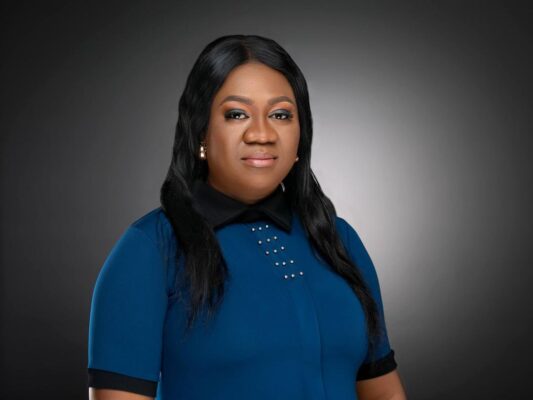
Trust services are moving from the margins to the centre of how wealth is structured, protected and transferred in Nigeria. As capital markets deepen and client needs become more complex, trustees are playing a broader role across private wealth, infrastructure finance and financial inclusion. Rita Imonieroh, managing director, FCMB Trustees Limited, in this interview with HOPE ASHIKE-MOSES, outlines how the firm is expanding its private trust offering, driving adoption through education, and positioning trusteeship as a pillar of investor confidence and long-term value. Excerpts:
You recently joined FCMB Trustees. What has been your focus since assuming the role?
Since joining FCMB Trustees in August 2025, my focus has been on deepening our impact and expanding service to clients and communities.
We are strengthening our private trust services offering. While we have a solid base in corporate trust, private trusts remain underpenetrated in Nigeria. We see an opportunity to grow this segment through awareness and client education. Anchored in estate planning, private trusts help clients protect assets, preserve wealth and ensure orderly transfer across generations.
We are also digitising key processes across compliance, onboarding and service delivery to improve efficiency and enhance client experience.
What strategies are guiding your efforts toward achieving these goals?
Client awareness is central. Trust services have historically suffered from low visibility and limited understanding. We are addressing this through sustained education and targeted engagement.
We use multiple channels, particularly digital platforms, to simplify trust concepts through storytelling, infographics and practical guides. The goal is to make trust services accessible and easy to understand. Technology is another key pillar. We are investing in tools that streamline operations and improve service delivery. At the same time, we are building solutions for both the emerging affluent segment and underserved groups, supported by local and global partnerships.
You mentioned the industry is underserved. What is driving this?
The challenge is not a shortage of trust companies. The number of operators has grown in recent years. The real issue is low awareness. Many people do not fully understand what trust services are or how they support wealth protection, family needs and asset transfer. There are also misconceptions that trusts are only for the wealthy or that they require giving up control of assets. These gaps mean many individuals and families are not taking advantage of structures that can support long-term financial security.
How would you describe your leadership approach in a changing regulatory environment?
As part of the FCMB Group, I align with the group’s core values of excellence, purpose, innovation and customer focus.
My approach emphasises adaptability, strong governance and continuous improvement. We stay responsive to regulatory and market changes while maintaining a clear focus on delivering value to clients.
What role do trustees play in strengthening investor confidence in capital markets?
Trustees are central to the functioning of capital markets. They act as independent custodians of clients’ assets, ensuring that the interests of investors are protected. In structured transactions, trustees manage collateral, monitor compliance with agreed terms and provide transparent reporting. This independent oversight and neutrality build confidence and support market integrity.
Estate planning is becoming more important in Nigeria. How are FCMB Trustees responding?
We are addressing this by expanding estate planning solutions to better serve those seeking wealth preservation and transfer.
We combine tailored advisory with digital tools to deliver flexible solutions for individuals, families and diaspora clients. Education remains critical to broadening adoption, particularly among middle-income clients.
What are the key misconceptions Nigerians have about trust services?
A common misconception is that trusts are only for high-net-worth individuals. In reality, they can support a wide range of clients. Even a retirement savings account can be the only asset held under an estate plan. There is also concern about loss of control. Many believe transferring assets to a trust means handing them over completely to the trustee, who can misuse them. However, trustees operate within defined legal frameworks that reflect the wishes of the asset owner. Another misconception is cost. While trusts require planning, the cost of poor estate management or intestacy can be significantly higher. Cultural inheritance practices also contribute to resistance. In addition, people generally compare trusts with other traditional investment tools and expect trusts to generate high returns like conventional investments, but they primarily preserve capital and enable smooth wealth transfer.
How is FCMB Trustees positioning itself in infrastructure finance and corporate trusteeship?
Infrastructure finance presents a major opportunity. As Nigeria looks to close its infrastructure gap, the capital market will play an important role.
We are positioning ourselves as a transparent and compliant provider of structured trust services, supporting bond issuances, syndicated loans and other transactions. Our role is to ensure compliance, monitor obligations and protect investor interests throughout the lifecycle of these deals.
How can trustees contribute to financial inclusion?
Trusteeship can expand financial inclusion in Nigeria by acting as a bridge between underserved/emerging affluent customers and formal finance, using structures that protect assets, enforce transparency, and build confidence in more complex products. Trustees provide independent oversight, safeguard assets, and enforce covenants in products like collective investment schemes, bonds, escrows, and wealth structures, which make new or cautious users more willing to participate.
For low‑ to middle‑income and informally employed Nigerians, trusteeship can: (i) Support micro‑savings and micro‑investment schemes (e.g., cooperative investment clubs and agent‑led savings) by holding pooled funds, monitoring managers, and ensuring agreed payout rules are followed. (ii) Serve as escrow/settlement agents for marketplace platforms, pay‑later schemes, and diaspora remittances, so funds are only released when conditions are met, reducing fraud fears that often keep people in cash.
For emerging affluent professionals and entrepreneurs (often first‑generation wealth): Estate planning and private wealth trusts help formalise assets, avoid family conflict, and ensure continuity. Trustees can structure goal‑based investment trusts (education, housing, business expansion), where the trustee enforces disciplined contributions and investment mandates, solving the “I don’t trust the manager” barrier. Business owners can use trustees as security trustees in bank/fintech lending and note programmes, making it easier to raise capital from a wider pool of investors who rely on the trustee’s independent monitoring.
Do you serve clients across different income segments?
Yes, we serve clients across the income spectrum, from individuals and families to SMEs, corporates and public institutions.
Our solutions are tailored to a range of needs, from simple estate planning tools to more complex wealth and corporate trust structures.
Can clients save with trustees as they do with banks?
Trust services differ from traditional banking.
Clients can save with trustees, but it’s not the same as saving with a bank, and it’s important to understand the difference. A trustee manages money on behalf of clients under a legal structure called a trust. This is commonly used for estate planning, wealth management, investment portfolios, retirement or education funds, as the case may be.
Banks take clients’ deposits and offer interest, amongst others. However, a trust company focuses on growth, protection, preservation and transfer of a client’s assets rather than short-term returns.
How do you assess Nigeria’s regulatory environment under the Securities and Exchange Commission?
The regulatory environment is strengthening, particularly with recent reforms that enhance oversight, investor protection and market stability. This is primarily driven by the Investments and Securities Act (ISA) 2025 and recent SEC circulars which mandate sharp increases in minimum capital for capital market operators to bolster stability in the capital market. The ISA, amongst others, expands SEC powers in oversight, enforcement, and investor protection, covering digital assets and imposing stricter penalties for non-compliance. The SEC also mandates full minimum capital compliance by June 2027.
These developments are positive for the long-term growth of the capital market. However, continued investor education and closer alignment across regulators will be important to drive participation and innovation.
What trends will shape the trust industry over the next five to 10 years?
Technology, regulation and evolving client needs will shape the industry.
Digital transformation will improve service delivery, while clients will increasingly demand more tailored and cross-border solutions.
How can Nigeria deepen participation in trust structures?
Improving legal frameworks and simplifying processes will be key. This includes modernising trust laws and digitising asset registration systems.
Greater integration of trustees into financial structures will also help build confidence and drive adoption.
How can collaboration within the financial sector be strengthened?
Stronger coordination among regulators and industry players will be important. Shared infrastructure, data systems and knowledge exchange can improve efficiency and trust.
Collaboration will be critical to expanding access and delivering better outcomes across the financial system.

Join BusinessDay whatsapp Channel, to stay up to date
Open In Whatsapp