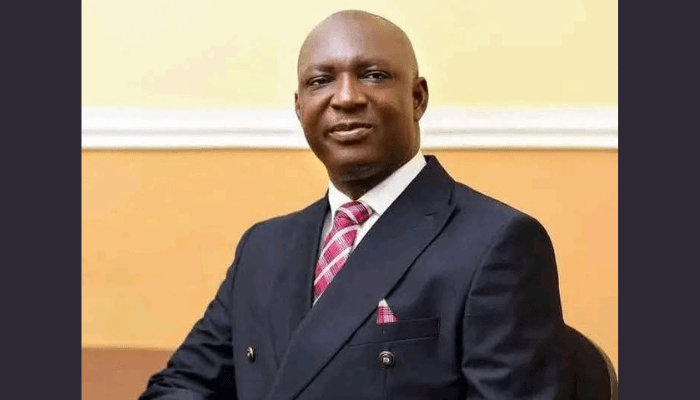
The Chairman of the Northern Christian Association of Nigeria, Joseph John Hayab, has cautioned political actors against exploiting religious and ethnic tensions ahead of future elections, warning that Kaduna State must not relive the tragic violence that trailed the 2002 Miss World Beauty Pageant crisis.
Hayab, who also serves as Country Director for the Global Peace Foundation Nigeria, spoke in an interview with BusinessDay on Monday in Kaduna on insecurity in Kaduna and across northern Nigeria, the economic implications of violence, and the performance of Governor Uba Sani’s administration.
He stressed that insecurity in Nigeria predates the current government, noting that successive administrations have grappled with communal conflicts rooted in historical grievances, political manipulation, and identity divisions.
Hayab emphasised that, “The insecurity we are seeing today did not start with this regime. It has been there for a long time—communal clashes, religious tensions, and political triggers that go back decades,” he said.
Reflecting on the 2002 Miss World Beauty Pageant crisis, Hayab argued that the violence in Kaduna was politically motivated rather than purely religious.
According to him, actors opposed to the second-term ambition of then-Governor Ahmed Makarfi allegedly capitalised on a controversial newspaper article to incite unrest.
He said, “The Miss World crisis was not supposed to be a Kaduna problem. The article was not written in Kaduna, yet the state became the epicentre of violence. Innocent lives were lost, homes were destroyed, and mass burials were conducted,” he recalled.
Hayab, who participated in burial efforts during the crisis, described the experience as harrowing, noting that victims were buried in large numbers under emergency conditions.
Following the 2002 violence, Hayab said Kaduna enjoyed nearly a decade of relative peace due to deliberate peacebuilding efforts, including interfaith dialogue and rapid response mechanisms.
However, he noted that political tensions surrounding the 2011 general elections reignited violence.
He said, “What happened in 2011 was largely political. Elections were conducted, results announced, and grievances turned violent. That cycle continued and evolved into the banditry and terrorism we see today,” he explained.
Hayab warned that emerging insecurity could again be manipulated for political gain as the 2027 elections approach.
He urged the government to act decisively against perpetrators rather than downplay incidents.
“If people are trying to destabilise the system politically, the government must not play politics with insecurity. Go after those responsible and show leadership,” he said.
Addressing whether the killings in northern Nigeria amount to genocide against Christians, Hayab said the situation is complex but acknowledged targeted violence.
“There is killing going on in Nigeria—everyone is affected. But the targeting of Christians in some areas is real and painful. Denying it does not help; addressing it does,” he stated.
Hayab noted that insecurity has significantly affected Kaduna’s economy, particularly between 2016 and 2023, when farming and market activities declined.
He acknowledged improvements under Governor Uba Sani, especially in reopening rural areas and boosting economic activity, but warned that recent violence threatens those gains.
“Kaduna was recovering. Farming resumed, markets reopened, and confidence returned. But recent incidents risk reversing that progress,” he said.
On infrastructure, Hayab commended Governor Uba Sani for adopting a more inclusive approach compared to previous administrations, particularly in extending development to rural communities.
“There is a shift. Roads are now reaching areas that were previously neglected. It may not be perfect, but it is restoring hope,” he said.
However, he urged the governor to sustain the momentum beyond political considerations.
Hayab concluded with a call for unity among Kaduna residents, stressing that peace and cooperation are essential for development.
“Nobody is going to drive anyone out of Kaduna. We must learn to live together, respect one another, and hold leaders accountable to serve all ” he said.
He emphasised that lasting peace would not only end violence but also unlock the state’s economic potential, particularly in agriculture and trade.
“Peace is prosperity. Without it, development cannot be sustained,” he added.

Join BusinessDay whatsapp Channel, to stay up to date
Open In Whatsapp