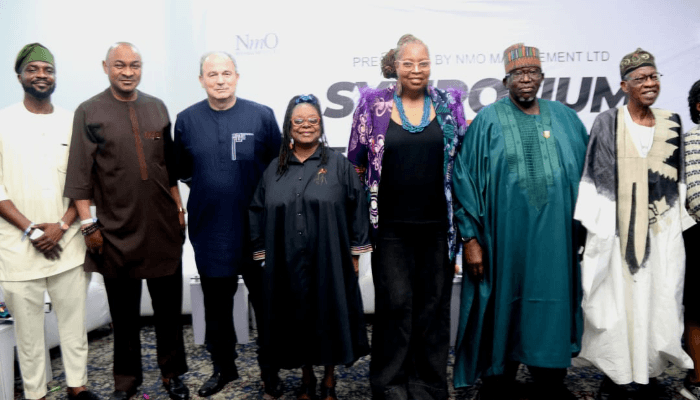
The critical need to address challenges facing the creative economy took center stage at the 2026 Symposium and Easter Festival Parade (SEFP) held in Lagos, emphasising the need for urgent action.
The event organnised by NmO Management under the theme, “Unlocking Access to Finance for the Creative Economy”, highlighted the sector’s untapped potential, while pinpointing inadequate capital alignment as a key
growth bottleneck.
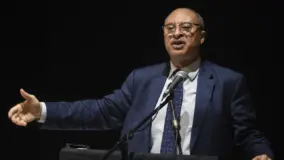
In his keynote address, former Minister of Information, National Orientation, Culture and Tourism, Lai Mohammed lauded the creative sector, stating it offers a unique opportunity to globally showcase Nigeria’s brand like no other sector.
According to him, robust local creative and arts scene can foster innovation, social harmony and a sense of National pride, which can drive productivity.
In his word: “Nigeria’s creative & culture
industry has been larger than life, vibrant and has employed millions of people, created wealth and brought immense fame and popularity at home and most especially abroad.
“Most especially Nigerian Literature, Film and more recently Music, Nigeria’s multi-cultural history has played a major role in being the link to the Nigerians and by extension Africans in the diaspora and massively creating employment, innovation and a decent contribution to the nation’s GDP’’.
While describing Intellectual Property (IP), as an intangible asset class that has the greatest potential to contribute much needed EFX earning, and reduction of Nigeria’s gaping trade deficit, he stressed the need for government to protect the industry by enforcing strict implementation of copyright laws.
“As an industry that boasts of millions in its employment, the onus is on the government to protect the industry by enforcing strict implementation of copyright laws, further formalize distribution channels to drastically reduce theft of IP both at home and even more so abroad.
“Government should crackdown heavily on offenders, support education and training across board, significantly increase funding and relax stringent requirements therein, increase grants and endowment funds, support the right framework and policies required for accelerated growth and possibly setup a dedicated agency for the Creative Industry.
“Mapping the entire industry will give empirical analysis and give active players a stronger basis for inclusion in schemes, healthcare and economic interventions”, he added.
Speaking at the event, the convener of SEFP, Ngozi Omambala described the Symposium and Easter Festival Parade 2026 as a strategic platform to explore both the opportunities and challenges within Nigeria’s creative economy.
Omambala who is also the CEO of NmO Limited and Vice Chairman of NACCIMA Creative Economy, also highlighted the sector’s vast talent pool while identifying the lack of structured capital alignment as a major constraint to unlocking its full potential.
Given an overview of Nigeria’s Creative Economy, Vice Chairman of NACCIMA Creative Economy, noted that despite limited access to structured financing, Nigeria’s creative sector has continued to grow, driven by resilience, innovation, and strong market demand.
She emphasised that the sector contributes significantly to the national GDP estimated at between ₦7.5– ₦9.6 trillion annually and supports over four million jobs across diverse creative fields.
Considering the challenges and opportunities in the creative economy, SEFP convener stressed that access to formal finance remains structurally limited despite the sector’s evident viability and growth trajectory, adding “the industry is at a critical inflection point, where expansion without adequate structure could threaten long-term sustainability”.
In his remarks, the national president of NACCIMA, Jani Ibrahim, reaffirmed the association’s commitment as the umbrella body of the organised private sector to advancing enterprise development, supporting youth- and women-led businesses, and promoting a vibrant sectorial ecosystem.
Ibrahim, noted that this commitment is being driven through strategic advocacy, stakeholder engagement, partnerships, and the creation of enabling economic opportunities.
He emphasised the need for the creative economy to receive the structure, visibility, and investment it deserves, while fostering stronger linkages between creative, financial institutions, and market access platforms.
To him, the future of Nigeria’s economy will not be built on oil alone, but on ideas, innovation, and identity.
While describing the creative economy as a key driver of diversification, resilience, and global competitiveness, he stressed that unlocking its full potential requires the courage to invest differently, collaborate intentionally, and pursue long-term, sustainable strategies that move creativity beyond celebration to commercial viability.

Join BusinessDay whatsapp Channel, to stay up to date
Open In Whatsapp