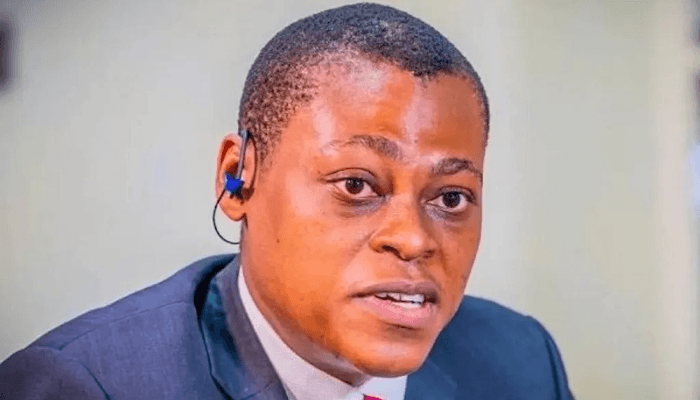
Rufai Oseni, a sterner, more unfiltered version of Mehdi Hasan, broke down on live television. Not theatrics. Just a man overwhelmed by the weight of a country that seems to be slipping into untamed chaos.
In that moment, he spoke—without really speaking—for millions of Nigerians. What we witnessed was not just emotion; it was a mirror held up to a nation pushed to the brink of helplessness and hopelessness.
Across the country, particularly in vulnerable rural communities, the script is now painfully predictable. Armed men arrive—often unchallenged, often unannounced. They kill. They maim. They raze entire villages. Then they disappear, almost as seamlessly as they came. No resistance. No interception. No consequences. Most times, rescues are made without arrests or any confrontation with the terrorists.
Then comes the second phase of the tragedy: statements, condemnations—and, of course, commiserations. We have perfected that vicious cycle.
There is, understandably, a growing argument that these attacks are not random—that they carry an ethno-religious undertone. The government is quick to dismiss this, insisting the violence is purely criminal or, at best—and annoyingly so—a herders-farmers crisis. Yet recent patterns complicate that position. When attackers bomb a mosque in one instance and then decimate predominantly Christian communities in another, it raises uncomfortable questions.
For some, it looks deliberate—an attempt to muddy the waters, to manufacture the illusion of neutrality in what many insist is anything less. But even that debate, important as it is, risks becoming a distraction. Because stripped of all analysis, all theories, and all careful phrasing, one brutal truth remains: Nigerians are being slaughtered, and those responsible are getting away with it. That is where the real outrage should reside.
It defies logic—completely—that armed groups can repeatedly invade communities, execute large-scale attacks, and vanish without a trace. No credible resistance from security agencies. No timely intelligence. No visible deterrence. Just a pattern of failure that is slowly, dangerously being normalized. And perhaps even more troubling is the response from leadership.
At a time when citizens are looking for presence, urgency, and decisiveness, what they often receive are carefully-worded speeches—detached, delayed, and all too familiar. The tone is solemn. The language is measured. The outcome is predictable: nothing changes.
Which brings us to the uncomfortable question: when is the next presidential commiserations? At this point, it feels less like a possibility and more like an inevitability. Another attack. Another statement. Another round of condolences.
To be clear—empathy is not the issue. Leadership must show compassion. It must acknowledge pain. But empathy without action, without enforcement, without consequence, quickly becomes performance. And Nigerians can tell the difference.
What is required now is not another statement or commiseration, but a shift. A shift towards accountability—where security failures are confronted, not concealed. A shift towards clarity—where the government defines the threat for what it truly is: insurgency, terrorism, banditry, or a dangerous fusion of all three. And above all, a shift towards will—the kind that translates rhetoric into visible, measurable action.
Because the real danger is no longer just the violence itself. It is the normalisation of it—the quiet adjustment of a people to a reality that should never be acceptable.
The tears of Rufai Oseni were not incidental. They were emblematic—a crack in the surface that revealed just how much strain lies beneath. Just last Thursday, another detachment of troops, right inside their base, was massacred along with their commanding officer in Borno. So, unarmed citizens are killed, and military troops are overwhelmed. Nigerians are weary of this sing-song that we have the best military in the world. Prove it!
The question now is simple: will leadership continue to respond with words, or will it finally match those words with action? Because in the end, governance is not measured by how eloquently it mourns, but by how effectively it protects.
Painting a gloomy scenery with bright colours by government operatives or hired celebrities is simply unpardonable and unacceptable. Nigeria is drifting, and Nigerians are frustrated, yet the political class is gearing up for another election—what else matters to them?

Join BusinessDay whatsapp Channel, to stay up to date
Open In Whatsapp