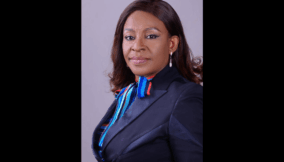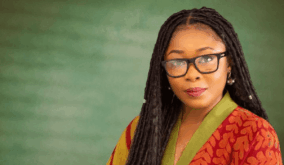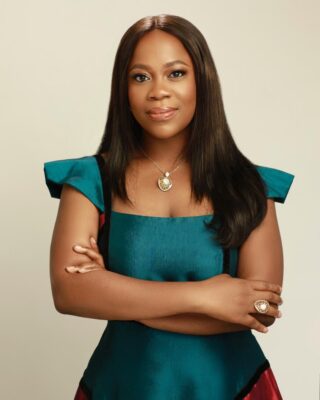
Addy Awofisayo is an accomplished media and tech executive with over 15 years of global experience. Born with a passion for innovation and creativity, Addy has built an impressive career spanning various strategy, finance, content, and partnerships roles across Africa, Europe, and North America.
Addy began her career at Microsoft in Seattle, WA, where she worked in Finance & Strategy. She later transitioned to the media industry, working at Discovery Communications on the content team for international markets. Addy also served as the Director for content and business strategy for a Pan-African media organization. In 2018, Addy joined YouTube as Manager of Content Partnerships for Africa, where she negotiated partnerships deals with large media companies and implemented initiatives for Creators to grow the creative economy on the continent.
Her leadership and expertise led to her promotion to Head of Content Partnership for Sub-Saharan Africa in March 2020. Currently, Addy serves as the Head of Music, Sub-Saharan Africa at YouTube, where she defines and executes strategies for African music, working with artists, labels, and music companies to grow their businesses on the platform. She has pioneered initiatives such as the Africa Day Concert and YouTube Black Voices Fund, providing growth opportunities for creators on the continent.
Addy holds a Bachelor’s degree from the University of Virginia and a Master’s degree from Harvard University. Her impressive educational background, combined with her extensive experience and passion for innovation, has established her as a leading expert in Africa’s creative economy.
In this interview with IFEOMA OKEKE-KORIEOCHA, she discusses her evolution into a ‘Sponsor-in-Chief’ for African talent. Moving beyond the discovery phase of African music, Awofisayo explains how she leverages the rigor of her Seattle roots to advocate for economic diplomacy and meritocracy. She shares her vision for ‘The Great Reconnection’—a future where the dialogue between Africa and its diaspora is a permanent economic engine—and why she is committed to ensuring that the revenue of African culture stays on the continent.
You began your career in Finance and Strategy at Microsoft. How does that “Big Tech” analytical rigor influence the way you evaluate the success of an African artist or a content creator today?
My time in Finance and Strategy at Microsoft taught me that data isn’t the enemy of creativity—it’s the map. In ‘Big Tech,’ we didn’t just look at whether a project worked; we looked at why it worked and if it was scalable.
Today, I apply that same rigor to the African creative ecosystem. When I evaluate a creator or an artist’s success, I’m looking beyond the viral moment. I’m looking at consumption patterns, audience retention across different regions, and the long-term sustainability of their brand. That rigor helps me strip away the noise and focus on the fundamental metrics that indicate whether they are building a ‘career’ or just having a ‘moment.’ However, the real magic happens when you use that data to support, rather than dictate, the creative process. I use that analytical background to provide the ‘proof of concept’ for the gut feelings we have about African creativity.
With a Master’s from Harvard and a focus on Public Health earlier in your journey, how do you view the “health” of the African creative ecosystem? Is it currently sustainable for the average independent artist?
My background in public health taught me that ‘an ounce of prevention is worth a pound of cure.’ In the music industry, the most effective ‘vaccine’ against a failed career is financial and legal literacy. Right now, the ecosystem’s ‘health’ is imbalanced. We have elite artists who are thriving, but the ‘middle class’ of independent creators is still vulnerable. Sustainability for the average artist depends on their ability to own their IP and understand the ‘vitals’ of their business—their data, their royalties, and their contracts. It’s all about equipping creators with the tools to build a career that doesn’t just survive a single hit but sustains them for a lifetime.
You’ve moved across continents and industries. What is the one ‘transferable skill’ from your days in Seattle that has been most critical to your leadership at YouTube Music in Sub-Saharan Africa?
If I had to pin it down to one, it would be Systems Thinking. In my previous jobs, you learn that no product or strategy exists in a vacuum; it’s part of a massive, interconnected ecosystem.
When I transitioned to the creative scene, I didn’t just see ‘creators’ and ‘content’; I saw an ecosystem that needed the same level of structural integrity I saw in Big Tech. Whether it’s improving monetization frameworks for creators or scaling our support for emerging genres like Amapiano, I use that building systems mindset to build sustainable rails. It’s about moving away from one-off wins and toward building a platform where African creativity can scale predictably and globally.
You are an advocate for women in tech and the creative arts. What is the most significant “systemic hurdle” you see female executives facing in the African media space today, and how are you working to dismantle it?
The hurdle I see most often is the ‘Creditability Gap’—both in terms of financial capital and professional recognition. For women in African media, the ‘cost of capital’ (be it social or financial) is often higher. Investors and partners often look for ‘proven’ male archetypes, making it harder for female-led creative ventures or executives to get the same level of backing.
I’m using my platform at YouTube to institutionalize equity. Whether it’s through the Black Voices Fund or our localized creator programs, I ensure that our selection processes are designed to bypass traditional ‘old boy’ networks. We look at the data—the engagement, the growth, the talent—not just who an artist or executive knows. By creating data-driven, transparent pathways for success, we ‘de-bias’ the ecosystem. My goal is to make the African creative space so meritocratic that gender becomes a secondary note to the sheer brilliance of the work.
In your 15-year journey, did you find that mentorship (advice) or sponsorship (opening doors) was more vital to your promotion to Head of Music?
If I look at my journey—from Public Health to Finance to Music—Mentorship provided the map, but Sponsorship provided the passport. Early in my career, I sought out mentors to help me refine my ‘hard skills.’ But as I moved into executive leadership at YouTube, I realized that the most ‘systemic’ hurdle for African leaders is the lack of global sponsors. Being ‘Head of Music’ for a continent requires more than just good advice; it requires institutional backing. I was fortunate to have sponsors who saw Sub-Saharan Africa not as a ‘charity project’ but as a ‘growth engine.’ Today, I view my role as a Sponsor-in-Chief. I use my position to open doors for African labels and artists that they didn’t even know existed. Advice is helpful, but an introduction to the right decision-maker is transformative.
In a 15-year career that spans from Seattle to Lagos, I’ve learned that mentorship is the engine, but sponsorship is the fuel. Mentorship—the advice, the late-night deck reviews, the ‘Harvard’ level of critical thinking—prepared me to be ready for the role. It gave me the internal tools to lead. But in a global organization like Google or Microsoft, merit alone isn’t always
enough to break through the noise of a billion-dollar region. Sponsorship was the vital force that actually moved the needle. I had leaders who didn’t just give me advice; they put their own professional reputation on the line to say, ‘Addy is the one to lead Sub-Saharan Africa.’ You can be the most mentored person in the room, but without a sponsor to open the door, you’re just a very well-prepared person standing in a hallway.
As a leading voice for Africa at global events (like the World Public Summit), how do you balance being a “Corporate Executive” for a US-based giant with being a “Cultural Diplomat” for the African continent?
To be an effective Corporate Executive, I have to be a Cultural Diplomat for Africa. My job is to ensure that the global ‘system’ understands the local ‘nuance.’ In the boardroom, I use the analytical rigor I learned at Microsoft to advocate for the African creator. I translate ‘culture’ into ‘data’ so the global headquarters understands why a specific genre like Amapiano or a movement like Pamoja deserves dedicated investment. I’m not just a representative of a US company in Africa; I’m Africa’s representative inside that company, making sure the ‘pipes’ we build globally are wide enough to carry the immense volume of African creativity.
Being a ‘Cultural Diplomat’ in this era means moving past the ‘discovery’ phase. We’ve been discovered. Now, as an executive, my focus is on economic diplomacy. When I speak at global summits, I’m not just talking about how beautiful our music is; I’m talking about how it contributes to the global GDP. My corporate role gives me the tools—the analytics, the funding, and the platform—to ensure that when African culture goes global, the revenue and the intellectual property rights flow back to the continent. I balance the two by ensuring that every corporate goal we set at YouTube SSA has a direct, positive ‘diplomatic’ impact on the African creative economy.
When you look back at your tenure at YouTube SSA five years from now, what is the one story you want to be remembered for?
I want to be remembered for the story of ‘The Great Reconnection.’ There was a moment in the mid-2020s where the musical dialogue between the Continent and the Diaspora—from Brazil to London to the Caribbean—became a permanent, high-speed highway. I want my legacy to be that I helped build that bridge using YouTube as the primary vessel. Whether it was through the Africa Day Concerts or the Black Voices Fund, I hope the story told is that we stopped being ‘the next big thing’ and became the center of the global cultural conversation. I want to be remembered as the executive who ensured that when the world looked for the future of sound, they looked at Africa first, and they found an ecosystem that was ready, professional, and world-class.

Join BusinessDay whatsapp Channel, to stay up to date
Open In Whatsapp