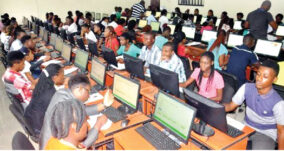
Connected Development (CODE) has lamented that most of the over 20 million out-of-school children in Nigeria are girls, urging decision-makers and policymakers to allocate sufficient funds to secure the futures of Nigerian children.
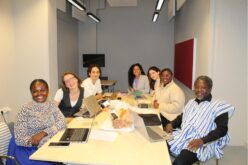
Hyeladzira James Mshelia, Acting Chief Executive of Connected Development, stated this on Wednesday during a media parley on the state of transparency and accountability in Borno State and the Local Education Sector Operations Plan, held in Maiduguri.
She noted that security challenges arising from insurgency continue to disrupt education through school destruction, displacement and fear of attacks.
According to her, limited access to WASH (Water, Sanitation and Hygiene) facilities remains a major issue, affecting student health, attendance and learning outcomes.
Read Also: ECOWAS Parliament seeks to tackle child exploitation, street vulnerability
She said, “The statistics I shared show that Nigeria currently has the highest number of out-of-school children, at over 20 million, the majority of whom are girls, and this is not an accident.
“This is the result of structural barriers that have kept these girls out of school, such as poverty, unsafe learning environments and curricula that were never designed to include girls in the first place. That is why the conversation around gender-responsive education sector planning is very important and timely.
“But the strongest message to government is that this number is not just a figure in a textbook; it is the reality of the girl child in our communities. These huge numbers mean that if we do not invest in education, it will affect our GDP,” Mshelia said.
She added that teacher shortages and the uneven distribution of teachers continue to affect the quality of education and student–teacher ratios across several local government areas in Borno State.
Ibrahim Abdulkadir Sabo, Project Lead at CATAI, urged the state government to implement safe school policies for girls and persons with disabilities, to ensure access to secure learning environments in Borno State.
Sabo also appealed to stakeholders to implement gender-responsive education policies with adequate funding across four local government areas — Mafa, Damboa, Gubio and Askira-Uba.
Also speaking, Ben John, Executive Director of CASFORD, said there is a need for separate facilities for boys and girls in schools, as well as inclusive assistive devices for persons living with disabilities.
The Malala Fund supported the Joint Action Grants.
Join BusinessDay whatsapp Channel, to stay up to date
Open In Whatsapp