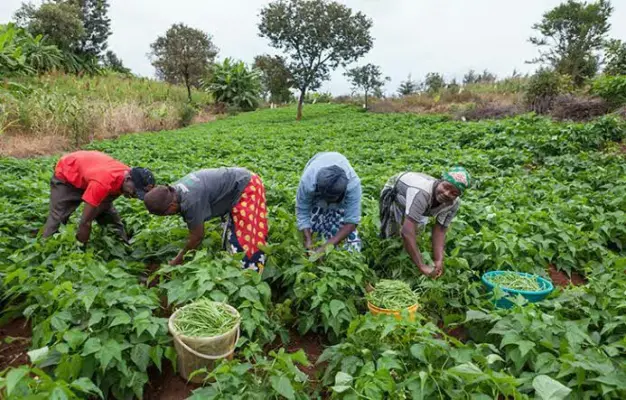
Nigeria’s push for food security has received a measured boost in the 2026 federal budget, with the Federal Ministry of Agriculture and Food Security allocated N1.475 trillion.
The figure reflects a modest increase from N1.24 trillion in 2025 and a sharp rise from N362 billion in 2024. It signals continuity in policy direction but also highlights growing fiscal constraints.
The allocation comes at a time of persistent food inflation, supply chain disruptions, and insecurity across key farming regions. Expectations are high that increased funding will translate into tangible output gains.
While the 2026 budget, did not give a breakdown, sustained emphasis in the past years have always been on capital expenditure, with priority areas including irrigation, mechanization, input subsidies, and expansion of extension services. There is also a focus on strengthening agricultural value chains.
However, analysts caution that budget size alone does not guarantee impact.
In previous cycles, actual releases fell short of appropriations. Delays in disbursement disrupted planting seasons and weakened programme delivery.
Food inflation remains elevated despite increased spending. Structural bottlenecks such as poor rural infrastructure, inadequate storage, and insecurity continue to undermine productivity.
The 2024 budget had limited capacity to address these constraints due to low funding. While the 2025 allocation marked a significant shift toward prioritising agriculture, execution gaps persisted, with farmers reporting uneven access to inputs and credit.
With the 2026 allocation, attention is shifting from funding levels to implementation efficiency.
Key performance indicators will include higher crop yields, reduced reliance on food imports, and stabilised prices of staples.
There is also increasing focus on agribusiness development. Stakeholders are calling for stronger support for agro processing and export oriented value chains to boost foreign exchange earnings and reduce pressure on imports.
Private sector participation is seen as critical. Public funding alone is unlikely to drive transformation without partnerships that can scale infrastructure and technology adoption.
Security remains a major risk factor. Large areas of farmland in the North Central and North East continue to be affected by conflict, limiting farming activities and discouraging investment. Industry stakeholders say the success of the budget will depend on how effectively it is implemented.
Speaking with BusinessDay, Areola Adegoke, National President, Cocoa Farmers Association of Nigeria (CFAN), said Government must play a central role in driving agricultural development.
He said this includes policy implementation, provision of storage facilities, and improved security for farmers.
He described the allocation as encouraging but noted that its impact would depend on timely releases and direct support to key players and real farmers.
He said effective implementation would strengthen food security under the administration of Bola Ahmed Tinubu.
He also called for the swift establishment of a national cocoa board and stronger protection for farming communities.
Also speaking , Sunday Edibo, former Regional Director at the Federal Ministry of Agriculture and Food Security, said smallholder farmers remain the backbone of the sector.
He said about 90% of agricultural production is driven by smallholders who lack access to critical inputs. He noted that fertiliser shortages and rising input costs continue to limit productivity.
He said poor distribution systems force many farmers to rely on previous harvests.
He warned that without improved access to fertiliser, seeds, and mechanisation, productivity gains would remain limited.
Daniel Onyejiuwa, Economist at the Glorious Vision University also said budget increases must be matched with structural reforms.
He said the sector requires improved access to finance, adoption of modern technology, and stronger rural urban market linkages. He called for single digit interest rates for farmers to boost productivity.
He identified weak industrialisation as a major gap in the agricultural value chain. He said Nigeria must move beyond raw produce to develop processing industries that can generate jobs, stabilise prices, and earn foreign exchange.
Nkiruka Stella Okonkwo, Co-founder, Leonard and Nkiruka Okonkwo Foundation, said progress in the sector remains gradual. She pointed to improved awareness, capacity building, and stakeholder engagement as positive trends.
She warned that insecurity, climate change, and funding constraints continue to threaten growth. She called for stronger collaboration between government and stakeholders to meet commitments under the Comprehensive Africa Agriculture Development Programme.
Overall, the 2026 allocation signals policy continuity rather than a dramatic shift.
It reflects recognition of agriculture’s importance but also underscores the limitations of public finance.The real test will be execution. If funds are released on time and efficiently deployed, the sector could see gradual improvement. If not, the cycle of underperformance may persist despite rising allocations.

Join BusinessDay whatsapp Channel, to stay up to date
Open In Whatsapp