Globally, Artificial Intelligence, Robotics and STEM education now represent the future of human capital growth and is fast becoming a major contributor to the enhancement of learning, employment opportunities and economic advancement.
To strengthen this new move, Arc-Lights Foundation through its inaugural ARC-RISE Summit 2026 provided a platform where learners, educators, and enthusiasts from 14 countries across the world gave insights with a focus to explore the future of AI, robotics, and STEM education.
The programme with the theme ‘Building National Human Capital for the AI and Robotics Future’ Keynote speech and panel discussions designed to highlight practical innovation, hands-on learning, and inclusive approaches, showing how Africa is building the next generation of innovators.
Speaking at the event, Abisola Obasanya, director of Arc-Lights Foundation, said the summit was designed to bring people together who are ready to build the future.
She said the summit is not just talking about STEM education, it offers the platform to create real opportunities for young learners and educators.
Obasanya said that through the ARC-RISE Summit, the Foundation is not just talking about the future, it is building it, empowering young learners, supporting educators, and creating opportunities that will impact Africa for years to come.
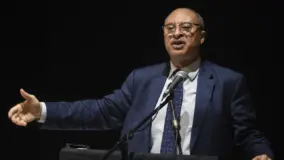
Kolawole Aramide, National president Aminu Kano Academic Scholars Association in his keynote address on the topic ‘AI and Robotics 2030: Data Predictions and Key Strategic Actions’ said that there is the need for Africa to prepare her students for a rapidly evolving world.
According to him, the only way Nigeria in particular and Africa in general can predict the future is to create it.
Samuel Anih, head of Space Education Outreach Programme at the African Regional Centre for Space Science and Technology Education, Obafemi Awolowo University, at the panel session observed that one of the challenges hindering public schools from performing well is often the lack of necessary robotics kits and proper training for educators.
Chidubem Anowor, founder and chief product Architect of PineApp solutions, urged tech hubs to evolve into institutional partners for education systems. While Balogun Wasiu, senior lecturer in the department of Mechatronics Engineering, Lagos State University of Science and Technology, Ikorodu Lagos demonstrated how students can create low-cost robotics solutions using simple materials like cardboard.
Bahta Mamo Bekele, UNECA Consultant and WRO Africa Expansion Lead at the panel discussion on ‘Robotics Inclusion in National Curriculum: Moving from Paper to Practice’ said it is important to move from policy to implementation.
Bekele emphasised that quality education should be delivered by quality educators.
On his part, Vladimir Ussoltsev, Robotics Coach from Kazakhstan, emphasised that, instead of seeking quick results that make robots unstable the next day, coaches should teach students to understand the cause of problems and structure algorithms for long-term stability.
Valentine Masicha, Founder of Mindset Coders and WRO National Organiser for Uganda, encouraged relevance in learning, adding that robotics education should be used to solve real-life challenges in sectors like agriculture and healthcare.
Babatunde Fasasi, described it as, a tool that allows students to measure distance and programme robot movements entirely within the computer application, saving significant time compared to physical testing, while John Klutse shared how RoboPass is partnering with institutions to deliver practical STEM learning to both teachers and students.
Philip Ndiomu Ebiogeh, permanent secretary, Federal Ministry of Innovation, Science and Technology commended the work of Arc-Lights Foundation, stating that the Ministry appreciates the foundation’s consistent efforts in advancing STEM education and is impressed with its initiatives.
Ebiogeh further expressed interest in supporting programmes like WRO Learn, which expand access to practical STEM education.
The summit also featured practical innovation showcased through WRO Learn, Arc-Lights Foundation’s platform that allows students to programme and test robots virtually.
There was also the official announcement of the upcoming challenge, alongside the WRO Nigeria Future Engineers Award, recognising young innovators who are already making an impact.
The summit also celebrated a major milestone in its commitment to empowering young people, as a student, Elizabeth, who studies at the University of Lagos, was awarded a scholarship worth 1 million naira, further demonstrating Arc-Lights Foundation’s dedication to supporting the next generation of innovators through tangible impact.

Join BusinessDay whatsapp Channel, to stay up to date
Open In Whatsapp