
This week, Ghana showed a strengthening macroeconomic recovery even as bank profitability rises across Africa, while escalating geopolitical tensions trigger sharp losses in capital markets. From GTCO’s standout performance in the continent’s top gold producer to record revenues in African banking and increased MSME lending in Kenya, the sector is proving resilient—albeit still vulnerable to external shocks, particularly from the Middle East crisis.
Ghana drives GTCO’s subsidiary earnings with 77% profit surge
Guaranty Trust Bank Ghana has emerged as the standout performer within Guaranty Trust Holding Company Plc (GTCO), delivering a 77.3 percent jump in profit and overtaking Sierra Leone to become the group’s fastest-growing subsidiary in 2025.
Why it matters: Ghana’s strong showing underscores the growing importance of regional subsidiaries to Nigerian banking groups’ earnings resilience. It also highlights how currency stability and macroeconomic recovery in key markets like Ghana are becoming critical profit drivers, reinforcing the case for deeper pan-African expansion strategies.
Middle East tensions spark historic sell-off on JSE
Africa’s largest bourse, the Johannesburg Stock Exchange (JSE), recorded its steepest monthly decline since 2008 in March 2026, as escalating Middle East conflict wiped out over R3 trillion ($160 billion) in market value.
Why it matters: The sharp rout signals Africa’s vulnerability to global geopolitical shocks, particularly through capital market channels. It also raises concerns about foreign portfolio outflows and investor risk aversion, which could tighten financial conditions across emerging and frontier African markets.
Ghana’s inflation falls to four-year low despite oil shock risks
Ghana extended its disinflation streak to a 15th month in March 2026, with headline inflation easing to 3.2 percent—its lowest level in four years—even as global oil price pressures intensify.
Why it matters: Sustained disinflation strengthens Ghana’s macroeconomic credibility and creates room for monetary easing to support growth. It also positions the country as a relative stability anchor in West Africa at a time when external shocks—particularly energy prices—are threatening price stability across the region.
African banks outperform global peers as revenues approach $100bn
African banks are closing in on a historic revenue milestone, with industry income projected to hit $107 billion in 2025, according to McKinsey & Company, while returns on equity continue to exceed global averages.
Why it matters: The sector’s strong profitability highlights Africa’s banking industry as a key engine of economic growth and investor interest. However, the concentration of profits in a few large markets signals uneven development and points to untapped opportunities in underpenetrated regions.
Kenyan banks ramp up MSME lending to record $2.5bn
Kenya’s banking sector more than doubled its MSME lending target in 2025, disbursing KES326.5 billion ($2.53 billion) in loans—well above its initial goal.
Why it matters: The surge reflects a structural shift toward small business financing as a core growth strategy for banks. It also signals improving credit access for MSMEs, which are critical to job creation and economic expansion, especially as lower interest rates begin to stimulate private sector activity.
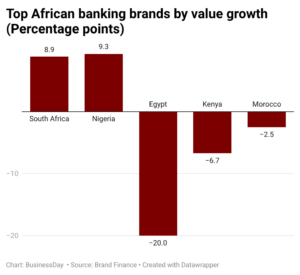
Chart of the Week

Join BusinessDay whatsapp Channel, to stay up to date
Open In Whatsapp