In the early vision of satellite internet pioneer SpaceX, Starlink was designed to bridge the digital divide—bringing fast, reliable connectivity to remote communities long excluded from the global economy. From isolated villages in sub-Saharan Africa to maritime routes and disaster zones, the promise was simple: internet access anywhere, anytime.
But in the Sahel—a vast, unstable belt stretching from Senegal to Sudan—that same technology is quietly being repurposed. What began as a tool for inclusion is increasingly becoming a strategic enabler for armed groups operating across some of Africa’s most volatile territories.
This shift underscores a growing reality in modern conflict: connectivity is no longer just economic infrastructure—it is now a battlefield asset.
From digital inclusion to tactical advantage
The Sahel’s geography has long favoured insurgent groups. Sparse populations, weak state presence, and limited telecommunications infrastructure create ideal conditions for asymmetric warfare. Historically, armed groups relied on rudimentary communication methods—satellite phones, couriers, and occasionally compromised mobile networks.
Starlink has changed that equation.
The system operates via a constellation of low-Earth orbit satellites, delivering high-speed, low-latency internet without reliance on ground-based telecom infrastructure. A standard kit includes a compact satellite dish, router, power supply, and mounting hardware. Once powered and positioned with a clear view of the sky, it connects automatically.
This simplicity is precisely what makes it so disruptive.
In regions where governments struggle to maintain even basic network coverage, Starlink offers a plug-and-play digital backbone—one that is difficult to monitor, intercept, or shut down through traditional means.
The cost of connectivity—and its accessibility
In West Africa, Starlink kits typically retail for around ₦900,000–₦1,000,000, with monthly subscriptions averaging ₦80,000–₦90,000, depending on exchange rates and local market conditions. While this may seem prohibitive in low-income regions, the economics shift when viewed through the lens of armed groups.
Insurgent networks often control smuggling routes, taxation systems, and illicit economies that generate steady revenue streams. For such groups, the cost of a Starlink terminal is marginal compared to its operational value.
Moreover, parallel markets have emerged. Devices are increasingly traded through informal channels, sometimes crossing borders from countries where Starlink is officially licensed into those where it is restricted or unregulated. This grey-market ecosystem further lowers barriers to access.
The result is a quiet proliferation of satellite-enabled connectivity in areas far beyond official regulatory reach.
A new layer of coordination
The operational implications are significant.
Armed groups in the Sahel are now able to coordinate across vast, previously disconnected territories. Real-time communication allows for synchronised attacks, rapid redeployment, and improved intelligence sharing.
Unlike traditional radio systems—which can be intercepted or jammed—Starlink enables encrypted communication over global internet platforms. This dramatically reduces the risk of exposure.
It also enhances logistical capabilities. Groups can track supply routes, monitor troop movements, and adapt strategies in near real time. In a region where distances are vast and infrastructure is poor, this level of coordination represents a major tactical upgrade.
The propaganda dimension
Beyond the battlefield, connectivity is transforming the information war.
Armed groups are increasingly leveraging social media platforms to disseminate propaganda, recruit fighters, and project power. High-speed internet allows for the rapid upload of videos, statements, and imagery—often within hours of an attack.
This immediacy amplifies psychological impact. It enables groups to control narratives, exaggerate capabilities, and intimidate local populations as well as distant observers.
In the past, such media operations required access to urban centres or external intermediaries. Today, they can be conducted from remote desert or forest locations, further blurring the line between physical and digital theatres of conflict.
Bypassing state surveillance
Perhaps the most challenging aspect for governments is Starlink’s ability to bypass traditional surveillance systems.
Conventional telecom networks operate within national jurisdictions. They can be monitored, regulated, and—if necessary—shut down. Satellite internet, by contrast, operates above these frameworks.
This creates a significant intelligence gap.
Security agencies accustomed to intercepting phone calls or tracking mobile data flows find themselves dealing with encrypted, decentralised communication channels that are far harder to penetrate. Even identifying the physical location of a Starlink terminal can be difficult without direct cooperation from the service provider.
In effect, the technology erodes one of the state’s key advantages: control over the communication environment.
Policy dilemmas and countermeasures
Governments across the Sahel and wider Africa are beginning to grapple with this new reality, but policy responses remain fragmented.
One potential avenue is direct engagement with service providers. Cooperation could enable authorities to geolocate terminals, restrict access in conflict zones, or deactivate devices linked to sanctioned entities.
However, such measures raise complex legal and ethical questions. Blanket restrictions risk undermining legitimate users—businesses, humanitarian organisations, and civilians who depend on connectivity for survival and economic activity.
There is also the challenge of enforcement. Even if access is restricted in one country, devices can be moved across porous borders, reactivated elsewhere, or connected through roaming capabilities.
Some governments are exploring regulatory frameworks to control importation and registration of satellite internet equipment. Others are investing in countermeasures, including electronic warfare capabilities to detect or disrupt signals.
Yet these approaches require resources, coordination, and technical expertise that many Sahelian states lack.
The expanding footprint
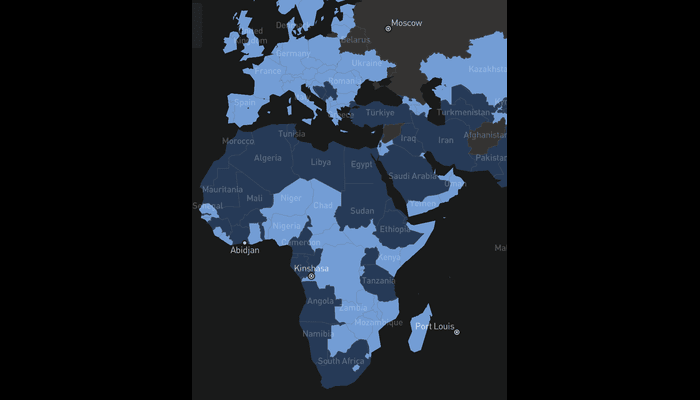
Starlink is now officially operational in multiple African countries, including Nigeria, Ghana, Kenya, Mozambique, and others across the continent. As coverage expands, so too does the potential for both positive impact and unintended consequences.
For rural communities, the benefits are undeniable: access to education, healthcare information, financial services, and global markets. For businesses, it opens new frontiers of productivity and innovation.
But in fragile states, where governance is weak and conflict is persistent, the same technology can be co-opted in ways that exacerbate instability.
A dual-use reality
The story of Starlink in the Sahel is ultimately a case study in dual-use technology.
Like drones, GPS, or even mobile phones before it, satellite internet is neither inherently good nor bad. Its impact depends on the context in which it is deployed and the actors who control it.
What makes Starlink particularly significant is its combination of accessibility, resilience, and independence from traditional infrastructure. These qualities make it a powerful tool for development—but also a potent asset in asymmetric warfare.
Looking ahead
As conflicts become increasingly digitised, the role of connectivity will only grow. The Sahel offers a glimpse into this future—a landscape where control of information flows is as critical as control of territory.
For policymakers, the challenge is to balance innovation with security. Overregulation risks stifling progress and widening the digital divide. Underregulation, however, may allow emerging technologies to be weaponised in ways that outpace state responses.
For companies like SpaceX, the stakes are equally high. As their technologies expand into complex geopolitical environments, questions of responsibility, oversight, and collaboration with governments will become harder to avoid.
What is clear is that the digital frontier is no longer separate from the battlefield. In the Sahel, it is already part of it.
And as satellite constellations continue to grow, the line between connection and control will only become more contested.
Photo caption: Starlink coverage of the African continent DWA

Join BusinessDay whatsapp Channel, to stay up to date
Open In Whatsapp