…To launch new Payments System Vision within next month
The Central Bank of Nigeria (CBN) has inaugurated a Payments Service Providers Committee as digital transactions in the country surged past N1 quadrillion, underscoring the scale and growing importance of the ecosystem to the broader economy.
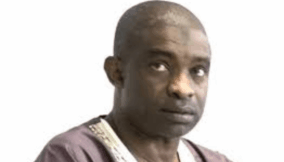
Abdullahi Sani, deputy governor for Economic Policy, said at the committee’s inaugural meeting in Lagos on Thursday that the platform, chaired by the Central Bank and co-led by the Deputy Governor for Financial System Stability, brings together all key licensed payment service providers to strengthen coordination across the industry.
Nigeria’s digital payments landscape has expanded rapidly in recent years, with more than 11.2 billion electronic transactions processed in 2024 alone, valued at over N1.07 quadrillion. The milestone marked the first time transactions crossed the quadrillion-naira threshold, with growth continuing through 2025 and into the early months of 2026.
Sani said the pace of expansion has significant implications for economic growth, financial inclusion and trade, making it critical for the Central Bank to deepen policy coordination, enhance knowledge sharing and enable collective problem-solving among stakeholders.
The committee also includes regulators such as the Nigerian Communications Commission, the Nigeria Deposit Insurance Corporation and the Securities and Exchange Commission, which will meet quarterly with industry players to address challenges and sustain Nigeria’s leadership in digital payments.
Nigeria is already regarded as a leader in payment service provision, with fintech capabilities seen as more advanced than those of many regional peers. Authorities are now seeking to consolidate that position over the next five to 10 years by strengthening the policy environment and ensuring the sector contributes more meaningfully to the economy.
The Central Bank said it plans to launch a new Payments System Vision within the next month, outlining the direction of the ecosystem over the next three years. The framework has been co-created with fintech firms, mobile money operators and other payment service providers.
Officials expect continued strong and inclusive growth in the sector, with broader access to digital financial services helping to reduce poverty, support businesses and deepen economic participation. At the same time, regulators are focusing on managing risks tied to fraud, anti-money laundering and terrorism financing to safeguard financial stability.
Philip Ikeazor, deputy governor for Financial System Stability, said fraud cases in the payments system declined by about 50 percent between 2024 and 2025. He added that the Central Bank has introduced a new policy, Project Radar, which deploys automated solutions for anti-money laundering and fraud detection across banks and payment service providers.
Sani said industry participants had long called for a structured platform to engage directly with regulators, noting that the new committee addresses that gap. The inaugural session focused on participation structure, priority areas and the creation of sub-committees to drive the work.
Previously, engagement between operators and regulators could be slow, often requiring formal supervisory interactions. The new framework is expected to remove that bottleneck by enabling faster decision-making, real-time collaboration and more coordinated responses to industry challenges.
The committee will meet quarterly to address both regulatory priorities and issues raised by market participants, with authorities expecting it to accelerate development, improve efficiency and support innovation across Nigeria’s payment system.
Emem Usoro, deputy governor for Corporate Services, was also present at the briefing.
Also speaking at the event, Premier Oiwoh, managing director and chief executive of the Nigeria Inter-Bank Settlement System (NIBSS), commended the CBN for the initiative, noting that it would deepen the development of the country’s payments ecosystem.
Oiwoh said the committee would strengthen collaboration between banks and fintech companies, creating a more integrated and efficient system.
“I am excited about the launch of this committee, as it will foster deeper partnerships between banks and fintechs within the ecosystem,” he said.
He also praised the CBN leadership, including the governor, deputy governors and directors, for establishing a platform long sought by industry stakeholders.
“This is something the industry has been yearning for over the years, and today it has finally come to life. The ultimate beneficiaries of this initiative will be Nigerians,” Oiwoh added.
He noted that the move would further position Nigeria on the global stage, enhancing its competitiveness in financial services and payments across Africa and beyond.

Join BusinessDay whatsapp Channel, to stay up to date
Open In Whatsapp