Nigeria’s pension industry is increasingly positioning itself at the forefront of sustainable finance, using its long-term capital base to support environmentally responsible investments.

This shift reflects both a strategic response to global investment trends and a growing recognition of green finance as a viable avenue for portfolio diversification and risk management.

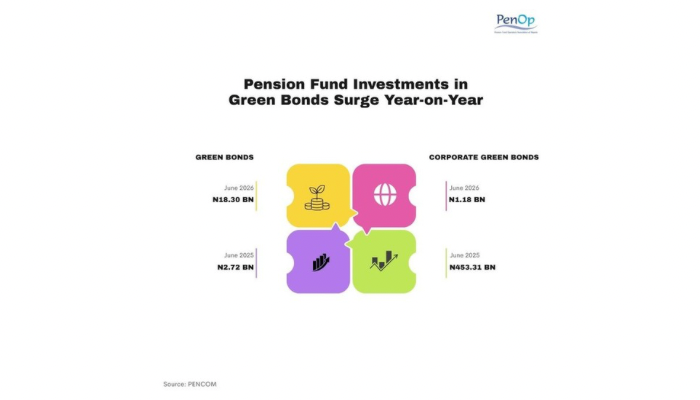
Recent data underscores this transition, with corporate green bonds growing from N453.31 billion in June 2025 to N1.18 trillion in June 2026, an approximate 160 percent year-on-year increase.

This surge signals stronger corporate participation in environmentally focused financing, alongside rising investor confidence in sustainable instruments.

Similarly, green bonds expanded sharply from N2.72 billion to N18.30 billion within the same period, representing a remarkable 573 percent increase, albeit from a relatively low base.

Analysts at the Pension Fund Operators Association of Nigeria (PenOp) said the trajectory highlight a broader shift within Nigeria’s financial ecosystem toward climate-aligned investments.

“Pension funds, in particular, are playing a catalytic role by channeling capital into green bonds that fund renewable energy, infrastructure, and other environmentally beneficial projects.”

According to them, while the market is still in its formative stages, the pace of growth suggests significant untapped potential.

“Overall, the expansion of green finance instruments points to an emerging opportunity for long-term investors, with pension funds well positioned to drive both sustainability outcomes and stable returns, the analysts said.

Nigeria’s pension industry continues to grow, with total Assets Under Management (AUM) reaching N28.04 trillion. A breakdown across the various fund categories shows how assets are distributed within the system.

Overall, the distribution of pension assets indicates that the majority of funds are concentrated in Funds II and III, which together account for nearly 68 percent of the total AUM. This highlights contributors’ preference for balanced and moderately conservative investment options within the Nigerian pension system.

The continued growth of pension assets across these categories underscores the strength and stability of Nigeria’s contributory pension scheme, while also reflecting the diverse risk preferences and lifecycle stages of contributors within the system.

Modestus Anaesoronye is a leading Nigerian financial journalist with over two decades of experience reporting on the insurance and pension sectors across Nigeria and West Africa. He has held key editorial positions at major national media outlets, including The Comet, The Nation, and Financial Standard, and currently serves as a Senior Financial Analyst at BusinessDay Media Ltd. A widely travelled reporter, he has covered industry developments in more than 14 countries across Africa and Asia. Anaesoronye is a multiple award-winning journalist, honoured several times as Insurance Journalist of the Year and Pension Journalist of the Year by recognised industry bodies, including PensionScope and the Pension Fund Operators Association of Nigeria (PenOp), among others.

Join BusinessDay whatsapp Channel, to stay up to date

Open In Whatsapp