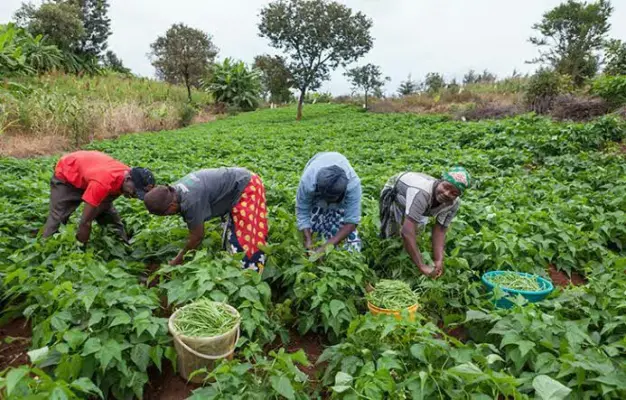
Africa’s agricultural transformation may hinge less on how much funding is available and more on how intelligently it is deployed across the value chain.
This was stated by industry leaders at a recent BusinessDay Future of Agriculture Conference, held on Wednesday, March 25, 2026.
During the event, stakeholders argued that fragmented financing continues to weaken food systems across the continent.
“What we really need is value chain financing,” noted Chinedu Obialo, managing director of Sofari C & C Limited.“From primary production to storage, logistics, processing, and market development,if funding is fragmented, the system cannot be resilient,” she added.
Read also: Baobab Microfinance unveils new head office, pushes for growth
Agriculture, they stressed, functions as an integrated ecosystem. Yet, traditional financing models treat it as isolated segments, often leaving critical gaps, particularly in storage, processing, and market access. This disconnect not only increases risk but also limits profitability across the chain.
Experts also highlighted the delicate balance between supporting farmers and safeguarding depositor funds.
“Farmers are competing with other sectors for financing,”noted Uche Bosa, group head, corporate banking at Coronation Merchant Bank.
“It has to make sense for the banks, and it has to make sense for the farmers. Everyone in the value chain must be profitable,” she added.
The discussion pointed to innovation as a turning point. Case studies like Babangona demonstrated how structured, end-to-end models can unlock financing.
Aggregating smallholder farmers and connecting them to processors and markets, could reduce risk while ensuring profitability for all stakeholders.
“When the bank is making money, the aggregator is making money, and the farmers are making money, the entire system becomes sustainable,” Bosa added.
Read also: Nigerian states return to debt markets as domestic borrowing hits N4trn
Risk mitigation tools,such as guarantees from global institutions like IFC and FMO are also playing a growing role in encouraging banks to lend to agriculture. However, experts warned that excluding smallholder farmers is not an option.
Stakeholders agreed that Africa’s agricultural future depends on designing flexible financial models tailored to each stage of the value chain. Without this shift, efforts to build a resilient and food-secure Africa may remain out of reach.

Join BusinessDay whatsapp Channel, to stay up to date
Open In Whatsapp