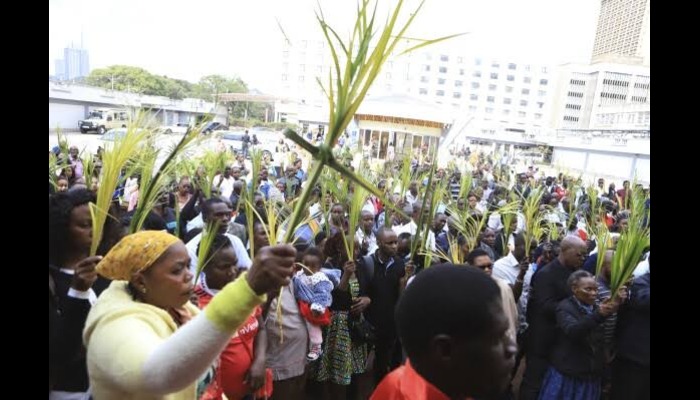
For many Christians across Nigeria and the globe at large Palm Sunday is more than a mere celebration of waving palms to a deep rooted spiritual and doctrinal belief of Christ’s triumphant entry into Jerusalem.
The day is also significant to many Orthodox churches in that it is the first day of the ‘Holy Week’; a week that characterised the passion, death, and victory of Jesus Christ over death at Calvary.
The week starts with the celebratory march that portrays Christ’s entry into Jerusalem cumulating into activities of Easter celebration, which is one of the most anticipated holidays of the year,
Easter is marked by a season of religious observances, traditions and celebrations leading up to the day and observed by millions across the world.
For Christians, Easter commemorates the resurrection of Jesus Christ, which is a fundamental belief in Christianity that ends with Easter Sunday; a day that characterised Christ’s victory over death – the day he rose from the dead.
Across the world, Christians mark Easter celebration with Lent, an annual 40-day period of fasting and personal reflection. Lent represents the 40 days that Jesus spent fasting and praying in the desert before starting his public ministry.
“Palm Sunday means different things to different religious organizations, especially the leaders. The Roman Catholic and American churches perceive it differently from most Pentecostals.
“The Pentecostals, being who they are, perceive it also differently. Some, like Romans chapter 14 will say, one man esteems one day different from others, but some others see all days alike. They don’t see anything special in it,” said Joseph Ojo, the presiding bishop of Calvary Kingdom Church (CKC), Lagos.
According to him, Palm Sunday is a day of victory, by entering into Jerusalem triumphantly. “It’s a day that Jesus brought joy into Jerusalem riding on the horse; depicting his kingship over not only Jerusalem, but over the world.”
Lent is also marked by self-discipline followed by spiritual practices, like daily prayer or acts of charity. However, Sundays are not traditionally counted in the 40 days, as they are considered days of celebration rather than fasting.
For this year, Palm Sunday is celebrated on March 29, the last week of Lent that represents the day Jesus entered Jerusalem waving palm branches.
This is followed by Maundy Thursday on April 2, also called Holy Thursday. In Christendom, ‘Maundy’ means foot-washing, which refers to Christ washing the feet of his disciples as narrated by the Bible’s New Testament.
Afterwards, they gathered for the Last Supper, a final meal together before Christ is crucified, and prayed in the Garden of Gethsemane, where he was arrested. Some Christians choose to have a feast on Holy Thursday to commemorate the Last Supper.
Good Friday is celebrated on the Friday before Easter and marks the day Jesus was crucified and died. Followed by Holy Saturday on April 4 – a day before Easter Sunday, which represents the day Christ’s body rested in the tomb before resurrection.
For many Christians, Holy Saturday is characterised as a time of waiting, reflection and anticipation for Easter, while Easter Sunday characterised his resurrection. “My charge to Christians is just that we should embrace it, give thanks to God for the victory that Jesus brought over the forces of darkness,” Ojo said.

Join BusinessDay whatsapp Channel, to stay up to date
Open In Whatsapp