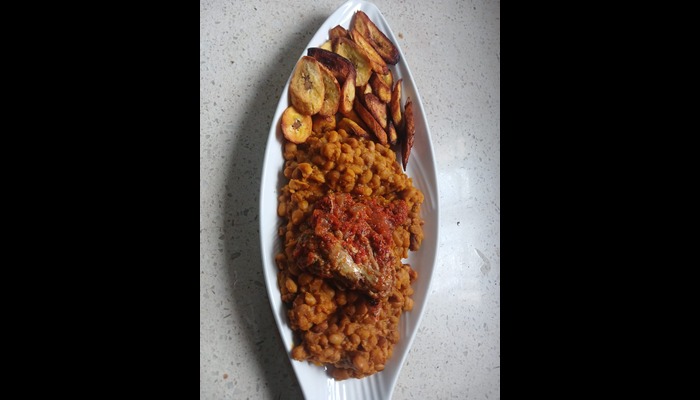
Nigeria’s culinary heritage is a living archive and one that speaks not only through grand festive dishes like Jollof rice or Egusi soup, but also through everyday meals that quietly sustain culture, identity, and memory.
Among these, ewa and dodo – Jollof Beans and Fried Plantains stand out as humble yet powerful symbols of Nigerian food heritage, worthy of recognition on the UNESCO Intangible Cultural Heritage (ICH) list.
Ewa and dodo are a cultural language understood across class, ethnicity, and geography in Nigeria. From the bustling streets of Lagos to quiet homes in Ibadan and Abeokuta, from Oshogbo to Ore and other parts of the nation, the pairing of soft, stewed beans and golden fried plantains represents comfort, nourishment, and shared experience. It is a meal that transcends economic divides, equally cherished by students, artisans, professionals, and elites, making it one of the most democratic expressions of Nigerian cuisine.
At its core, ewa, particularly in its “Jollof” form, is a reflection of indigenous knowledge systems. The slow cooking of beans, often enriched with palm oil, peppers, onions, and local spices, showcases a deep understanding of flavour layering and nutrition. Beans are a vital source of plant-based protein, making ewa not only culturally significant but also nutritionally strategic in a country where affordable protein sources are essential. This aligns with UNESCO’s emphasis on practices that contribute to community well-being and sustainable living.
Dodo, on the other hand, embodies the art of transformation. Made from ripe plantains sliced and fried to caramelized perfection, it demonstrates the ingenuity of Nigerian culinary techniques, turning a simple food into a versatile delicacy. Whether served alongside rice, beans, or eaten on its own, dodo carries a sensory identity: its aroma, texture, and taste are instantly recognizable and deeply nostalgic for Nigerians at home and in the diaspora.
What strengthens the case for UNESCO recognition is not just the dishes themselves, but the cultural practices surrounding them. The preparation of ewa and dodo is often communal, passed down through generations, from mothers to children, from street vendors to apprentices.
In many Nigerian cities, “mama put” food vendors have become custodians of this tradition, preserving authentic recipes and techniques in informal yet impactful ways. These vendors are not merely food sellers; they are cultural bearers, sustaining a culinary heritage that might otherwise be lost in the face of globalization and fast food culture.
Moreover, ewa and dodo have achieved a remarkable level of social and cultural symbolism. They are staples at roadside bukas, university cafeterias, religious gatherings, and even upscale restaurants reimagining Nigerian cuisine for global audiences. Their adaptability speaks to their resilience, an important criterion for UNESCO’s Intangible Cultural Heritage list, which values traditions that continue to evolve while retaining their core identity.
In the Nigerian diaspora, ewa and dodo serve as edible links to home. For many abroad, the taste of beans and fried plantain is a powerful reminder of identity and belonging. This global presence further reinforces their cultural significance, positioning them not just as national treasures, but as part of the world’s shared culinary heritage.
Recognizing ewa and dodo on the UNESCO ICH list would validate the everyday experiences of millions of Nigerians. It would elevate the narrative that heritage is not only found in palaces, festivals, or rare traditions, but also in the ordinary meals that shape daily life. It would also support efforts to document, preserve, and promote Nigerian culinary practices in the face of rapid modernization.
In a world increasingly drawn to authenticity and cultural storytelling, Nigeria has an opportunity to present ewa and dodo as more than food, as heritage. Their simplicity is their strength; their ubiquity is their power. And in their story lies a compelling case for global recognition.
It is also important to note that children loves this food a great deal! Ask any Nigerian mother! Lets visit the kitchen
Recipe for 5 servings
4 cups beans [brown or white]
1 onion [sliced or diced]
2 cooking spoons palm oil
5 big plantains [ripened]
A pinch of potash [optional]
Seasoning and salt to taste
3 red peppers [crushed or blended]
Method
. Make sure the beans are stone – free, wash them and bring to boil for 10 minutes.
. Drain off the water, return to the pot and add fresh water that will cook the food.
A pinch of potash can be added to the boiling pot! Why? [it’s a general belief that potash helps to soften beans, although this is optional].
. One or two slices of onions is a very good and healthy idea! This is because the onions will add a special flavour to the cooking beans!
. While the beans are cooking, add the sliced or diced onions, once this is done, the aroma of the food will change immediately.
. Continue to cook until the beans are very tender.
. Once you know they are tender, add the salt and seasonings to taste including one or two cooking spoon of palm oil.
. Allow to simmer for six minutes before adding other ingredients.
. Cover and simmer until the beans are ready.
. Remove from heat and serve while you quickly fry the plantains.
. Set a frying pan on fire, wash and peel the plantains, cut into sizeable – chunks and fry with the remaining cooking oil.
. Make sure a pinch of salt is added [althogh it is optional].
. Fry until the plantains are golden brown.
. Remove from heat and serve with the delicious protein enriched beans.

Join BusinessDay whatsapp Channel, to stay up to date
Open In Whatsapp