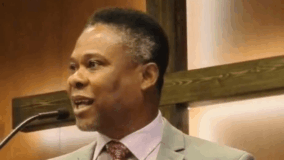
Soiprala Prince, is a multidisciplinary creative strategist whose work spans film, photography, and brand systems. With roots in architecture, music, and corporate environments, he operates on a singular belief: every idea has a soul but its value is only realised when it is clearly communicated. He builds narrative systems that bridge the gap between creators and consumers, transforming creativity into scalable, monetisable ecosystems. At his core, he is an artist who learned business combining emotion, structure, and scale to create work that is not only seen, but felt and remembered, In this interview with KENNETH ATHEKAME, he discussed how African storytelling can evolve into a globally competitive export, and explored ways to monetise storytelling more effectively in Nigeria. Excerpts:
Your work cuts across film, photography, and brand strategy. How did your journey into the creative industry begin?
My work has always come from empathy, a need to express, and an instinct to observe. I don’t just see output, I see intention. I see something deeper, almost like a soul, and my role is to translate that in a way people can feel and immediately understand. I didn’t formally start in the creative industry, but I was always around studios, construction sites, film sets. I kept finding myself in spaces where things were being built visually, emotionally, and culturally. Over time, people began to recognise not just what I do, but how I think. I don’t see myself as a businessman. First, I’m an artist. But I had to learn business, because creativity without structure doesn’t scale. That balance shaped my journey.
What drew you to the intersection of storytelling and business?
I believe everything has a soul, every idea, every product, every thought. The problem is, most of them are never experienced the way they’re meant to be because they’re not communicated clearly.
There’s a gap between creators and consumers not because the work isn’t good, but because the value isn’t translated well. And within that gap, there’s opportunity.
Creativity without monetisation is dependency. Business without storytelling is invisible. The real leverage is in owning both building ideas people can feel and systems that make them profitable. My role is simple: I bridge that gap.
How have architecture, music, and corporate experience shaped your perspective?
Architecture taught me structure. It showed me that creativity without functionality has consequences. Music taught me emotion. It sharpened my understanding of feeling, timing, and depth in how to interpret what’s beneath the surface. Corporate taught me scale. It showed me how ideas evolve into systems that generate consistency and revenue.
Now, I combine all three: structure from architecture, emotion from music, and scale from corporate. That intersection defines how I approach every project.
You emphasise “narrative systems.” What does that mean in practical terms?
Narrative isn’t decoration, it’s infrastructure. A narrative system ensures a brand communicates clearly, consistently, and over time. It defines what a brand stands for, how it expresses that across content, and how it reinforces its value. It’s not about what you say once it’s about what people keep understanding about you. In Nigeria, many brands focus on the product, but the real work is in communicating meaning. Visibility without clarity doesn’t build recall. If your storytelling isn’t structured, it becomes forgettable.
How can African storytelling evolve into a globally competitive export?
It has to sit at the intersection of authenticity and audacity. Authenticity keeps the story real. Audacity pushes it onto the global stage without hesitation. We don’t need to make our stories more digestible; we need to make them undeniable. But beyond expression, there’s a structural issue: ownership. We can’t just export talent; we have to export intellectual property. If we don’t own what we create, we’re not building an industry, we’re feeding one. The next phase is not just visibility. It’s control, scale, and ownership.
What are Nigerian brands getting wrong about storytelling today?
They focus too much on information and not enough on emotion. Storytelling is about world-building. If people don’t feel anything, they won’t remember you. There’s also an obsession with virality. Virality gives you attention for a moment. Memory gives you relevance over time.
Many brands are chasing numbers instead of meaning. But if people don’t remember you, you don’t exist in their decision-making.
Can you share an example of narrative driving impact?
My work with the Adekunle Gold Foundation on sickle cell advocacy is a strong example. The challenge with advocacy is that it often leans on information, not emotion. We shifted the approach from presenting facts to telling a story people could feel. Once the narrative became clear, everything aligned visuals, tone, delivery. The campaign reached over 780,000 views and drove real engagement and donations.
That’s what narrative does: it turns attention into meaning, and meaning into action.
How can storytelling be monetised more effectively in Nigeria?
The issue isn’t talent, its systems. We lack structure, distribution ownership, and strong monetisation models. We need to shift from content thinking to asset thinking. Content is consumed. Assets compound. Ownership of intellectual property is key. If we build worlds around African stories like mythology we’re not just creating content, we’re building ecosystems. And whoever owns those ecosystems controls the value.
What role should the government and the private sector play?
The government should focus on policy, infrastructure, and funding systems. The private sector should drive execution and scale. Right now, both are reactive. We need long-term, coordinated thinking to build sustainably.
Are Nigerian creatives globally competitive?
Creatively, yes. Structurally, no. We’re exporting stars, but not systems. Until we fix funding, distribution, and IP protection, we’ll have recognition without long-term industry growth.
How transferable is storytelling across industries?
Completely transferable. The format changes, but the principle stays the same: whoever controls the narrative controls the value.
What can traditional industries learn from creatives?
They need to get closer to the audience. Creatives understand attention, behavior, and trends in real time. That agility is what keeps brands relevant.
How important is collaboration between creatives and corporations?
It’s essential. Creatives bring culture. Corporates bring capital. Together, they scale.
What advice would you give creatives struggling with the business side?
Stop selling services. Start building identity. Have a clear narrative, a recognisable style, and a defined audience. If people can’t describe you, they can’t remember you.
What separates a creative from a creative entrepreneur?
A creative producer. A creative entrepreneur builds systems. One earns per project. The other builds assets and recurring revenue. The difference is leverage.
What does global competitiveness mean in practical terms?
It means your work meets global standards, travels across markets, and generates revenue beyond your location, not just good for Nigeria, but viable anywhere.
What are the biggest structural challenges in Nigeria’s creative economy?
Funding gaps, weak IP protection, poor distribution, and inconsistent standards. These are infrastructure problems, not creative ones.
What does success look like for you and for Nigeria’s creative economy?
For me, success is building narrative systems that scale globally. For Nigeria, success is ownership of IP, distribution, and value. Right now, we’re visible. The next phase is ownership.
Join BusinessDay whatsapp Channel, to stay up to date
Open In Whatsapp