SATIRE II:

In addition, Nigeria should respond to the following proposals:

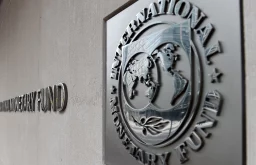
(i)Nigeria’s Phantom Debts

(ii) Debt Forgiveness

(iii) Debt Recovery

(iv) Counter Trade – Escrow Account

with Brazil, France, and Austria

(v) Reserve Additional Bonus

(vi) Joint Venture Cash Calls

(vii) Shell/NNPC Bonga Project.

The coup d’état of 15th January 1966 and the counter coup of July 29, 1966, have left our nation bleeding from permanent scars and wounds.

Regarding the second coup which claimed the lives of the military head of state, General Johnson Aguiyi-Ironsi, and the military governor of the Western Region, Colonel Adekunle, here are two witness statements:

(i)Lieutenant Colonel William Walbe (Retd)

“We arrested him (Fajuyi) as we arrested Aguiyi-Ironsi. We suspected him for being a party to the January coup. You remember the Battle Group Course which was held in Abeokuta. Fajuyi was the commander of the Battle Group Course…. All those who took part in the January coup were those who had taken part in the course…. He had to suffer too. I am sorry about that, but that is the nature of the life of a military man….”

“While numerous reports and studies have highlighted massive losses to corruption in Nigeria, there is no single, recent US government report specifically stating that Nigeria lost exactly $130 billion to corruption in a specific 8-year period.”

(ii) Lieutenant-General T.Y. Danjuma (Retd)

“It was under Fajuyi that the training on the raid of the Sarduana (of Sokoto) took place. The chaps could not stomach Fajuyi such that if there was anybody who should die first, as far as they were concerned, it was Fajuyi, not even Aguiyi-Ironsi.

Having regard to the situation in our country, we have to tackle corruption:

“NIGERIA LOST $130 BILLION TO CORRUPTION IN 8 YEARS.” – Us Report.

“While numerous reports and studies have highlighted massive losses to corruption in Nigeria, there is no single, recent US government report specifically stating that Nigeria lost exactly $130 billion to corruption in a specific 8-year period. However, several reports from other sources have indicated figures within that range, and official statements often mention similar staggering amounts.

Here is a breakdown of the information regarding Nigeria’s corruption losses based on search results:

$157.5 Billion over 10 Years (2003-2012): In 2019, former President Muhammadu Buhari cited a 2014 Global Financial Integrity report, stating that Nigeria lost an estimated $157.5 billion in illicit financial flows over that ten-year period.

Over $582 Billion Since Independence: A 2024 citation of a report by Chatham House (quoted in The Economist) indicated that $582 billion was stolen from Nigeria between 1960 and 2019.

$130 Billion in Illegal Outflows (2000-2008): An earlier report by Dev Kar, a former IMF economist, indicated that approximately $130 billion was lost to illicit financial flows (including bribery and tax evasion) from Nigeria between 2000 and 2008.

$130 Billion+ Border/Customs Losses: Reports from 2017 suggested that over N130 billion (naira) was lost due to corruption at land borders alone over a three-month period.

$18 Billion Yearly Loss: A 2024 report indicated that Nigeria loses about $18 billion annually to financial crimes and corrupt procurement processes.

Recent US-Nigeria Anti-Corruption Action

While the specific “$130 billion in 8 years” report is not in the latest results, the US government actively tracks corruption in Nigeria. In 2025, the U.S. Department of Justice and the Nigerian government agreed to repatriate approximately $52.88 million in assets forfeited as part of a crackdown on corruption in the oil industry.

Recent Corruption Ranking

According to Transparency International’s 2025 Corruption Perceptions Index, Nigeria ranked 142nd out of 180 countries, scoring 26 out of 100, indicating a continued, albeit stagnant, battle against public sector corruption.

Furthermore, we have to hold old boys of King’s College, Lagos, to a higher standard of conduct. A case in point is IHS:

“ThisDay” newspaper of February 19, 2026: “FEDERAL GOVERNMENT TO REVIEW ACQUISITION OF IHS TOWERS BY MTN GROUP”

“The federal government is to review the acquisition of IHS towers by the MTN Group,” the Minister of Communications, Innovation and Digital Economy, Dr Bosun Tijani, has disclosed.

In a statement which he personally signed yesterday, the minister noted that the telecommunications sector was very sensitive to national security.

“Given the strategic importance of telecommunications infrastructure to national security, economic growth, financial services, innovation, social inclusion, and ensuring strategic actions by private sector operators are in line with the market development agenda under the renewed hope policy directions of the President, the ministry will undertake a thorough assessment of this development in collaboration with the relevant regulatory authorities to review its impact on the sector.

“Our objective is clear: to ensure that any market consolidation or structural changes protect consumers, safeguard investments, and preserve the long-term sustainability of the sector.”

According to him, the government remained committed to maintaining a stable, transparent, and forward-looking policy environment that keeps Nigeria’s telecommunications industry on a strong and sustainable path, in alignment with the broader vision of building a robust digital economy.

Join BusinessDay whatsapp Channel, to stay up to date

Open In Whatsapp