In the past decade, Northeast Nigeria has stood at the intersection of conflict, displacement, and economic disruption, with agriculture—the backbone of rural livelihoods—bearing the brunt of instability. As communities across Adamawa, Borno, and Yobe States attempt to rebuild, the question facing policymakers, development institutions, and private sector actors is no longer simply how to provide aid, but how to restore viable, self-sustaining agricultural economies.
Food security in this context is not just a humanitarian concern; it is a critical economic issue. With millions dependent on agriculture for income and survival, rebuilding farming systems directly impacts market stability, employment, and regional economic recovery. Yet, the transition from emergency response to long-term resilience remains one of the most complex challenges in Nigeria’s development landscape.
Increasingly, attention is shifting toward sustainability—not just in environmental terms, but as a framework for building agricultural systems that are economically viable, ecologically sound, and resilient to both conflict and climate shocks.
In this interview, Agricultural Economist and Sustainable Food Systems Specialist, Mr. Olurotimi Ogundijo, shares insights from years of leading large-scale agricultural and livelihood programs across conflict-affected communities in Northeast Nigeria. Drawing from his work with international development partners and thousands of smallholder farmers, he provides a grounded perspective on what it takes to move beyond aid and build resilient agricultural economies that can endure shocks and sustain growth over time.
Nigeria has invested significantly in humanitarian agriculture interventions in the Northeast. Why is there still a strong call to move “beyond aid”?
Humanitarian aid plays a critical role, especially in the immediate aftermath of conflict where the priority is stabilisation. It prevents hunger, reduces vulnerability, and creates a basic platform for recovery. However, its design is inherently short-term. It addresses consumption needs, not production systems.
What we have observed in the Northeast is that when interventions stop at input distribution or food support, they do not fundamentally change the economic position of households. Farmers remain dependent because the underlying system that enables continuous production is not fully restored.
Moving beyond aid requires a deliberate shift toward sustainability. That means designing interventions that rebuild soil systems, strengthen farmer knowledge, and reconnect production to markets. Agriculture must return to being an economic activity, not just a survival mechanism. Until that transition happens, dependency will persist, regardless of how much aid is provided.
You’ve emphasised sustainability. In this context, what does sustainable agriculture actually mean for conflict-affected regions?
Sustainable agriculture in conflict-affected regions must be understood as a balance between productivity, resilience, and resource stewardship.
It is not just about producing more; it is about producing in a way that can be maintained over time despite shocks. That includes preserving soil fertility, managing water efficiently, and reducing vulnerability to climate variability.
In practical terms, sustainability means that a farmer should be able to cultivate year after year without degrading the land, without excessive dependence on external inputs, and with enough stability to generate income.
In these regions, sustainability is not optional. If farming systems are not sustainable, they collapse quickly under pressure whether from climate shocks, economic stress, or renewed instability.
From your experience on the ground, what does a “resilient agricultural economy” actually look like?
A resilient agricultural economy is one that continues to function even when conditions are not ideal. It is defined less by peak performance and more by consistency.
We begin to see resilience when farmers are able to adapt their practices. For example, adjusting planting cycles, diversifying crops, or adopting soil management techniques that improve moisture retention.
Beyond the farm level, resilience is reflected in functioning markets. When farmers can produce surplus and there are systems to aggregate, transport, and sell that produce, the economy begins to stabilise.
Ultimately, resilience is visible when communities move from dependency to participation. When farmers are not just recipients of support, but active contributors to local economies, that is when the system begins to sustain itself.
You’ve worked closely with displaced and returning farmers. How does sustainability factor into their recovery process?
For displaced populations, sustainability is closely tied to rebuilding both assets and confidence.
When farmers return, they are often starting from a deficit. Land may be degraded, tools lost, and support systems disrupted. In that situation, introducing high-cost or resource-intensive practices is not realistic.
Sustainable approaches such as composting, integrated soil fertility management, and low-cost irrigation become critical because they rely on locally available resources. They allow farmers to rebuild gradually without incurring unsustainable costs.
Equally important is restoring knowledge systems. Sustainability is not just about techniques; it is about understanding how to manage resources over time. When that knowledge is rebuilt, recovery becomes more durable.
Many interventions still focus heavily on distributing inputs. Why is that approach limited from a sustainability standpoint?
Input distribution can provide a short-term boost, but it does not address the structural issues within the farming system.
For example, if soil fertility is poor, simply adding fertiliser may improve yields temporarily, but without improving the underlying soil health, that effect will not last. Similarly, improved seeds will not perform optimally if water management is inadequate.
From a sustainability perspective, the focus must shift to systems. Inputs should complement knowledge, not replace it. When farmers understand soil health, water management, and crop interactions, they are better positioned to use inputs effectively and maintain productivity over time.
How important is soil health in building sustainable agricultural systems in these regions?
Soil health is absolutely foundational. It is the base upon which everything else depends.
In many parts of Northeast Nigeria, soils have been degraded due to continuous use and limited nutrient replenishment. This creates a situation where yields decline over time, regardless of other interventions.
When we focus on restoring soil health through organic matter, composting, and integrated practices, we begin to see improvements not just in yield, but in stability. The soil retains moisture better, supports crop growth more effectively, and becomes more resilient to stress.
From an economic standpoint, this is critical because it reduces the need for continuous external inputs, making farming more cost-effective and sustainable.
Water management is another key issue. What sustainable approaches have proven effective?
Water is one of the most limiting factors in dryland agriculture, so managing it efficiently is essential.
We have seen strong results with simple water harvesting techniques and small-scale irrigation systems. These approaches do not require large infrastructure but can significantly improve water availability.
For example, capturing runoff or using low-cost irrigation technologies allows farmers to extend their growing season. This not only improves food security but also creates additional income opportunities through dry-season farming.
The key is that these solutions are accessible. Sustainability depends on whether farmers can adopt and maintain these systems without heavy external dependence.
How do Farmer Field Schools contribute to sustainable agriculture?
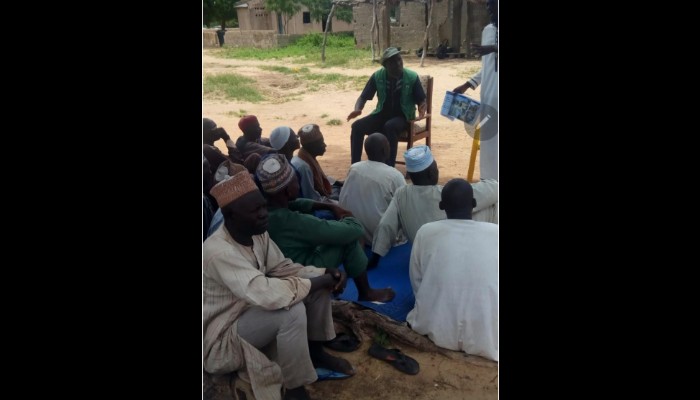
Farmer Field Schools are particularly effective because they focus on learning by doing. Farmers observe, experiment, and understand the outcomes of different practices.
This is important for sustainability because it builds internal capacity within communities. Instead of relying on external experts, farmers develop the knowledge to make decisions independently.
We have seen that when farmers understand why a practice works, whether it is composting, crop rotation, or water management, they are more likely to adopt and sustain it over time.
Can agriculture realistically drive economic recovery in these regions, or is that expectation too optimistic?
It is not only realistic, it is necessary. In many of these communities, agriculture is the primary economic activity.
When agricultural systems are restored, they create a multiplier effect. Farmers generate income, local markets become active, and related services such as transportation and processing begin to grow.
However, for agriculture to drive recovery, it must move beyond subsistence. It must be productive, connected to markets, and supported by sustainable practices. That is where the real economic impact lies.
What role do markets play in sustaining these agricultural systems?
Markets are essential because they provide the economic incentive for production.
Without access to markets, increased productivity does not translate into improved livelihoods. Farmers need to be able to sell surplus produce in a reliable and profitable way.
This is why we emphasise value chain development. Aggregation, storage, and market linkages are just as important as production itself. When these elements are in place, agriculture becomes a viable economic enterprise.

How can sustainability be embedded into agricultural policy for conflict-affected regions?
Policy must recognise that these regions have unique challenges. A one-size-fits-all approach will not work.
Sustainability should be embedded through support for soil health initiatives, water management systems, and extension services. Policies should also encourage practices that reduce environmental degradation while improving productivity.
Importantly, there must be alignment between humanitarian and development strategies. Sustainability requires continuity, and that continuity can only be achieved through coordinated policy frameworks.
What lessons have you learned from working with international development partners?
One of the most important lessons is that sustainability must be built into program design from the beginning. It cannot be an afterthought.
We have also learned that local context matters. Practices must be adapted to the realities of the communities where they are implemented.
Finally, coordination is key. When stakeholders align their efforts, resources are used more effectively, and outcomes are more sustainable.
How should success be measured in sustainable agricultural interventions?
Success should be measured in terms of long-term outcomes, not just immediate outputs.
We look at whether farmers can sustain production independently, whether soil health is improving, and whether incomes are becoming more stable.
Another important indicator is reduced dependency. When households no longer rely on aid and can support themselves through agriculture, that is a strong sign of success.
Climate variability is increasing. How does this affect sustainability efforts?
Climate variability makes sustainability even more critical. Without resilient systems, gains can be reversed quickly.
This is why climate-smart practices must be integrated into all interventions. Sustainability and resilience are closely linked. A system that is sustainable is also more capable of withstanding shocks.
What role can the private sector play in advancing sustainable agriculture?
The private sector can drive innovation and scale. Investments in processing, storage, and distribution strengthen value chains and reduce losses.
There is also potential for private sector involvement in providing technologies that improve efficiency, such as irrigation tools or soil management solutions.
However, this requires an enabling environment. Policy, infrastructure, and security all play a role in attracting and sustaining investment.
What are the biggest risks if sustainability is not prioritised in these interventions?
The biggest risk is that progress becomes temporary. Without sustainability, systems degrade, and communities fall back into dependency.
There is also the risk of environmental damage. Unsustainable practices can deplete soil and water resources, making future recovery even more difficult.
In essence, without sustainability, interventions become cycles rather than solutions.
Looking ahead, what are the most critical priorities for long-term agricultural resilience?
The priorities include strengthening knowledge systems, improving infrastructure, and integrating sustainable practices across all levels of the value chain.
Equally important is empowering communities. Sustainability depends on local ownership and capacity.
Finally, what message would you give to policymakers and stakeholders?
Agriculture must be viewed through a long-term lens. It is not just about immediate outputs, but about building systems that can endure.
If sustainability is prioritised, agriculture can become a powerful driver of economic recovery and stability. The opportunity is there, but it requires deliberate and consistent action.
Closing note
As Nigeria continues to navigate the complex intersection of conflict recovery and economic development, the emphasis on sustainability is becoming increasingly central to agricultural policy and practice. The transition beyond aid is not simply about reducing dependence, but about building systems that are capable of sustaining livelihoods, stabilising markets, and supporting long-term growth.

Join BusinessDay whatsapp Channel, to stay up to date
Open In Whatsapp