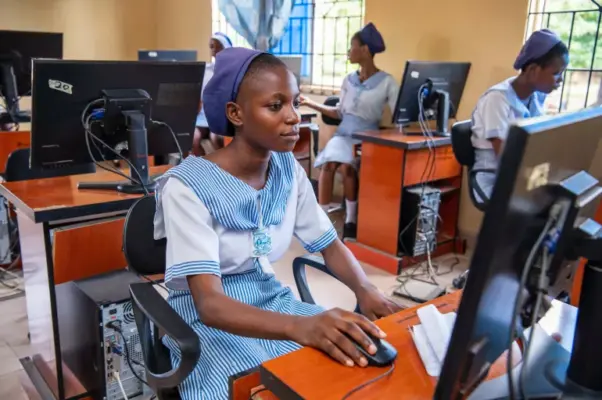
In an era shaped by rapid technological change, the ability to use digital tools responsibly, critically, and productively is emerging as a crucial skill, placing digital discipline at the centre of preparing Nigerian students for the future.
Many schools in Nigeria are investing in devices, platforms, and connectivity, believing that access to technology is the foundation of students’ future-readiness.
However, across the world, what countries are witnessing across classrooms suggests something deeper, literacy is no longer enough. The real challenge today is not whether children can use technology. It is whether they can manage it.
A UNESCO report indicates a ‘quiet’ revolution is underway in schools around the world. While the debates over digital learning rage on, a growing number of governments and education systems have taken a bold stance: phones off, and out of sight.
According to a New GEM Report analysis, while one in four countries had smartphone restrictions in schools in 2023, this number has surged. Today, more than half of countries have policies restricting phone use in schools.
The wave of change on smartphone use in schools, according to the report, reflects the increasing concerns of parents, teachers and policy makers about the adverse effects of phones and social media on academic engagement and learning, social interactions, sleep, mental health, cognitive abilities, privacy, to name but a few.
Many Nigerian parent decry the negative impact of smartphones and other digital devices on children, especially those under age 16, which have led to calls to restrict children access to digital tools.
However, experts believe that beyond the call for digital tools access to children, there is a more important thing to pay attention to, which is the behavioural problem of children in this digital era.
Olufunke Onyema, a guidance counsellor emphasised that exposing children to Android phones and other digital devices without intentional behavioural training is detrimental.
Thomas Nkume, a teacher, believes Nigerian schools can foster responsible technology use by setting clear guidelines for device usage, and promoting,
“Bridging the digital divide in Nigerian education is imperative but there’s a need to set boundaries on how students go about this new approach to learning.
“No doubt, access to technology enhances educational outcomes, empowers students with essential digital skills, and prepares them for success in the 21st century global economy, but abuse is inevitable without guidelines,” he said.
For years, the Nigerian governments have been focusing on building digital literacy across schools. Even private schools in Nigeria are investing in devices, platforms, and connectivity, believing that access to technology is the foundation of future-readiness.
Sometimes ago, South Korean government amended key education bills to reclassify previously sanctioned artificial intelligence textbooks as supplementary material rather than classroom manuals.
According to Business Insider Africa, this is following pushback from teachers and parents against rolling out textbooks without proper preparation, and evaluation.
“The Korean Federation of Teachers’ Associations said that while teachers are not opposed to digital education innovation, rolling out the textbooks without proper preparation and evaluation actually increased some teachers’ workloads.”
The decision reflects a growing concern over the role of artificial intelligence in education; as it marks a significant shift in how the country plans to balance technological advancement with foundational learning, sparking debate among educators, policymakers, and tech experts.
In a move to equip the youth with future-ready skills, African leaders in 2025, unveiled the EdTech 2030 Vision, a transformative roadmap aimed at harnessing technology to revolutionise learning across the continent.
The African Union Development Agency (NEPAD), and the New Partnership for Africa’s Development (NEPAD) launched the draft African EdTech 2030: Vision, Plan and Policy framework for consultation and stakeholder input.
The initiative seeks to bridge the digital divide, promote inclusive education, and position Africa at the forefront of global innovation in education technology.
However, the reality across classrooms suggests that digitalization of knowledge goes deeper than literacy. The real challenge is not whether children can use technology. It is whether they can manage it. Access without discipline is not empowerment, it is exposure.
As Nigeria positions itself within an increasingly digital global economy, embedding digital discipline into its education system will be critical.
By equipping students with not just technical skills but the mindset to use technology responsibly and productively, the country can build a generation ready to compete, innovate, and thrive in the future of work.

Join BusinessDay whatsapp Channel, to stay up to date
Open In Whatsapp